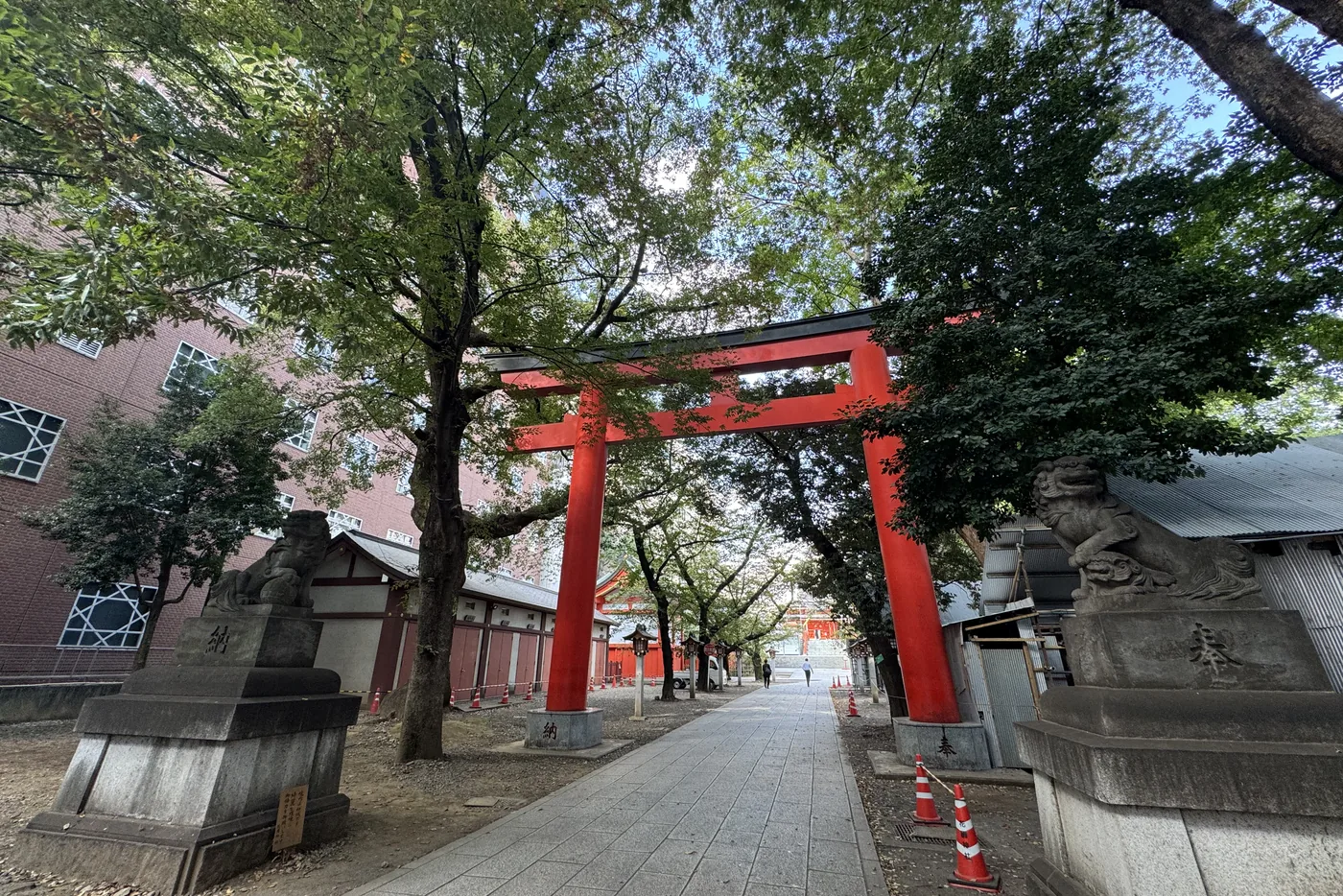
Hanazono Shrine Guide | Getting There from Shinjuku Station, Tori-no-Ichi 2026 Dates, Aozora Kotto-ichi Antique Market, and Shrine Etiquette
Hanazono Shrine is a Shinto shrine in the middle of Shinjuku's busy shopping and nightlife district. Admission is free. Using official information and photos taken on site, this guide explains how to get there from Shinjuku-sanchome Station and Shinjuku Station, the shamusho (shrine office) hours, how to pray, what to see on the grounds, the 2026 dates of Tori-no-Ichi (Otori-sai), and the antique market held every Sunday.
Ad · Affiliate This article contains links to partner booking and shopping pages (affiliate links). If you book or buy through these links, the site operator may receive a commission from the partner. Our advertising policy
Overview
Hanazono Shrine is a Shinto shrine in Shinjuku, Tokyo. It stands between Shinjuku-sanchome, an area full of department stores and restaurants, and Kabukicho, and its grounds are surrounded by buildings.
- Admission is free. Anyone can visit and pray, regardless of religion.
- According to Hanazono Shrine, it has protected the town of Shinjuku since before the Edo shogunate was established in 1603.
- It first stood about 250 meters south of its current site, around where Isetan Shinjuku is today. During the Edo period, it moved to part of the garden of the Owari Domain's residence, a spot where many flowers bloomed. This “hanazono” (flower garden) is said to be the origin of its name.
- In 1916, it was renamed “Hanazono Inari Jinja,” and since 1965, “Hanazono Jinja” (Hanazono Shrine) has been its official name. A stone pillar carved with the old name still stands on the grounds.
- Every November, during Tori-no-Ichi (Otori-sai), stalls line the grounds and large crowds gather until late at night. The 2026 dates are in the “Highlights” section of this article.
Getting there
Nearest stations
| Station | Lines | To Hanazono Shrine |
|---|---|---|
| Shinjuku-sanchome Station | Tokyo Metro Marunouchi Line and Fukutoshin Line, Toei Shinjuku Line | Right outside Exit E2 |
| Shinjuku Station | JR, Odakyu Line, Keio Line | 7 minutes' walk from the East Exit |
- If you come by Toei Bus, it is a 3-minute walk from either the Shinjuku-sanchome stop or the Shinjuku Isetan-mae stop.
- If you are coming by Tokyo Metro or Toei Subway, you can also use an unlimited-ride subway ticket. For details, see Tokyo Subway Ticket (24, 48 and 72 hours) | Prices, where to buy it and how to use Tokyo's unlimited subway pass.
Entrances
You can enter the grounds from several directions. Every entrance has a torii (shrine gate).
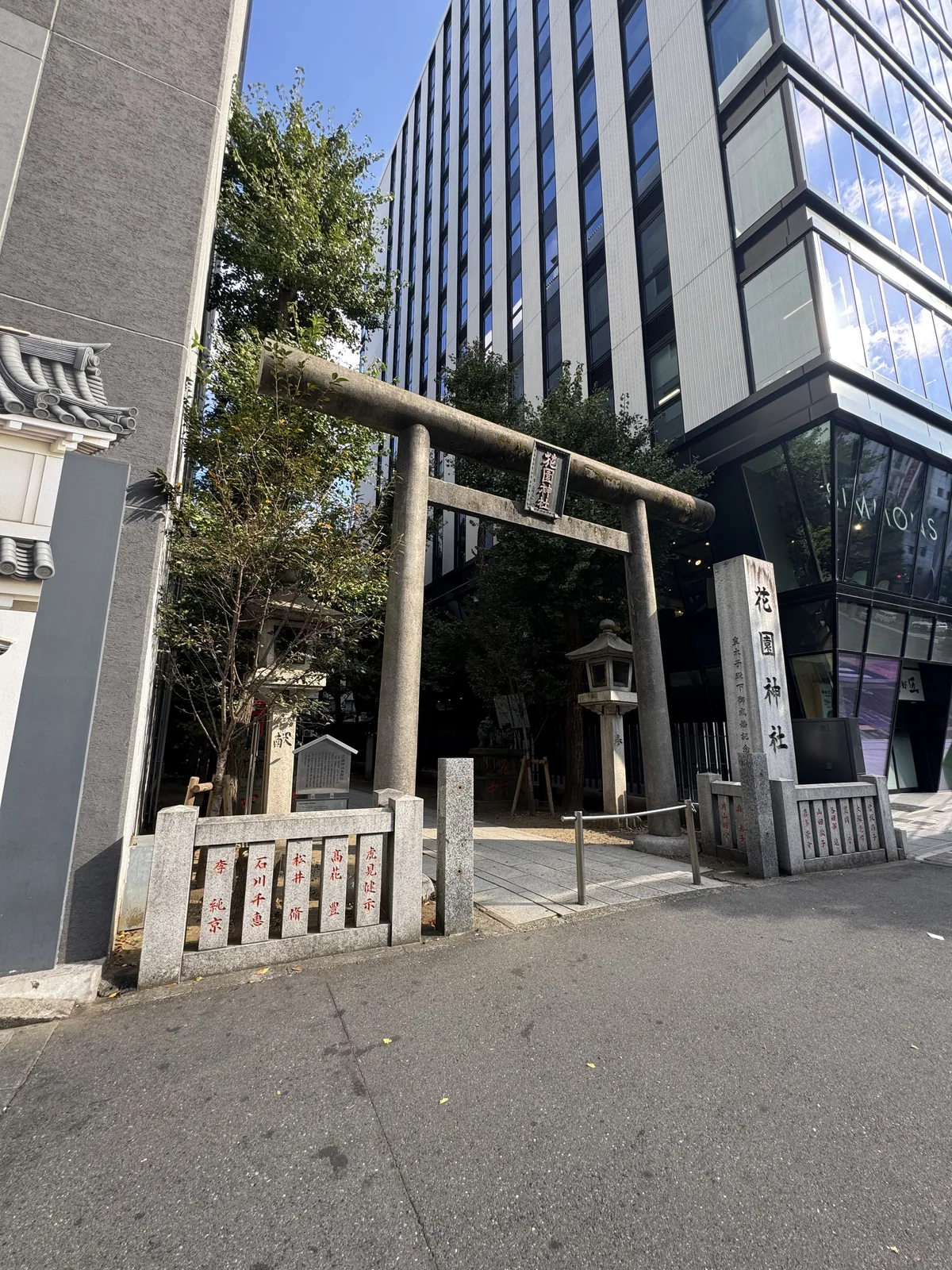
This entrance, between buildings, has a stone torii and a stone pillar carved with “花園神社” (Hanazono Jinja, Hanazono Shrine).
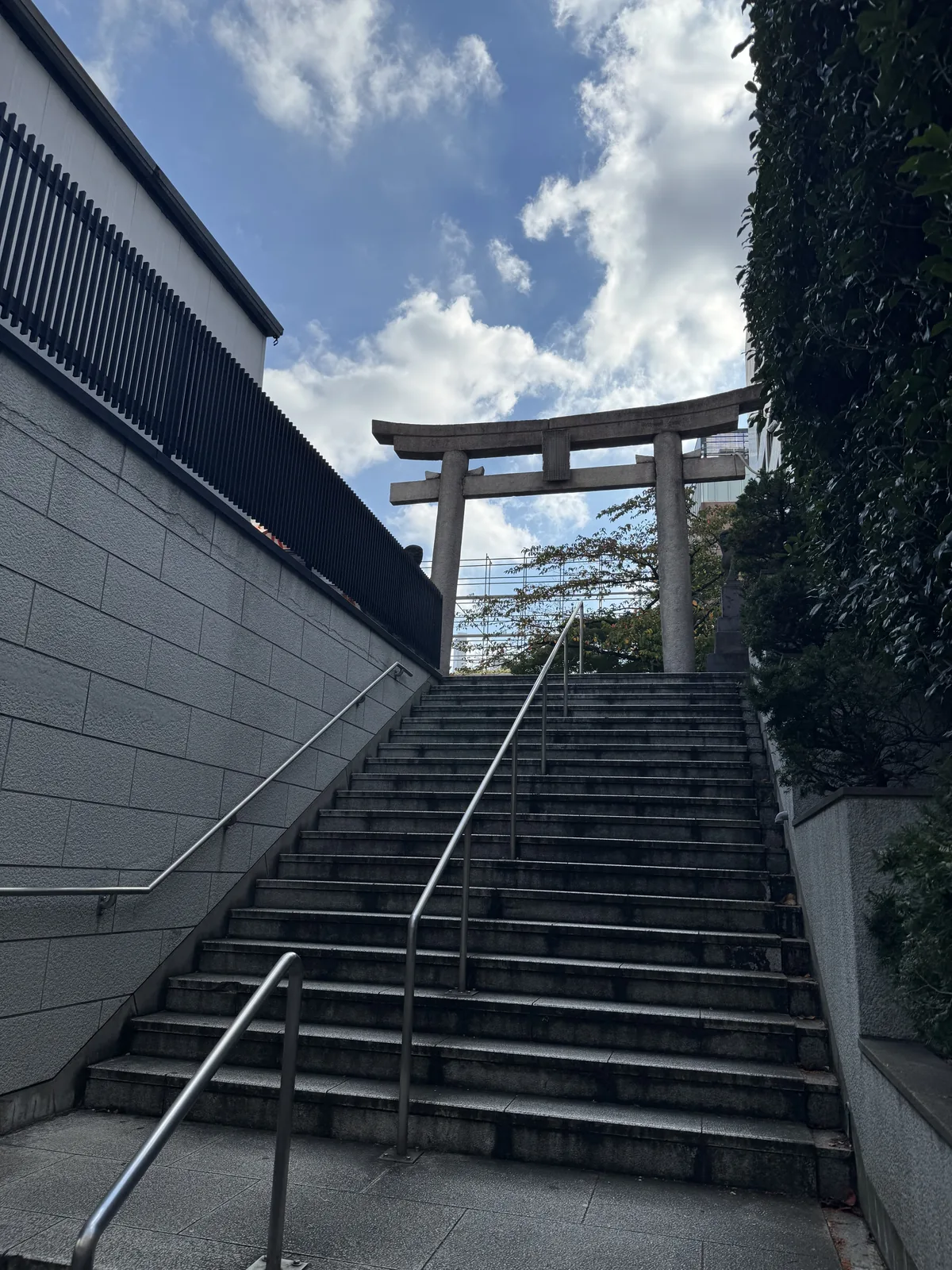
At another entrance, a stone torii stands at the top of a flight of stone steps.
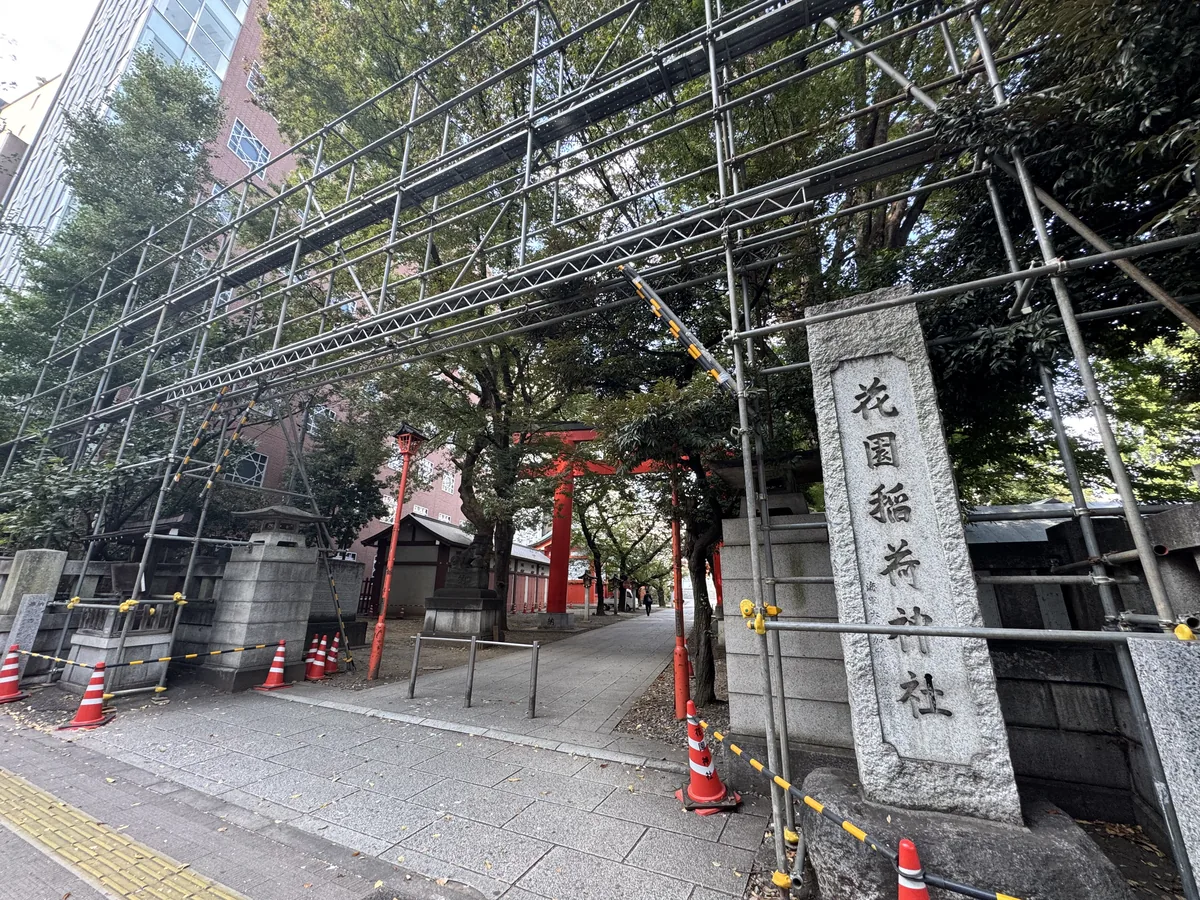
The stone pillar at this entrance is carved with the old name, “花園稲荷神社” (Hanazono Inari Jinja). A red torii can be seen in the back. When the photo was taken, there was also construction scaffolding around this entrance.
Opening hours
Shamusho (shrine office) hours
You receive omamori (amulets), omikuji (fortune slips), and similar items at the shamusho, the shrine's office and service window.
- The shamusho is open from 9:00 to 20:00, with no closed days.
- However, depending on the situation, it may close earlier, at 18:00.
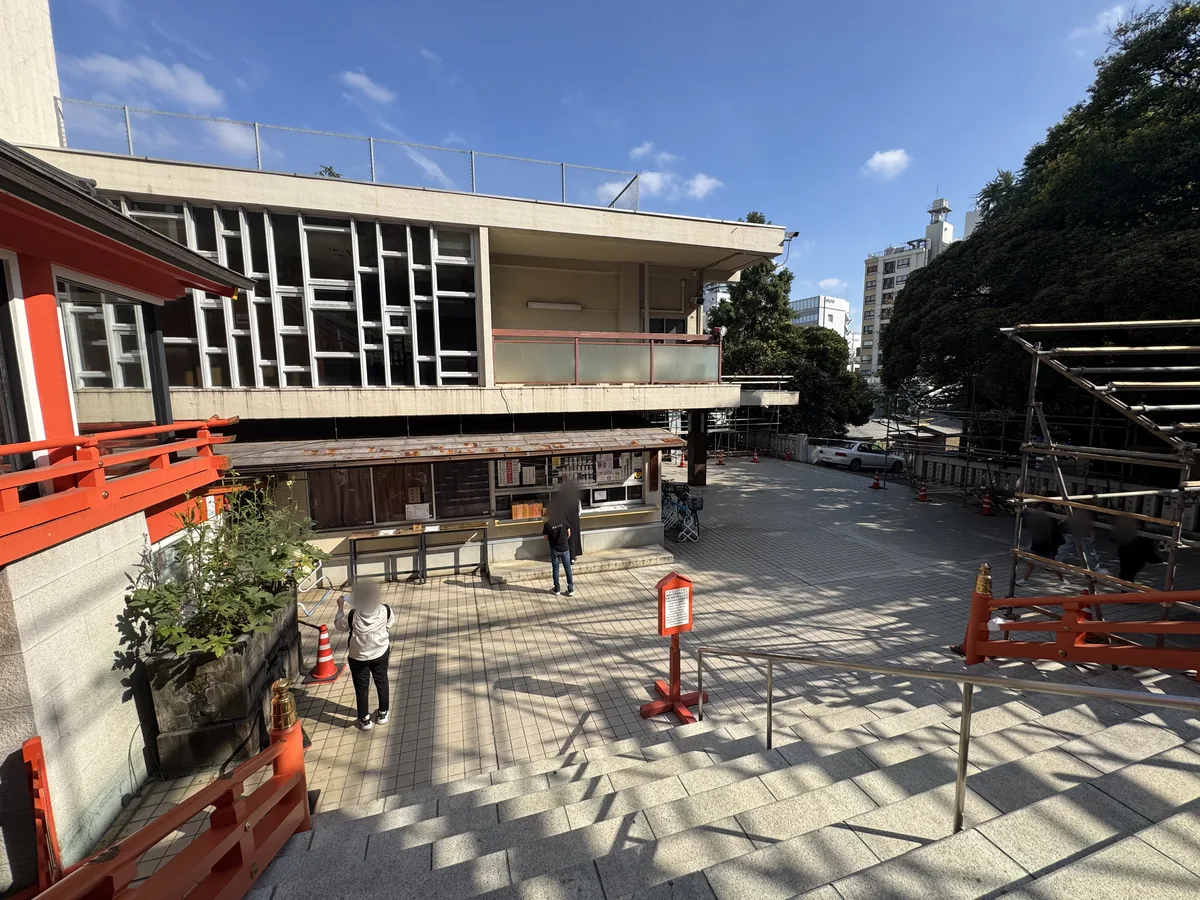
The photo shows the shamusho building seen from the top of the stone steps. The service window is on the ground floor (1F) of the building.
Hours for entering the grounds
Official information does not state the hours during which you can enter the grounds. If you go while the shamusho is open, you can receive omamori and other items.
Step by step
Passing through the torii
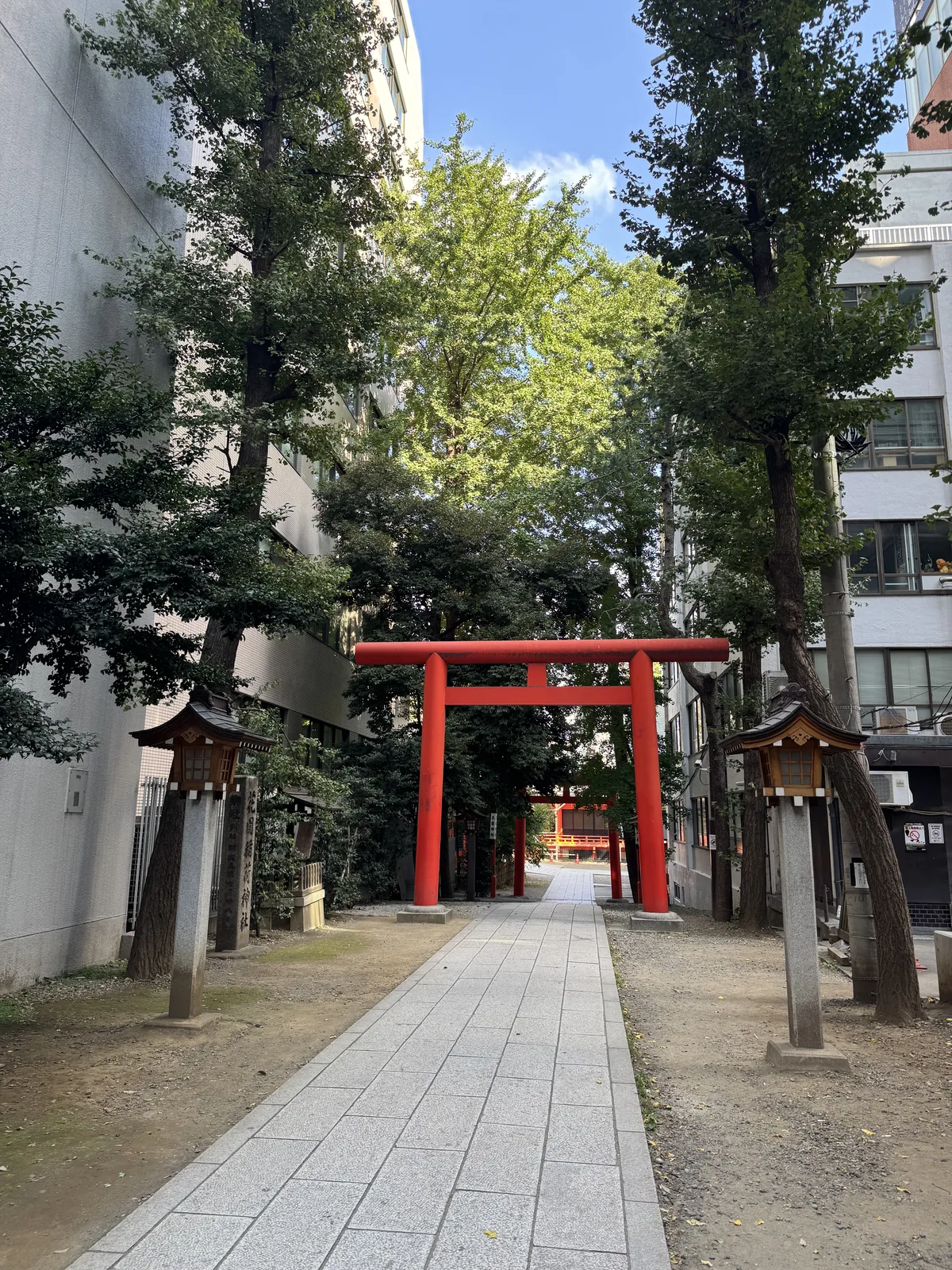
A torii is a gate that marks the entrance to a shrine. People who come to pray bow lightly in front of the torii when they enter and when they leave.
Purifying your hands and mouth with temizu
Before going on to the haiden, you purify your hands and mouth at a water basin called the temizusha. Anyone can do this, regardless of religion.
- Wash both hands.
- Take water in both hands and rinse your mouth.
- Wash both hands once more.
Praying at the haiden
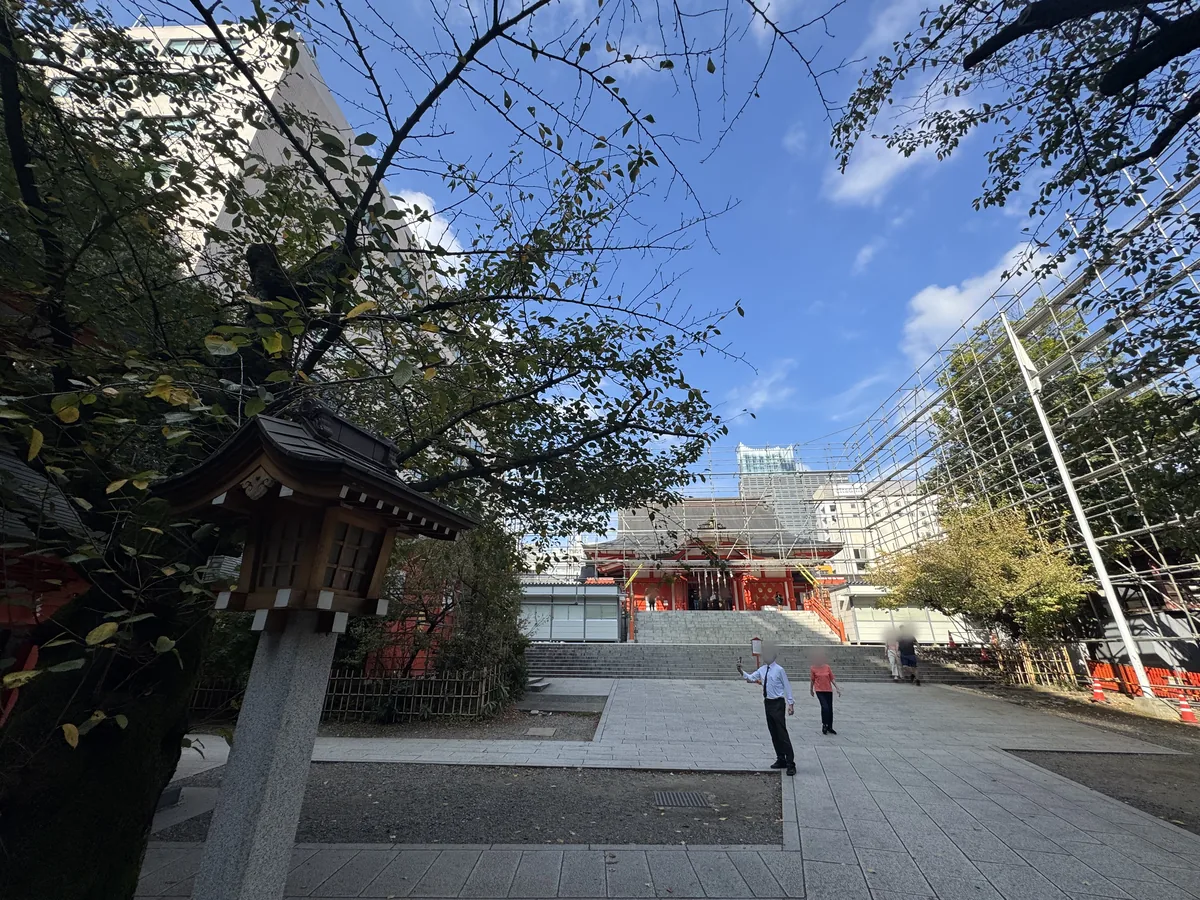
The haiden is at the top of the stone steps at the back of the grounds.
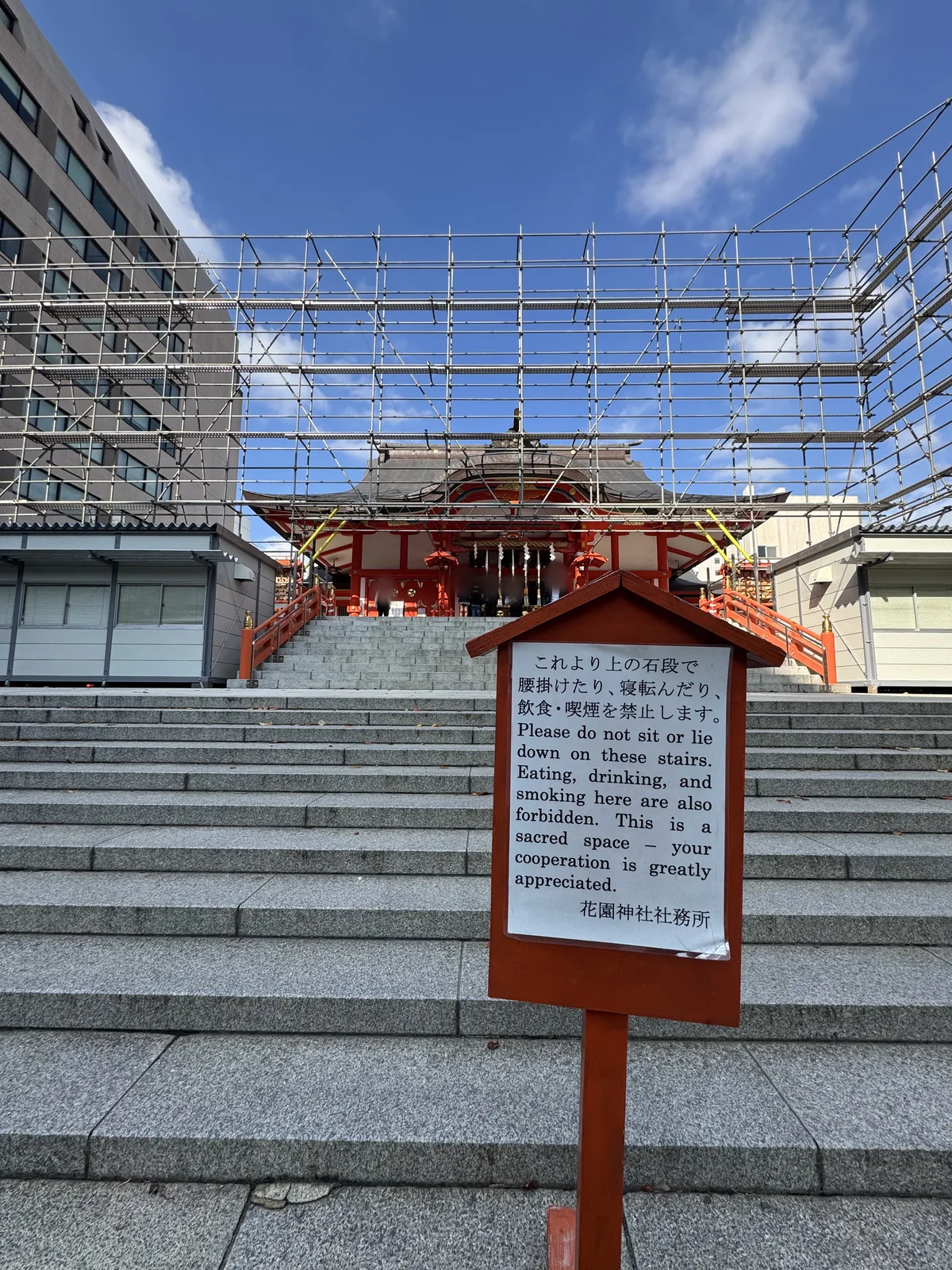
At the bottom of the steps is a sign in Japanese and English. Do not sit, lie down, eat, drink, or smoke on these steps.
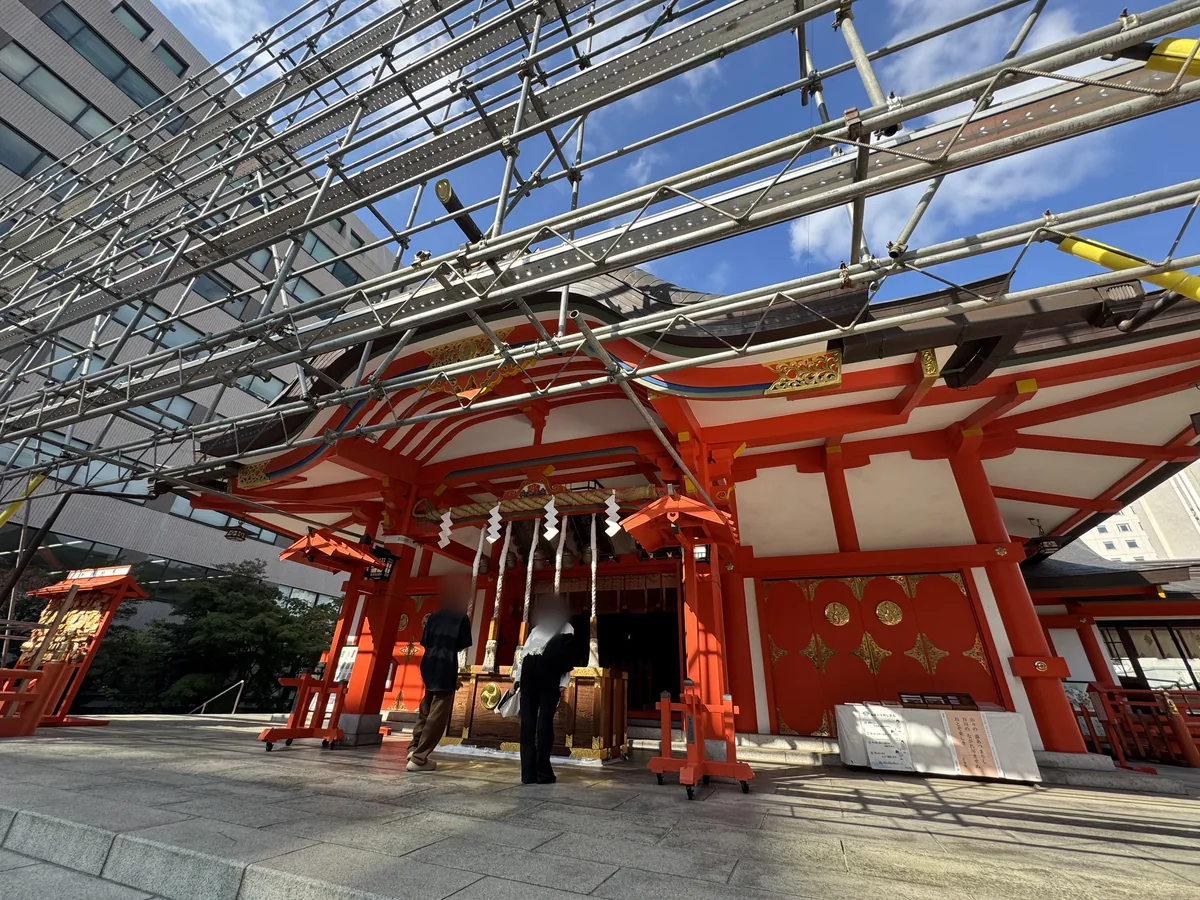
- Make a money offering. The amount is up to you.
- Bow deeply twice.
- Clap your hands twice in front of your chest.
- Finally, bow deeply once.
This etiquette is the same at many other shrines. It is also explained in our Meiji Jingu article, Meiji Jingu (Meiji Shrine) Guide | Access, Hours, Etiquette & Highlights.
Highlights
Map of the grounds
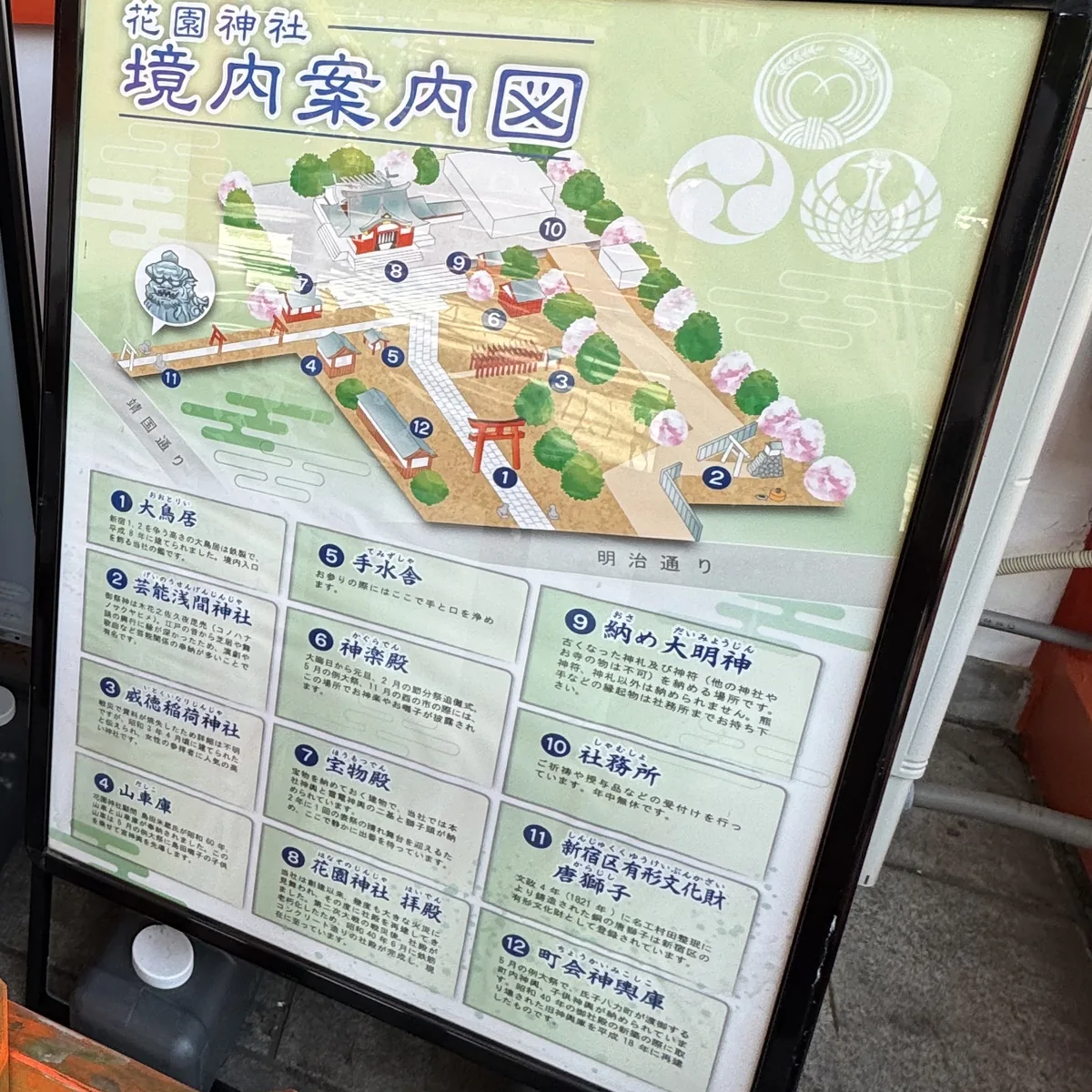
A map of the grounds stands on a signboard beside the shrine buildings. The main places are as follows.
- Grand Torii: A large iron torii, built in 1996. On the map of the grounds, it is shown at the entrance on the Meiji-dori Avenue side.
- Haiden: The hall where people worship. The current shrine buildings, including the haiden, and the shamusho are made of reinforced concrete and were completed in 1965. Before that, Hanazono Shrine suffered major fires many times and rebuilt its shrine buildings after each one.
- Itoku Inari Shrine: A small shrine on the grounds. It is said to have been built around 1928. Red torii offered by worshippers stand in a row.
- Geino Asama Shrine: A small shrine on the grounds. It is known for receiving many offerings from people in the entertainment world, such as theater and music.
- Karajishi: Bronze lion-dog statues made in 1821. They are a Tangible Cultural Property of Shinjuku City.
Place for returning old talismans, and an old notice board
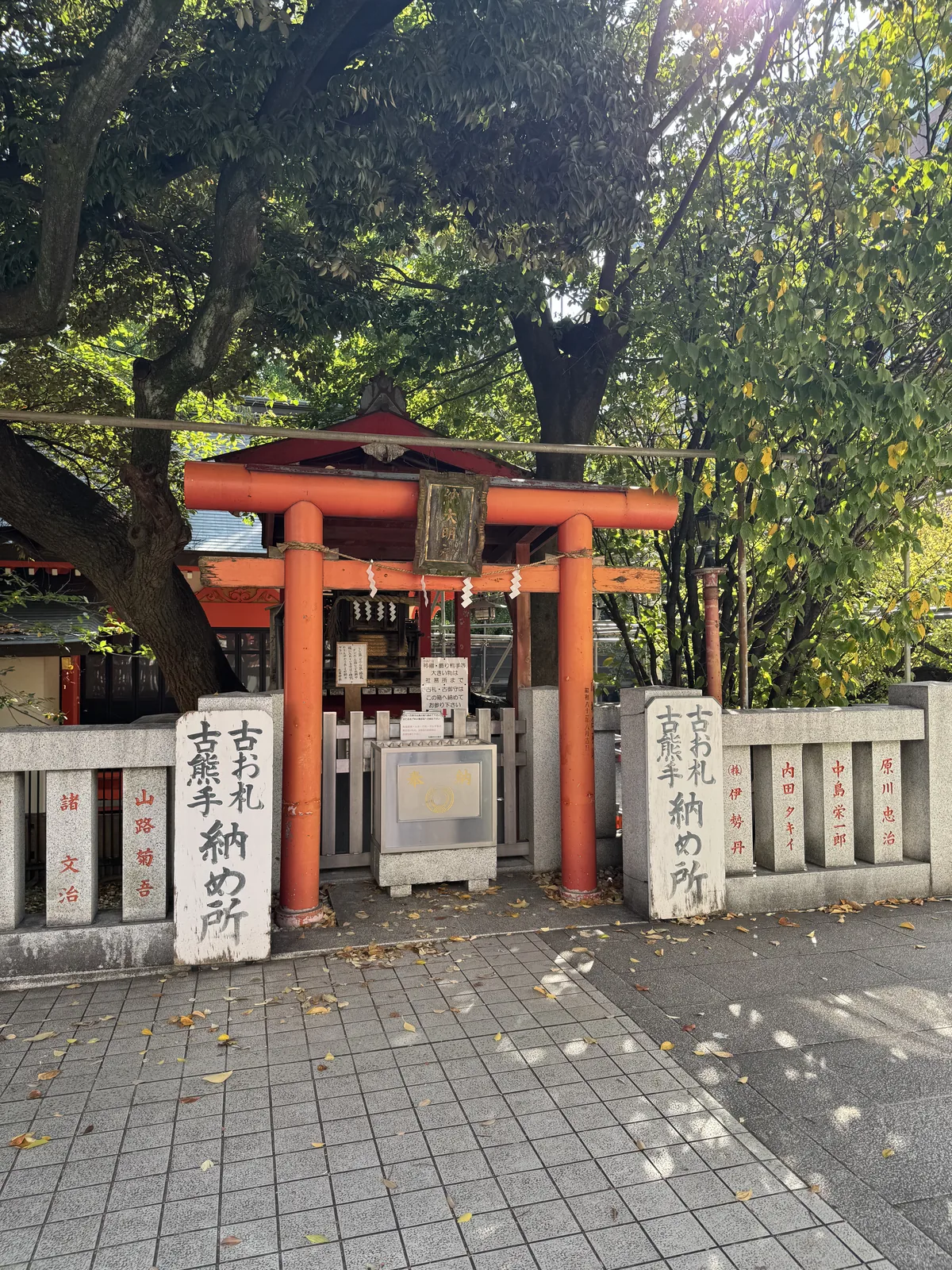
The place where the stone pillars read “古お札 古熊手 納め所” (Furu-ofuda Furu-kumade Osamesho: place to return old talismans and old kumade) is where you return ofuda (paper talismans) that have become old. According to Hanazono Shrine’s official website, only ofuda from this shrine can be returned here; items from other shrines or temples cannot. The official website also asks that lucky charms such as kumade be taken to the shamusho. Because the writing on the stone pillars and the official website say different things, if you are not sure where to return an old kumade, ask at the shamusho.
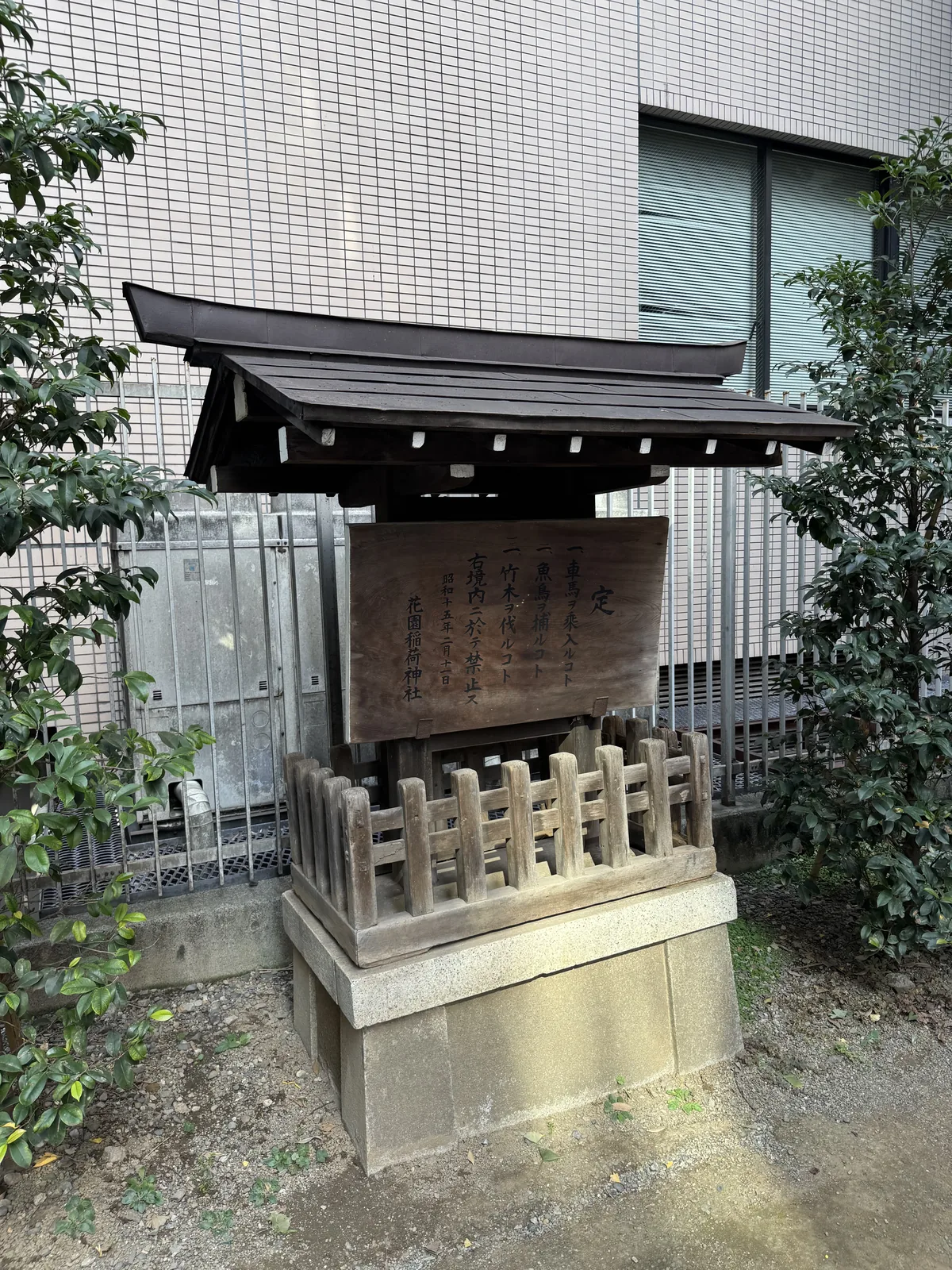
A wooden notice board from the time of the old name, “花園稲荷神社” (Hanazono Inari Jinja), remains on the grounds. Its text prohibits riding into the grounds by vehicle or on horseback, catching fish or birds, and cutting bamboo or trees, and it is dated Showa 15 (1940).
Omikuji and omamori
- Omikuji: There are several kinds, including tsutsu-mikuji (¥100), where you draw one stick from a container, and the fox-shaped kitsune-mikuji (¥500).
- Kumade amulet (¥800): An omamori in the shape of a kumade (lucky bamboo rake), for wishes such as business prosperity. It is available all year round, not only during Tori-no-Ichi.
- Prices are as listed on the official website and may change.
Tori-no-Ichi (Otori-sai) 2026
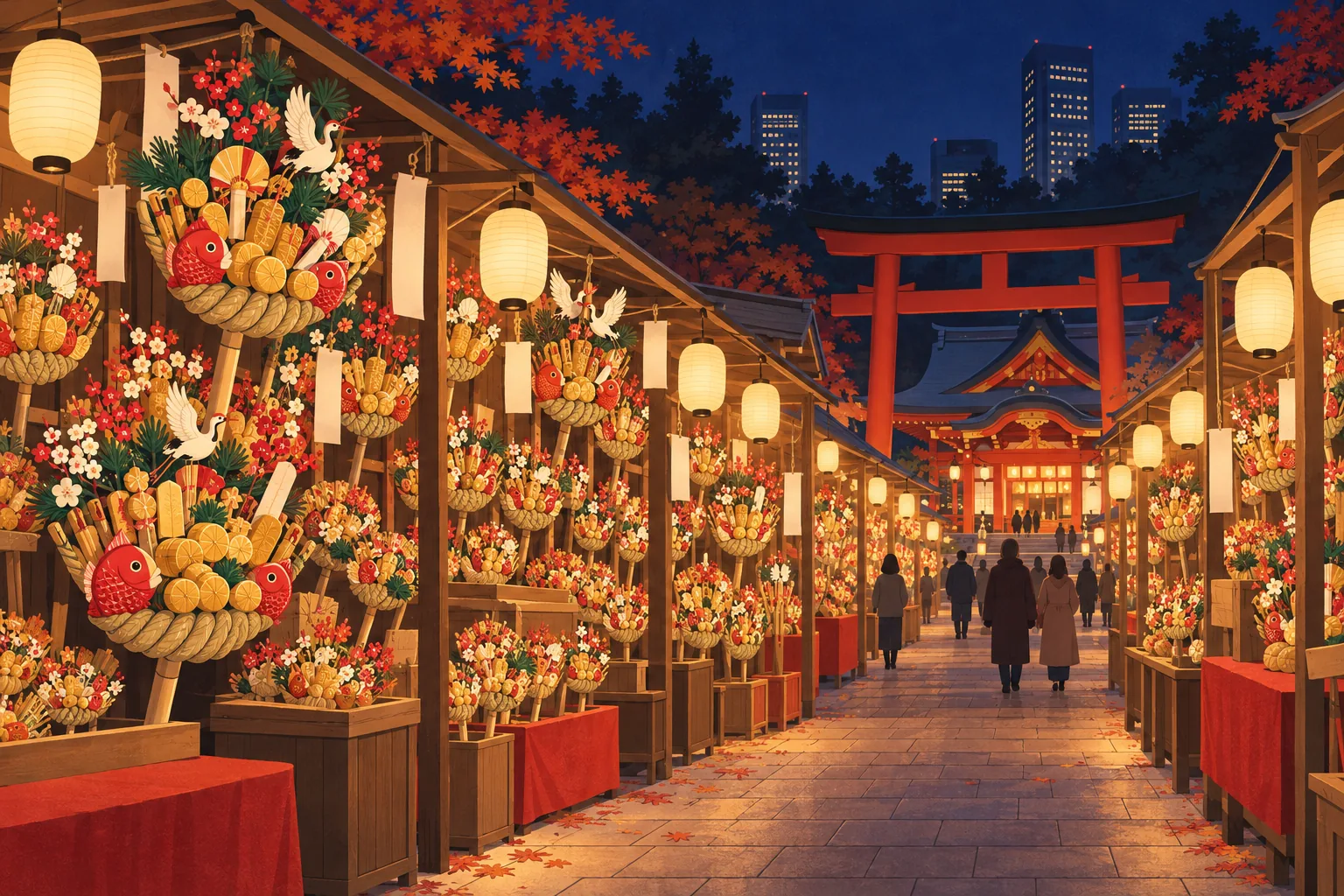
The picture above is an AI-generated image of Tori-no-Ichi. It differs from the actual grounds of Hanazono Shrine and the way the stalls are arranged.
Tori-no-Ichi (Rooster Day Fair) is a Hanazono Shrine festival held every November. Stalls selling kumade (lucky charms shaped like bamboo rakes, for business prosperity) and food stalls line the grounds and the approach to the shrine.

A kumade is a bamboo rake decorated with lucky charms such as koban (gold coins), rice bales, sea bream, and a treasure ship. The picture above is an AI-generated image; the shapes and decorations of the kumade actually sold differ from stall to stall.
In 2026, it takes place on the following 4 days.
| Date | Event | Stall hours |
|---|---|---|
| November 6 (Fri) | Ichi-no-Tori (first Rooster Day) eve festival | From around 15:00 until 24:00 |
| November 7 (Sat) | Ichi-no-Tori (first Rooster Day) main festival | From around 12:00 until 24:00 |
| November 18 (Wed) | Ni-no-Tori (second Rooster Day) eve festival | From around 15:00 until 24:00 |
| November 19 (Thu) | Ni-no-Tori (second Rooster Day) main festival | From around 12:00 until 24:00 |
- There are about 260 stalls. In the table, “until 24:00” means until the end of that same night, when the date changes at midnight.
- During these 4 days, only goshuin (shrine seals) written on paper in advance are available.
Aozora Kotto-ichi (open-air antique market)
An antique market is held on the grounds every Sunday. According to Hanazono Shrine, it runs from sunrise to sunset. However, it is not held on days when the shrine has an event, and it is also not held when it rains.
Good to know
Rules on the grounds
- Do not sit, lie down, eat, drink, or smoke on the stone steps leading up to the haiden (according to the sign on site).
- Hanazono Shrine is a place of prayer. Please do not talk loudly, and do not get in the way of people who are praying.
Other information
- In October 2026, when the photos were taken, there was construction scaffolding on and around the haiden. Official information does not say what the work is or when it will end.
- The Tori-no-Ichi dates and hours are based on Hanazono Shrine's 2026 announcement. Please check the official website before you go.
- To look up maps and transfers, you need mobile data on your smartphone. For how to choose, see eSIM, SIM Card or Pocket Wi-Fi in Japan: How to Choose | 5 Ways to Get Online Compared, What to Check First, and Airport Pickup.
- The two pictures in the Tori-no-Ichi section are AI-generated images. The other images in this article are photos taken in October 2026.