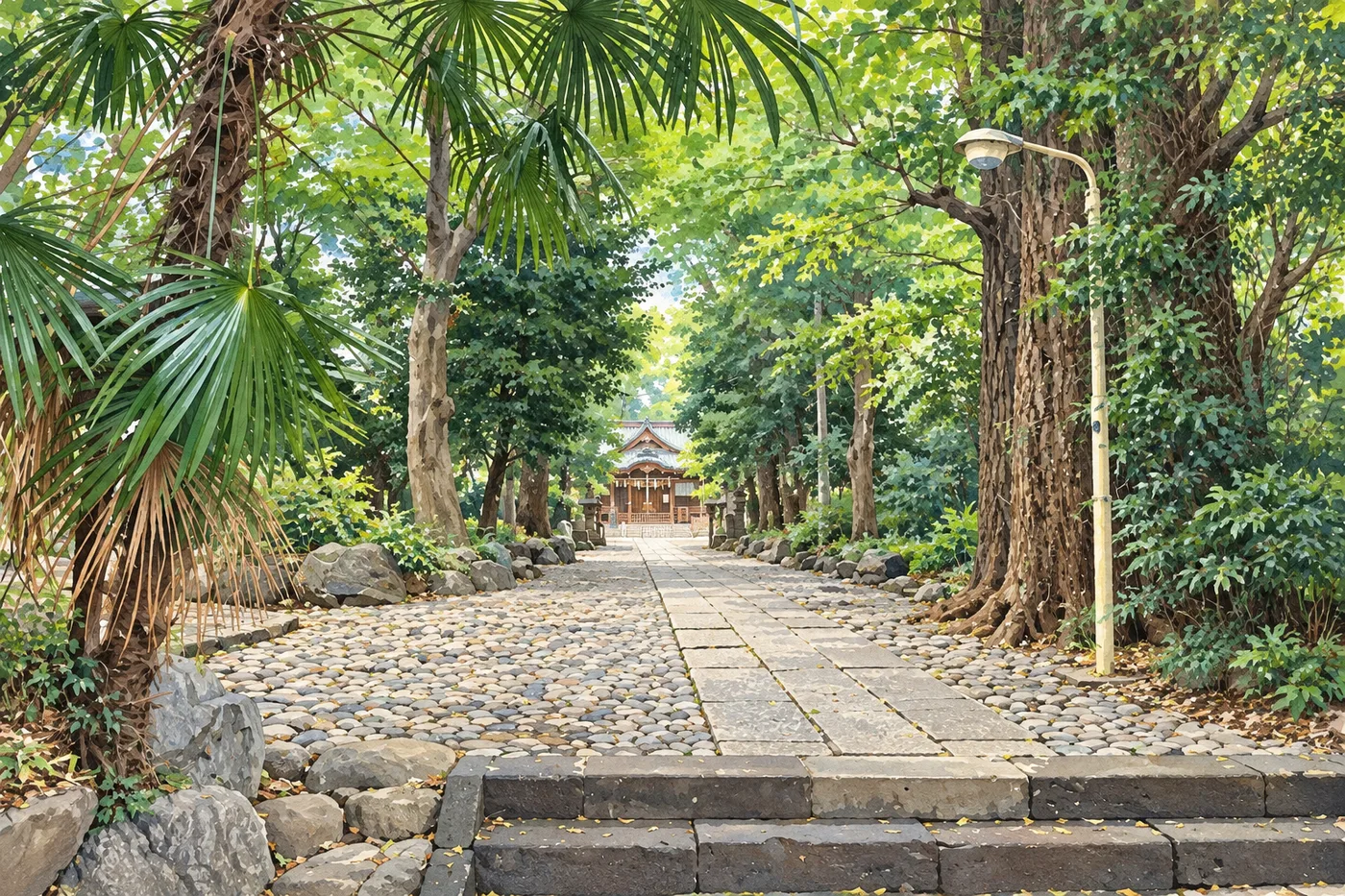
Yoyogi Hachimangu (Yoyogi Hachiman Shrine) Guide | The Shrine in the Film PERFECT DAYS, Toyo Ito's Toilet Below the Stone Steps, Getting There from Yoyogi-Hachiman Station, Goldfish Omamori and Goshuincho, Setsubun and the Annual Grand Festival
Yoyogi Hachimangu Shrine is a Shinto shrine in Yoyogi, Shibuya City, Tokyo. Admission is free, and you can visit and pray at any time of day. It is known as the shrine where the main character spends his lunch breaks in the film PERFECT DAYS, and below the stone steps at the entrance is a THE TOKYO TOILET toilet designed by Toyo Ito. Based on official information, this guide covers how to get there from the station, highlights on the grounds, omamori (amulets) and goshuincho (seal books), and annual events.
Ad · Affiliate This article contains links to partner booking and shopping pages (affiliate links). If you book or buy through these links, the site operator may receive a commission from the partner. Our advertising policy
Overview
Yoyogi Hachimangu (Yoyogi Hachiman Shrine) is a Shinto shrine in Yoyogi, Shibuya City, Tokyo. It stands on a small hill near Yoyogi-Hachiman Station on the Odakyu Line, and its grounds are surrounded by a forest of large trees.
- Admission is free. Anyone can visit and pray, regardless of religion.
- You can visit and pray at any time of day, including at night. The shamusho (shrine office), where you receive omamori (amulets) and other items, has set opening hours.
- According to Yoyogi Hachimangu Shrine, it began in 1212, when the deity Hachiman was ceremonially brought from Tsurugaoka Hachimangu in Kamakura (in today's Kanagawa Prefecture) and a small shrine was built. Hachiman is the deified Emperor Ojin, worshipped as a deity who wards off misfortune and opens the way to good luck.
- It is known as the shrine where the main character spends his lunch breaks in PERFECT DAYS, a film directed by Wim Wenders.
- Below the stone steps at the entrance is a public toilet designed by the architect Toyo Ito. It is one of Shibuya City's THE TOKYO TOILET toilets.
- The grounds contain the remains of a dwelling from the Jomon period.
Getting there
Nearest stations and buses
| Route | To Yoyogi Hachimangu Shrine |
|---|---|
| Yoyogi-Hachiman Station, Odakyu Line | 5-minute walk |
| Yoyogi-koen Station, Tokyo Metro Chiyoda Line | 5-minute walk from the exit toward Yoyogi-Uehara Station |
| Bus from the South Exit of Shibuya Station | Get off at the “Hachiman-shita” stop, then a 1-minute walk |
- Yoyogi-koen Station is a different station from JR Yoyogi Station. Because the names are similar, check the full station name when you search for routes and transfers.
- According to Yoyogi Hachimangu Shrine, buses bound for Hatsudai Station, Nakano Station, or Asagaya stop at “Hachiman-shita.”
- The Chiyoda Line is a Tokyo Metro line, so Tokyo Metro unlimited-ride tickets can be used on it. For details, see Tokyo Subway Ticket (24, 48 and 72 hours) | Prices, where to buy it and how to use Tokyo's unlimited subway pass. They cannot be used on the Odakyu Line.
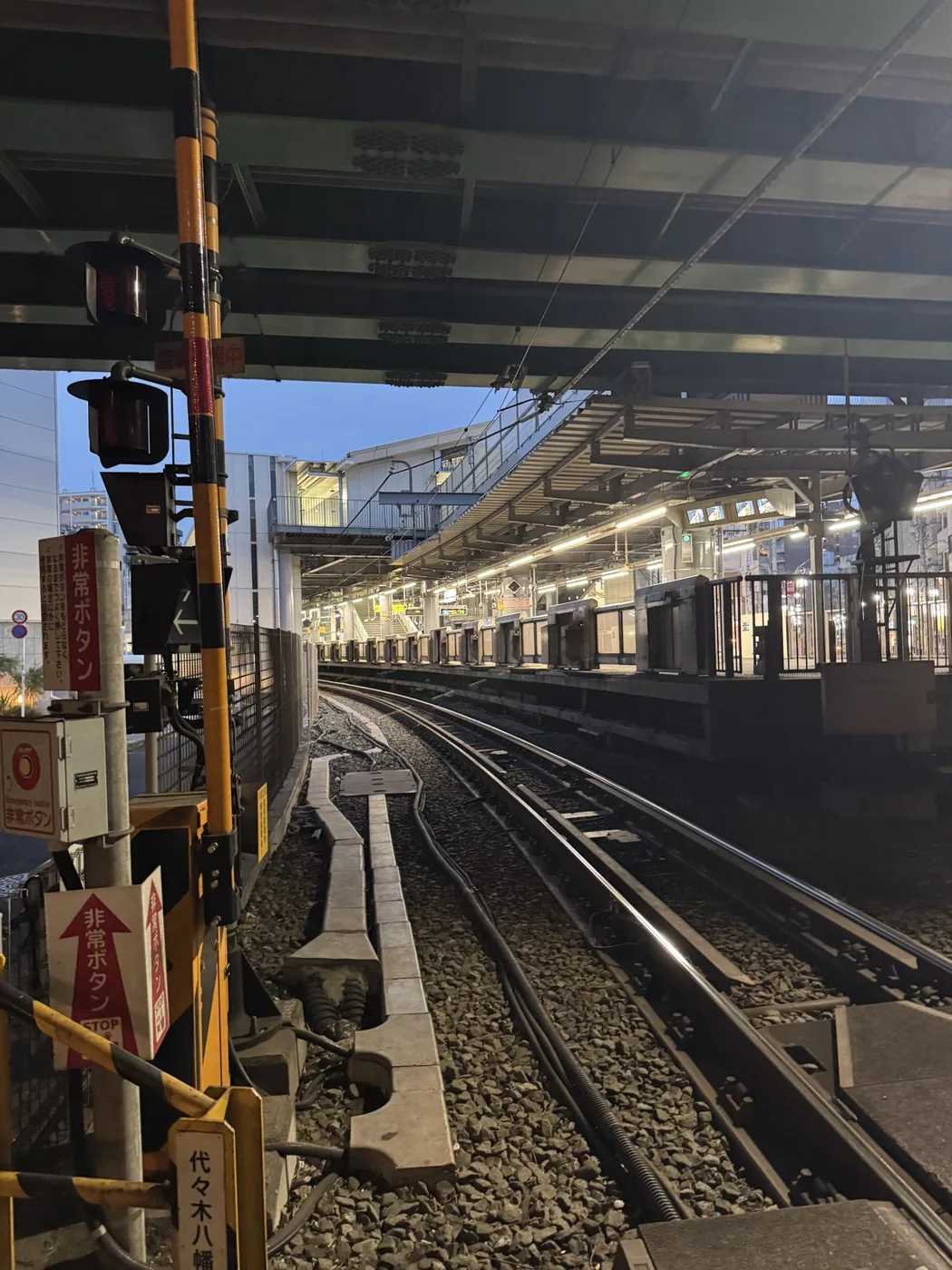
The photo shows the station platform seen from the railroad crossing next to Yoyogi-Hachiman Station. A sign reading “代々木八幡” (Yoyogi-Hachiman) is attached to a post of the crossing.
The entrance stone steps
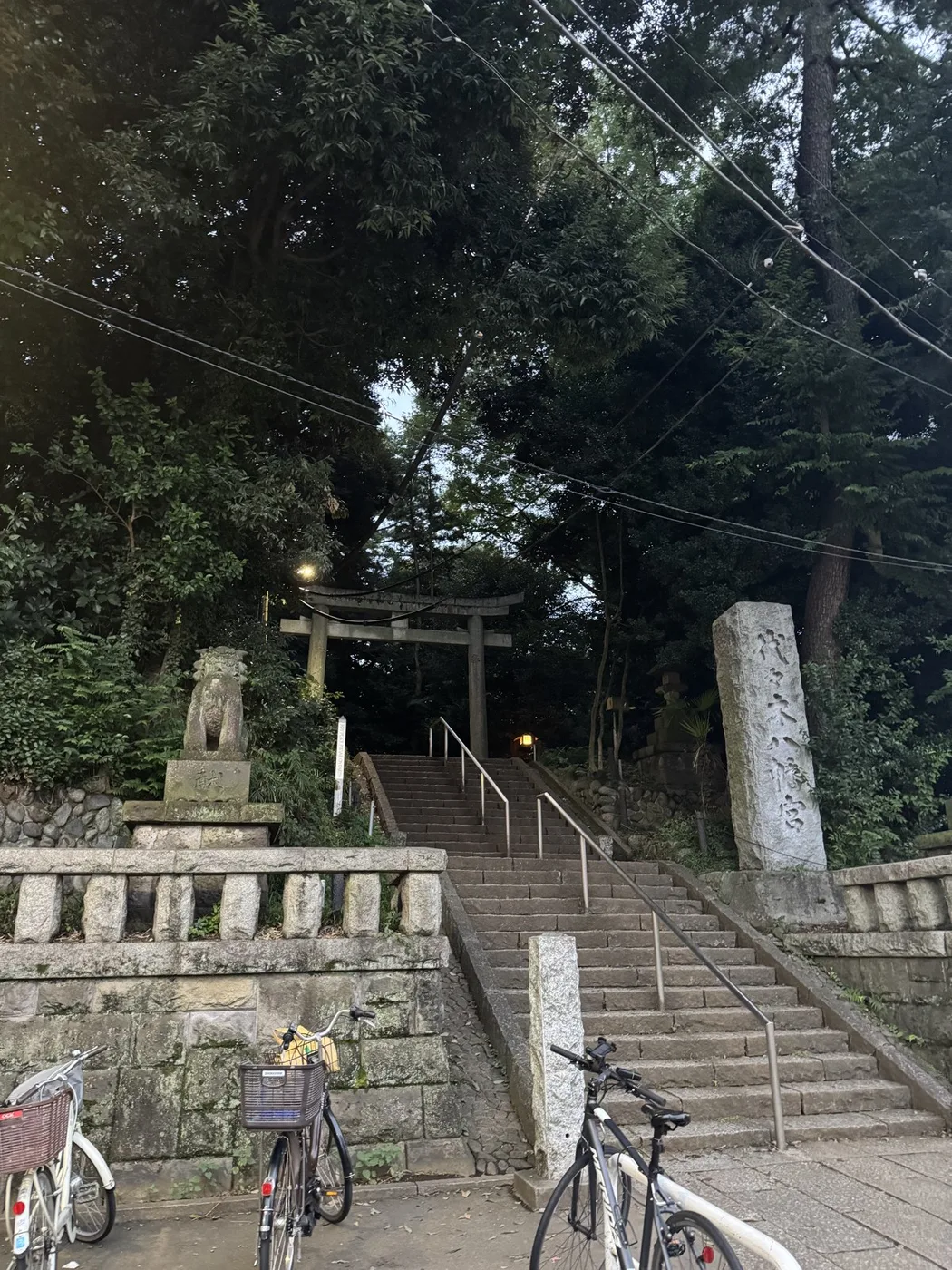
This is the entrance facing Yamate-dori. A stone pillar carved with “代々木八幡宮” (Yoyogi Hachimangu) stands here, and a stone torii (shrine gate) stands at the top of the steps. The photo was taken from the sidewalk in front of the entrance.
- You can also reach the main hall without using the steps. Walk up the sloping road, which cars also use. According to Yoyogi Hachimangu Shrine, this road has no stairs. The location of the vehicle entrance is shown on the map on the access page of the official website.
- There is a public toilet along Yamate-dori below the steps (explained in the “Highlights” section).
Highlights
The shrine in the film PERFECT DAYS
PERFECT DAYS is a film directed by Wim Wenders and starring Koji Yakusho. It depicts the daily life of Hirayama, a man who cleans public toilets in Shibuya City. In the film, Hirayama eats lunch under the trees of a shrine and uses his camera to photograph the sunlight filtering through the leaves (komorebi).
An article on nippon.com, a website that introduces Japan, identifies the place where Hirayama spends his lunch breaks as Yoyogi Hachimangu Shrine. The grounds are still a place where local people come to pray. If you walk around recalling scenes from the film, please take care not to get in the way of worshippers.
The “Yoyogi-Hachiman” toilet below the stone steps
Below the entrance stone steps, along Yamate-dori, is a public toilet designed by the architect Toyo Ito. It is one of the THE TOKYO TOILET toilets run by Shibuya City, and its name on the official THE TOKYO TOILET website is “Yoyogi-Hachiman Public Toilet.”
- The official THE TOKYO TOILET website compares the shape of this toilet to three mushrooms growing from the forest of Yoyogi Hachimangu Shrine. Its English title is “Three Mushrooms.”
- Yoyogi Hachimangu Shrine also asks worshippers to use the toilet along Yamate-dori below the stone steps. The toilet inside the shamusho can be used only by people receiving a prayer ritual (gokito).
- There are also THE TOKYO TOILET toilets near Yoyogi Park. The “transparent toilets,” whose walls turn opaque when you lock the door, are introduced in Yoyogi Park Guide | Free Tokyo Park Open at All Hours, Access from Harajuku Station and Yoyogi-koen Station, Events at Event Square (October–November 2026), Yoyogi Forest of Lights Illumination, Cycling Center, Toilets and Rules.
The sando and the main hall
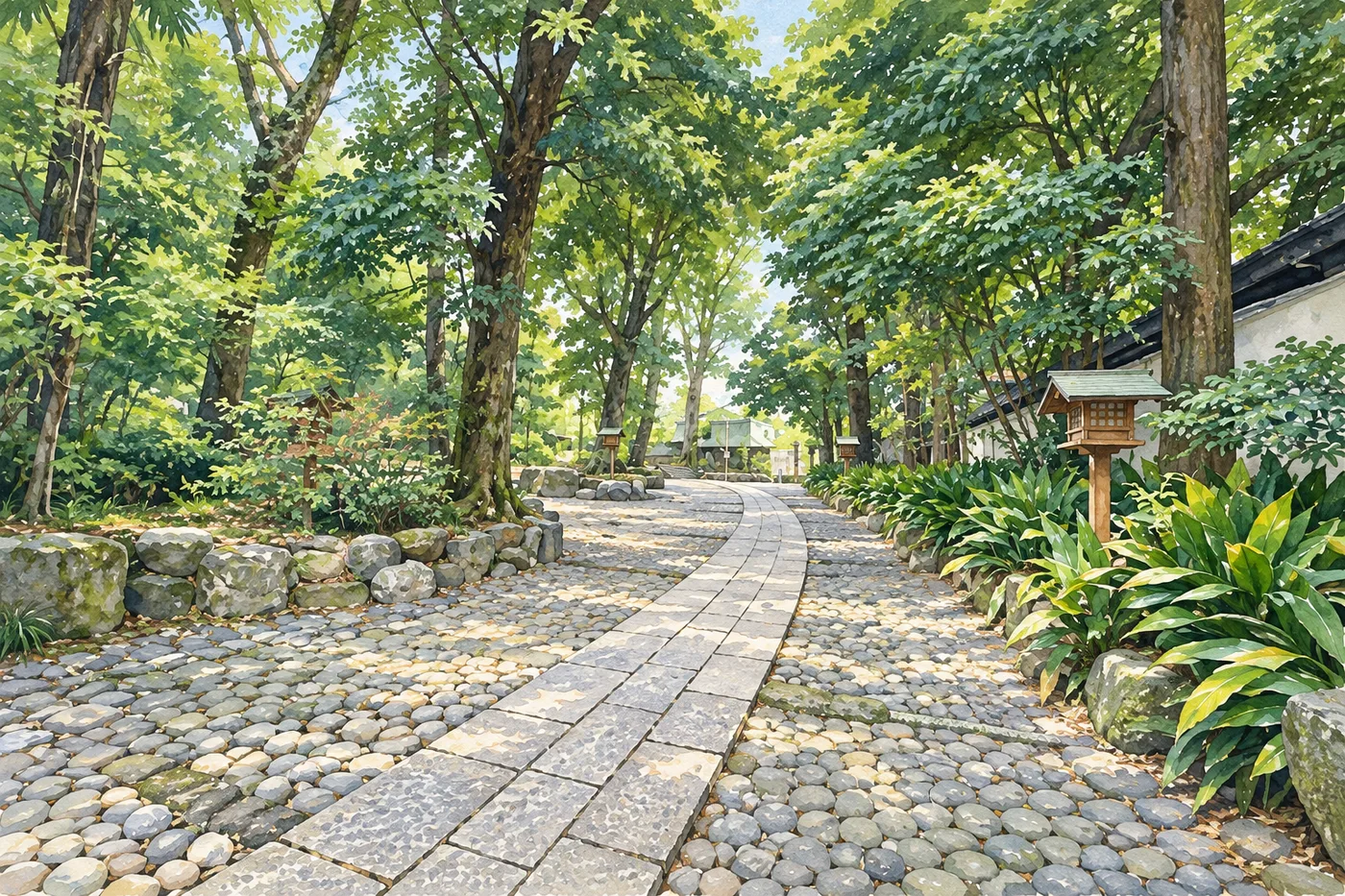
At the top of the stone steps, a sando (approach path) paved with round stones continues. According to Yoyogi Hachimangu Shrine, the forest on the grounds is a valuable natural woodland within Shibuya City. Many kinds of trees grow there, including sudajii (Japanese chinquapin), camphor, zelkova, and ginkgo.
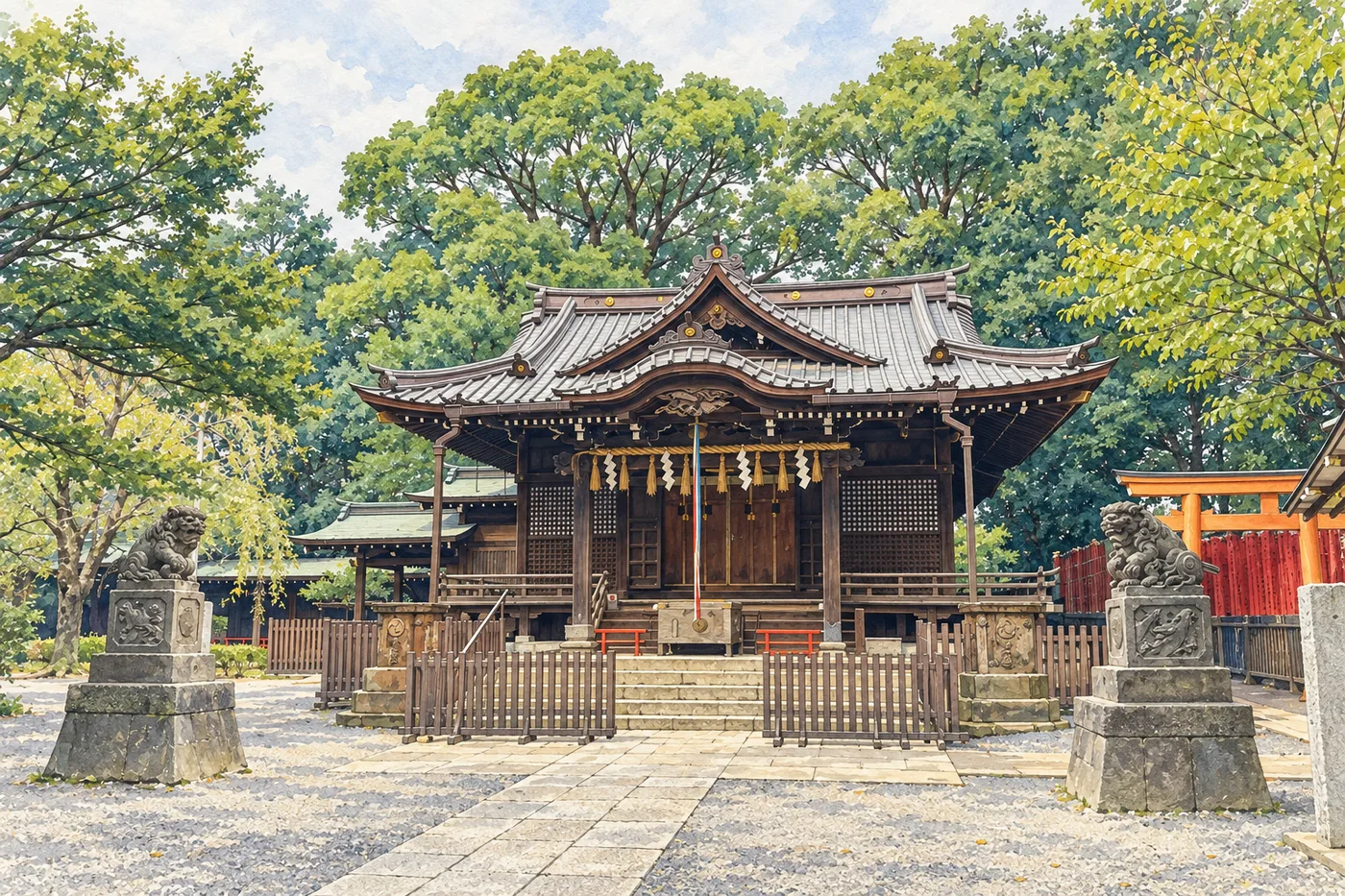
At the end of the sando is the main hall, where people pray. How to pray is explained in the “Step by step” section.
Shusse Inari Shrine
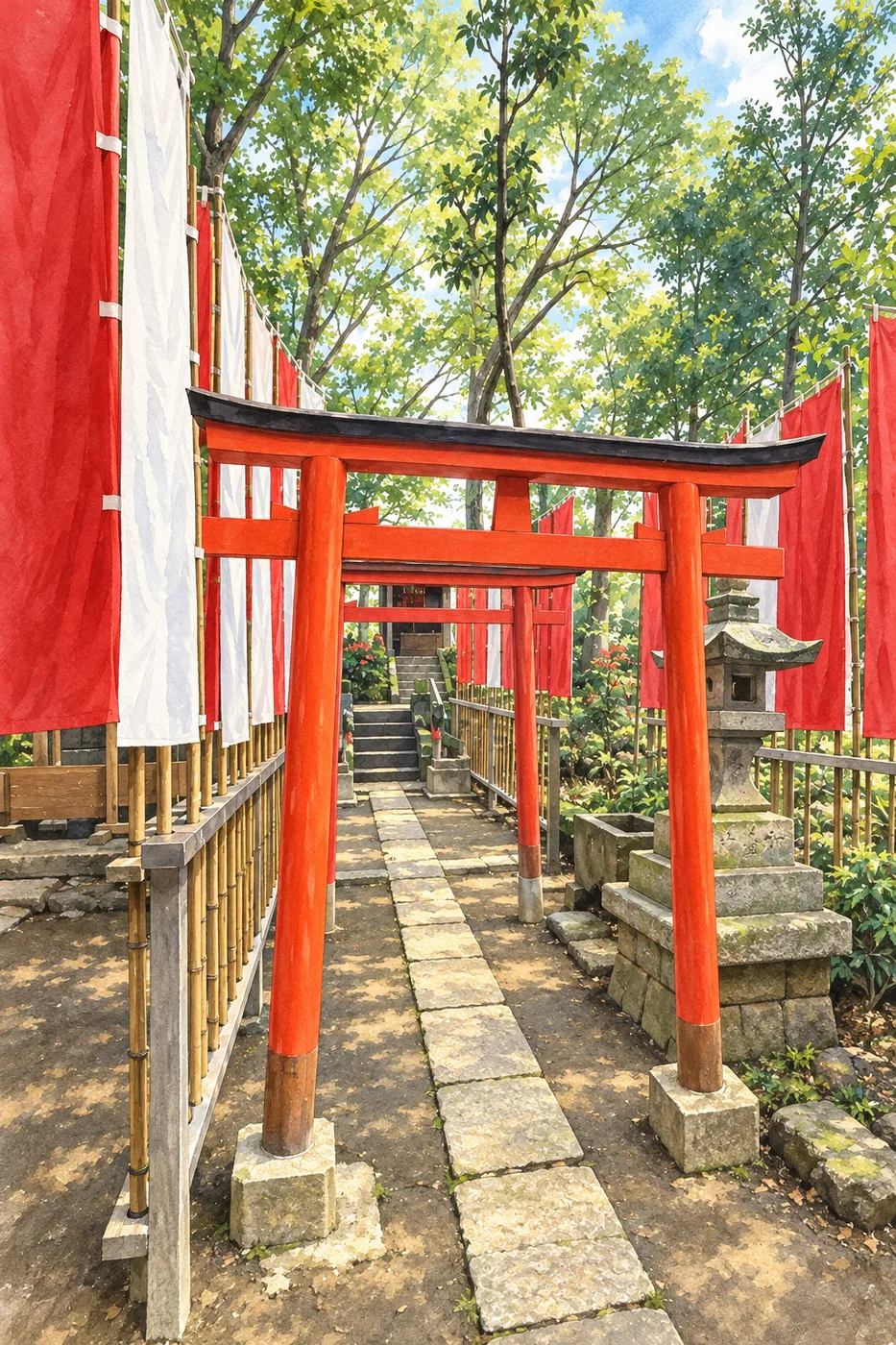
On the right side of the main hall, beyond a row of red-and-white nobori (long, narrow cloth banners), is a small shrine called Shusse Inari Shrine. People pray here for career advancement and business prosperity.
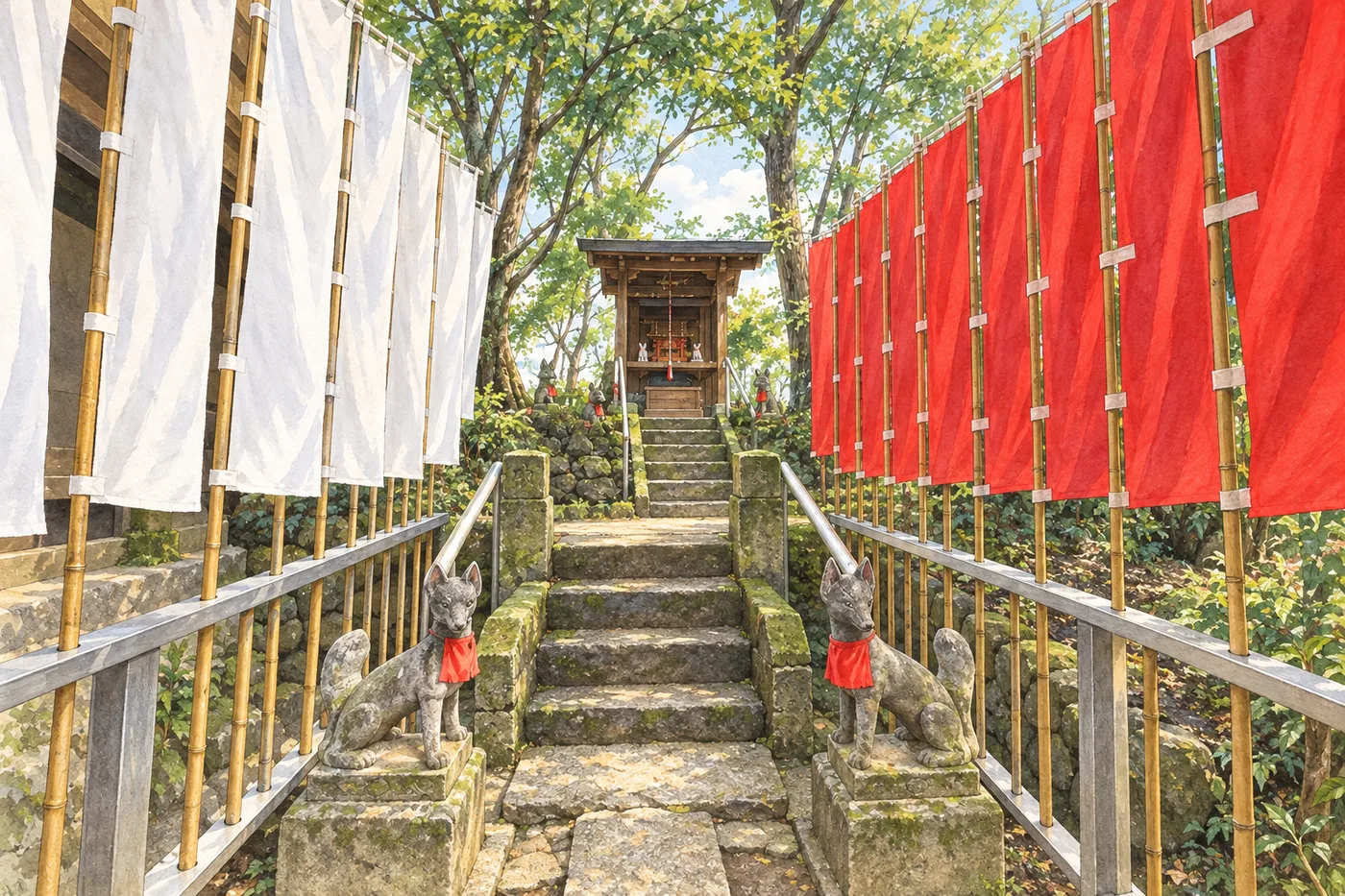
The nobori are offered every year in time for the Hatsuuma Festival of Shusse Inari Shrine (a festival held on the first Day of the Horse in the second month of the old lunisolar calendar). The illustrations do not show the writing on the nobori, but the real nobori have writing on them.
The sacred tree
Near the shamusho stands a camphor tree wrapped with a shimenawa (sacred rope). It is the sacred tree of Yoyogi Hachimangu Shrine (a tree believed to be a dwelling place of the deity). To protect the tree, the shrine asks visitors not to put coin offerings into the hollow of the tree and not to hug the tree for a long time.
Remains of a Jomon-period dwelling
According to Yoyogi Hachimangu Shrine, an excavation was carried out on the grounds in 1950, and the remains of a Jomon-period dwelling were found together with pottery and stone tools. The dwelling has been reconstructed and stands on the grounds, and some of the finds are kept in the exhibition room next to the kaguraden (sacred dance stage). The official website does not state the hours when you can visit the exhibition room.
GO TOKYO, the official Tokyo travel site of the Tokyo Metropolitan Government, notes that this site is designated as a cultural property of Shibuya City.
Annual events
The main events are as follows (from the “Main annual events” page of Yoyogi Hachimangu Shrine).
| When | Event |
|---|---|
| January 1 | Hatsumode (the first shrine visit of the year). Prayer rituals in the main hall are available from 0:00 on January 1 |
| February 3 | Setsubun Festival (from 15:00) and mamemaki, or bean throwing (from 15:30). In some years, the date changes according to the calendar |
| First Day of the Horse in the second month of the old lunisolar calendar (March 21 in 2026) | Hatsuuma Festival of Shusse Inari Shrine |
| 4th Sunday of May | Goldfish Festival (Kingyo Matsuri). There are goldfish scooping, ring toss, and food stalls |
| June 30 and December 30 | Oharae (great purification, a ritual to purify the sins and impurities of the past half year). From around the middle of each of these months, a chinowa (grass ring, a large ring made of grass that you pass through to purify yourself) is set up in front of the main hall |
| September 22 and September 23 | Yoimiya Festival (eve festival) and Annual Grand Festival. Stalls line the grounds. Each neighborhood's mikoshi (portable shrine) is carried around its own neighborhood, and on September 23, these mikoshi enter the grounds. There are traffic restrictions around the shrine |
| November | Shichi-Go-San. Many families come to receive prayer rituals to celebrate their children's growth |
Step by step
How to pray
A torii is a gate that marks the entrance to a shrine. People who come to pray bow lightly in front of the torii when they enter and when they leave. In front of the main hall, pray in the following order.
- Make a money offering. The amount is up to you.
- Bow deeply twice.
- Clap your hands twice in front of your chest.
- Finally, bow deeply once.
According to Yoyogi Hachimangu Shrine, there is no set order for going around the grounds. You may pray at the main hall and then visit Shusse Inari Shrine and other spots. Shrine etiquette, including how to purify your hands and mouth with water, is also explained in detail in our Meiji Jingu (Meiji Shrine) article, Meiji Jingu (Meiji Shrine) Guide | Access, Hours, Etiquette & Highlights.
Opening hours
Hours for visiting
- According to Yoyogi Hachimangu Shrine, you can visit and pray at any time of day, including at night.
- The shamusho (the window where you receive omamori, goshuincho, and other items) is open from 9:00 to 17:00. The official website does not state the days when the shamusho is closed.
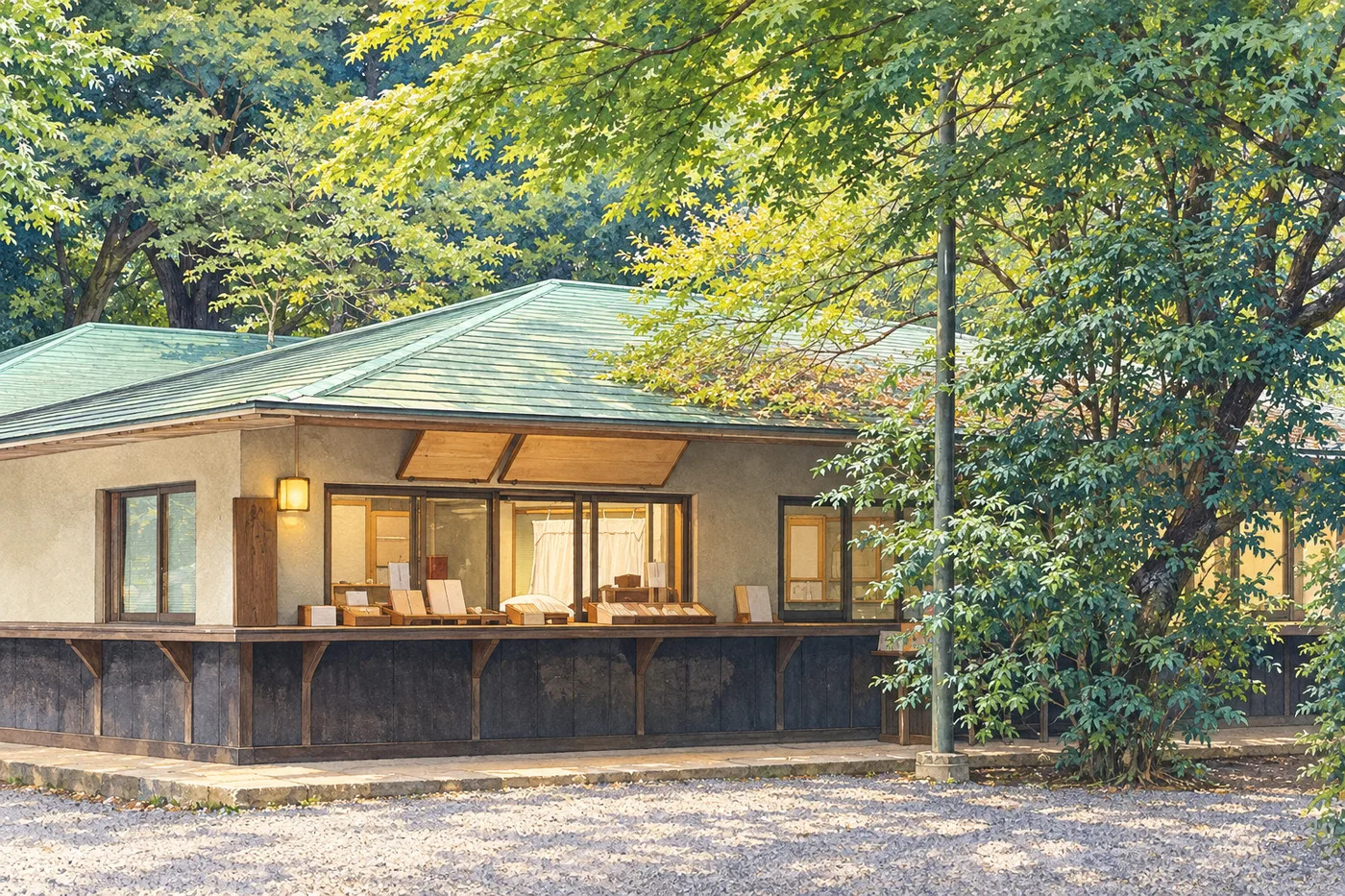
The illustration shows the building on the grounds with the window where you receive omamori and other items.
What to buy
Omamori (amulets)
These are items introduced on the “Juyohin” (items offered by the shrine) page of the official Yoyogi Hachimangu Shrine website. Prices are not listed on the official website.
- Goldfish omamori: Because the Japanese word for goldfish (kingyo) is written with the characters for “gold” and “fish,” goldfish are said to be linked to luck with money. These omamori are made in time for the Goldfish Festival in May and are usually available from around Golden Week (a holiday period from late April to early May). They are available only while supplies last. According to a notice on the official website viewed on October 21, 2026, this year's goldfish omamori were still available, but the ones with bubble decorations, the ones made of chirimen (crepe fabric), and the ones with tassels had already run out.
- Pastel omamori (Pastel mamori): Small omamori pouches that you can choose from many colors. Inside each pouch is a Yoyogi Hachimangu Shrine omamori for good health.
- Omamori for relationships (Enmusubi mamori) and omamori for happiness (Kofuku no omamori): The Enmusubi mamori is a magatama (comma-shaped bead) omamori made of rose quartz. The Kofuku no omamori is a crystal with a dragon decoration.
- Pouch omamori (Kinchaku mamori): Omamori in the shape of a small pouch. Gold is for luck with money, pink for happiness, and silver for luck in competition.
- Goshuin mamori: A sticker omamori that you can put on a smartphone or tablet.
Goshuincho and goshuin
- Goshuincho (seal book): Its wooden cover is carved with the words of the first article of the Goseibai Shikimoku, a law code of the Kamakura period.
- Goshuin (a shrine seal: a keepsake of your visit, for which the shrine's name is written in ink and a seal is stamped): The official website does not state the hours when goshuin are given or the amount of the offering. Ask at the window while the shamusho is open.
Itinerary
Combining your visit with Yoyogi Park
Yoyogi Hachimangu Shrine and Yoyogi Park are both within walking distance of Yoyogi-Hachiman Station and Yoyogi-koen Station. According to the official Yoyogi Park information, it is a 6-minute walk from Yoyogi-Hachiman Station to Yoyogi Park.
- The entrances, highlights, and weekend events of Yoyogi Park are explained in Yoyogi Park Guide | Free Tokyo Park Open at All Hours, Access from Harajuku Station and Yoyogi-koen Station, Events at Event Square (October–November 2026), Yoyogi Forest of Lights Illumination, Cycling Center, Toilets and Rules.
- Meiji Jingu is next to Yoyogi Park. For details, see Meiji Jingu (Meiji Shrine) Guide | Access, Hours, Etiquette & Highlights.
Other THE TOKYO TOILET toilets
There are many THE TOKYO TOILET toilets in Shibuya City. The toilets that Hirayama cleans in the film PERFECT DAYS are among them. Their locations and designers are shown on the map on the official THE TOKYO TOILET website. They are public toilets, so if you go to see them, take care not to get in the way of people using them.
Good to know
Rules on the grounds (from the official Yoyogi Hachimangu Shrine website)
- Taking photos or videos on the grounds requires the shrine's permission in advance, except for personal use. Depending on the content, date, and time, permission may not be granted.
- You cannot use the grounds solely to take photos for Shichi-Go-San, coming-of-age ceremonies, or weddings. People receiving a prayer ritual can have photos taken by a professional photographer in the main hall.
- Do not put coin offerings into the hollow of the sacred camphor tree, and do not hug it for a long time.
Other information
- The event dates are based on the “Main annual events” page of the official website, viewed on October 21, 2026. Check the official website before you go.
- To look up maps and transfers, you need mobile data on your smartphone. eSIM, SIM Card or Pocket Wi-Fi in Japan: How to Choose | 5 Ways to Get Online Compared, What to Check First, and Airport Pickup explains how to choose.
- The images of the sando, the main hall, Shusse Inari Shrine, and the building with the service window on the grounds are illustrations generated by AI. Because taking photos on the grounds requires the shrine's permission, except for personal use, we show them instead of photos. The images of the entrance stone steps and the station are photos taken from the street outside the grounds.