Emergency Numbers in Japan | Police 110, Ambulance 119, and Help in English
The numbers to call if you have an accident, fall ill suddenly, or have something stolen while traveling, plus helplines that answer in English, Chinese, and Korean around the clock. Save them to your phone before you leave.
Overview
Japan's emergency numbers are 110 for the police and 119 for fire and ambulance. Both work anywhere in the country and can be called from a mobile phone. If you are not confident in Japanese, the Japan Visitor Hotline run by the Japan National Tourism Organization (JNTO), 050-3816-2787, answers in English, Chinese, and Korean 24 hours a day and can help with accidents, sudden illness, and disasters.
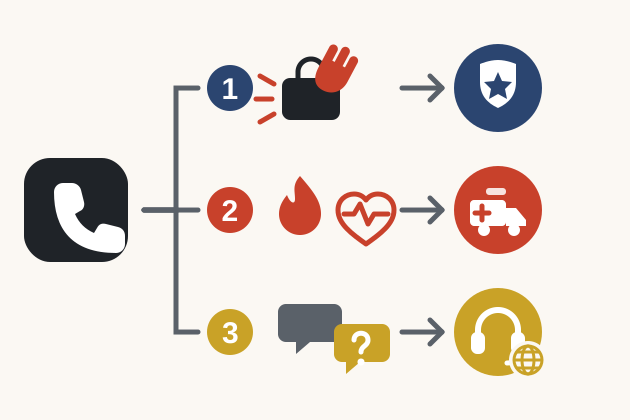
- Crime, an accident or theft: call the police.
- Fire, sudden illness or serious injury: call fire and ambulance.
- When you need language help: call the multilingual hotline.
Your options
| Situation | Who to call |
|---|---|
| Crime, accidents, theft | Police 110 |
| Fire and ambulance (sudden illness, serious injury) | 119 |
| Emergencies where you need language help, and tourist information | JNTO Japan Visitor Hotline 050-3816-2787 (from a phone outside Japan: +81-50-3816-2787). English, Chinese, and Korean, 24 hours a day, every day of the year |
| Police helpline in English (Tokyo) | 03-3501-0110 (24 hours) |
| Lost property (police) | 0570-550-142 (this is the Lost and Found Center of the Tokyo Metropolitan Police Department, and it covers Tokyo only. Elsewhere in Japan, contact the lost property desk of the police in that prefecture.) |
| General police information (Tokyo; English and other languages) | 03-3503-8484 |
| Tourist information (JNTO TIC) | 050-3416-0010 (daily, 9:00-17:00) |
Step by step
When you call 110 or 119
- Stay calm and say where you are. If you do not know the address, the name of a station or a building helps, and so does the address plate posted on a utility pole or a vending machine.
- Say briefly what has happened: an accident, someone injured, a fire, a theft.
- If you cannot speak Japanese, say "English, please" in English. Asking someone nearby, or the hotel front desk, to take over the call is another sure way to get through.
Using a koban
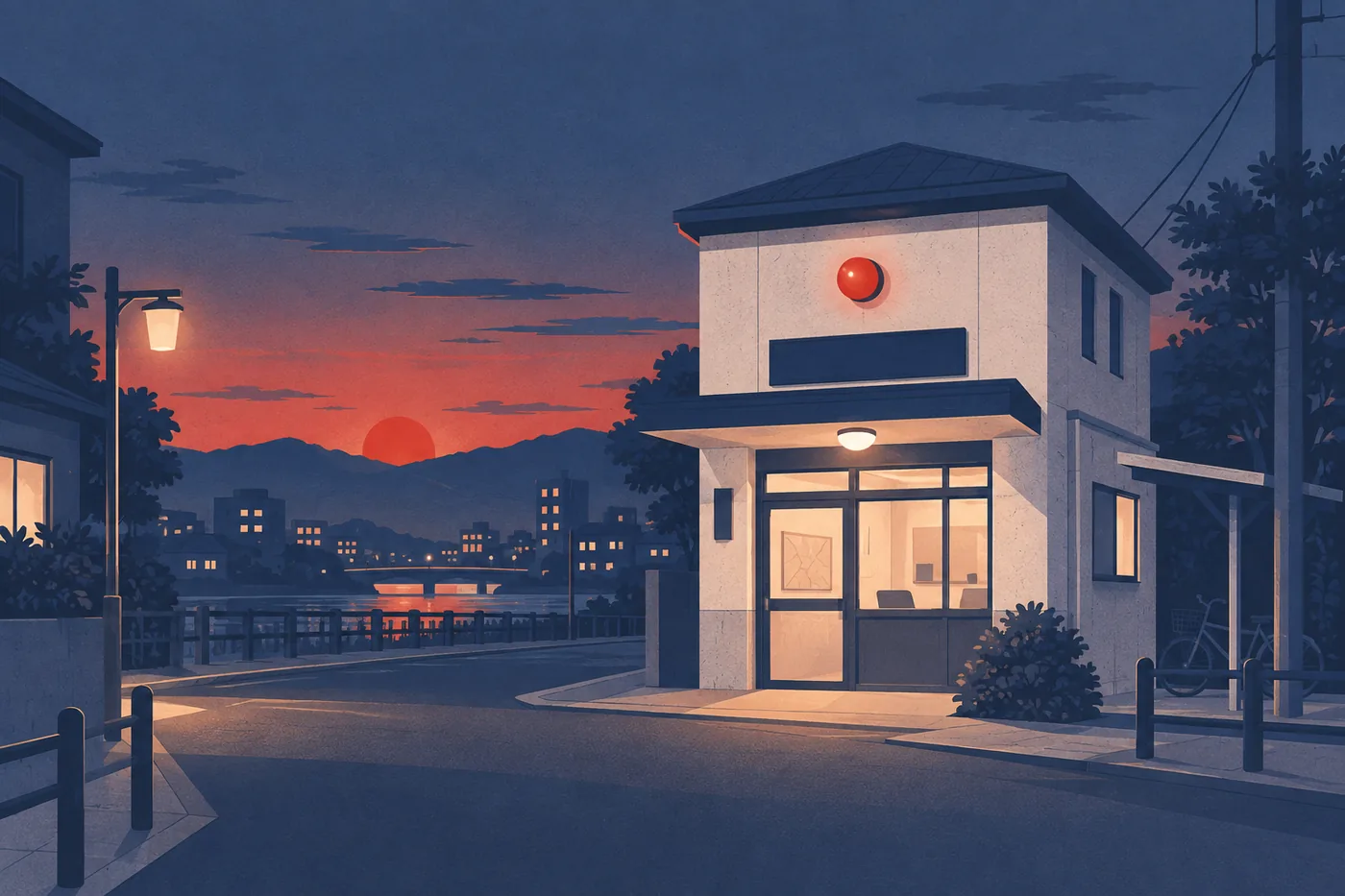
Small local police boxes, called koban and usually signed "KOBAN" or 交番, are found all over Japanese towns and cities. Officers there can give you directions, take a report of lost property, and take a theft report. You need proof that you reported the loss to the police in order to have a passport reissued or to make an insurance claim, so if something is stolen or lost, report it at a koban or a police station.
Finding a hospital
The Japan Tourism Agency publishes a multilingual guide to finding a hospital when you feel unwell. The JNTO hotline can also point you to medical facilities.
Costs
Calls to 110 and 119 are free.
Riding in an ambulance is generally free, but examination and treatment at the hospital are not. Arranging overseas travel insurance before you leave home is a sensible precaution.
Good to know
- Information about earthquakes, typhoons, and other disasters is available in several languages through Safety Tips, an app produced under the supervision of the Japan Tourism Agency, and through NHK WORLD-JAPAN.
- Carry one copy of your passport with you and leave another where you are staying; if the passport is lost, everything moves faster.
- Note down the contact details of your own country's embassy or consulate before you leave as well.