Shinjuku Central Park and Juniso Kumano Shrine Guide | Getting There from Tochomae Station and Shinjuku Station, Park Facilities and Rules, Kumano Shrine History and Worship
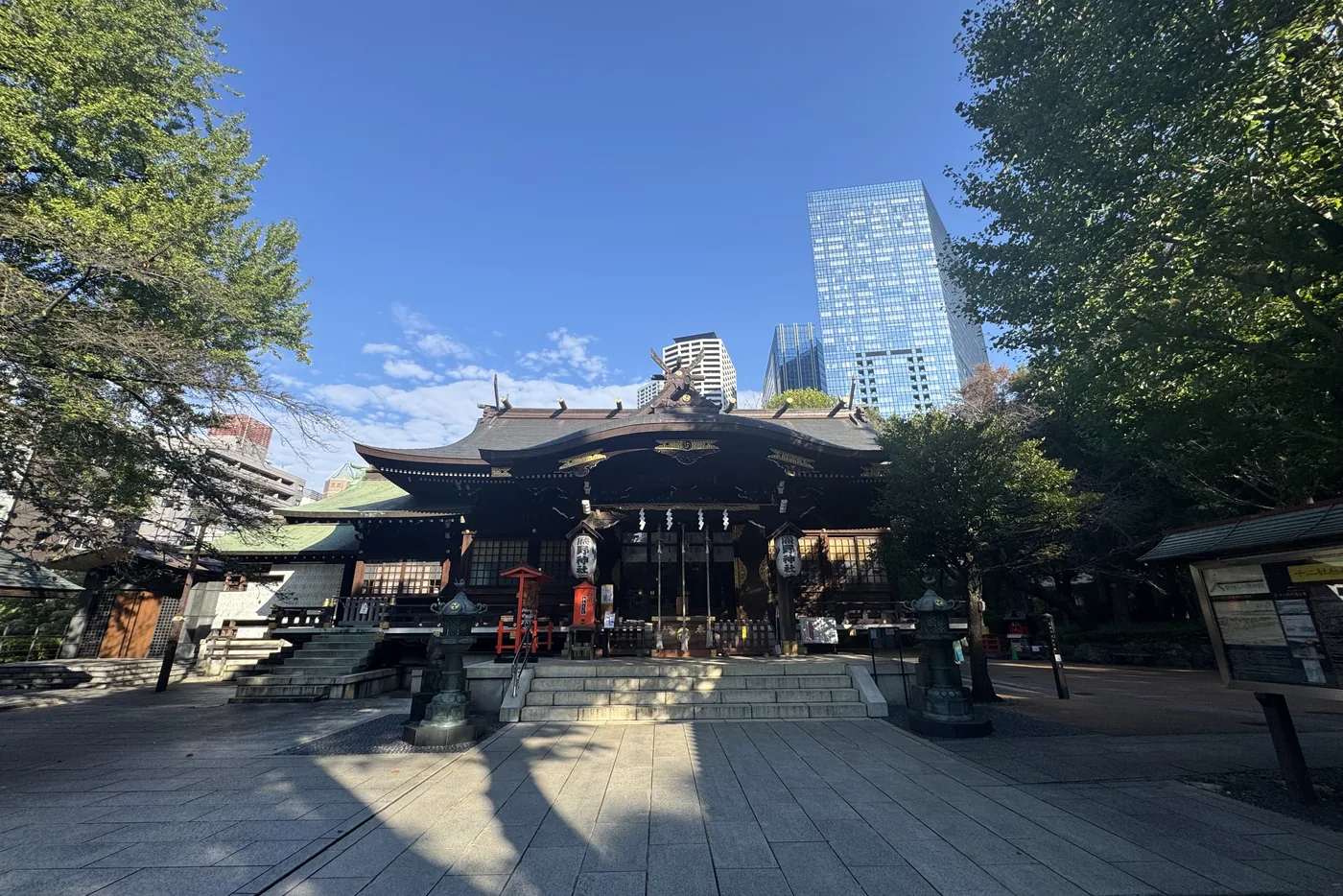
Shinjuku Central Park, just west of the Tokyo Metropolitan Government Building, is the largest park run by Shinjuku City, and admission is free. This guide covers how to get there, the park's facilities and rules, the closure of the lawn plaza in autumn 2026, and the history and worship etiquette of Juniso Kumano Shrine next to the park, using official information, photos taken in the shrine grounds, and illustrations of the park.
Ad · Affiliate This article contains links to partner booking and shopping pages (affiliate links). If you book or buy through these links, the site operator may receive a commission from the partner. Our advertising policy
Overview
Shinjuku Central Park is a park in the high-rise district of Shinjuku, Tokyo. It is just west of the Tokyo Metropolitan Government Building.
- According to the park's official website, it is the largest of the parks run by Shinjuku City, covering about 88,000 square meters. It opened in 1968.
- Admission is free, and the park is open every day.
- Next to the park is a shrine called Juniso Kumano Shrine. It is an old shrine said to date back to the Muromachi period.
Getting there
| Station | Line | To the park |
|---|---|---|
| Tochomae Station | Toei Oedo Line | 1 min on foot |
| Nishi-Shinjuku Station | Tokyo Metro Marunouchi Line | About 5 min on foot |
| Shinjuku Station | JR, Odakyu Line, Keio Line | About 10 min on foot |
- These walking times are from the park's official website.
- There is no parking lot in the park.
- If you travel by Tokyo Metro or Toei Subway, you can also use an unlimited-ride subway ticket. For details, see Tokyo Subway Ticket (24, 48 and 72 hours) | Prices, where to buy it and how to use Tokyo's unlimited subway pass.
Entrance to Juniso Kumano Shrine
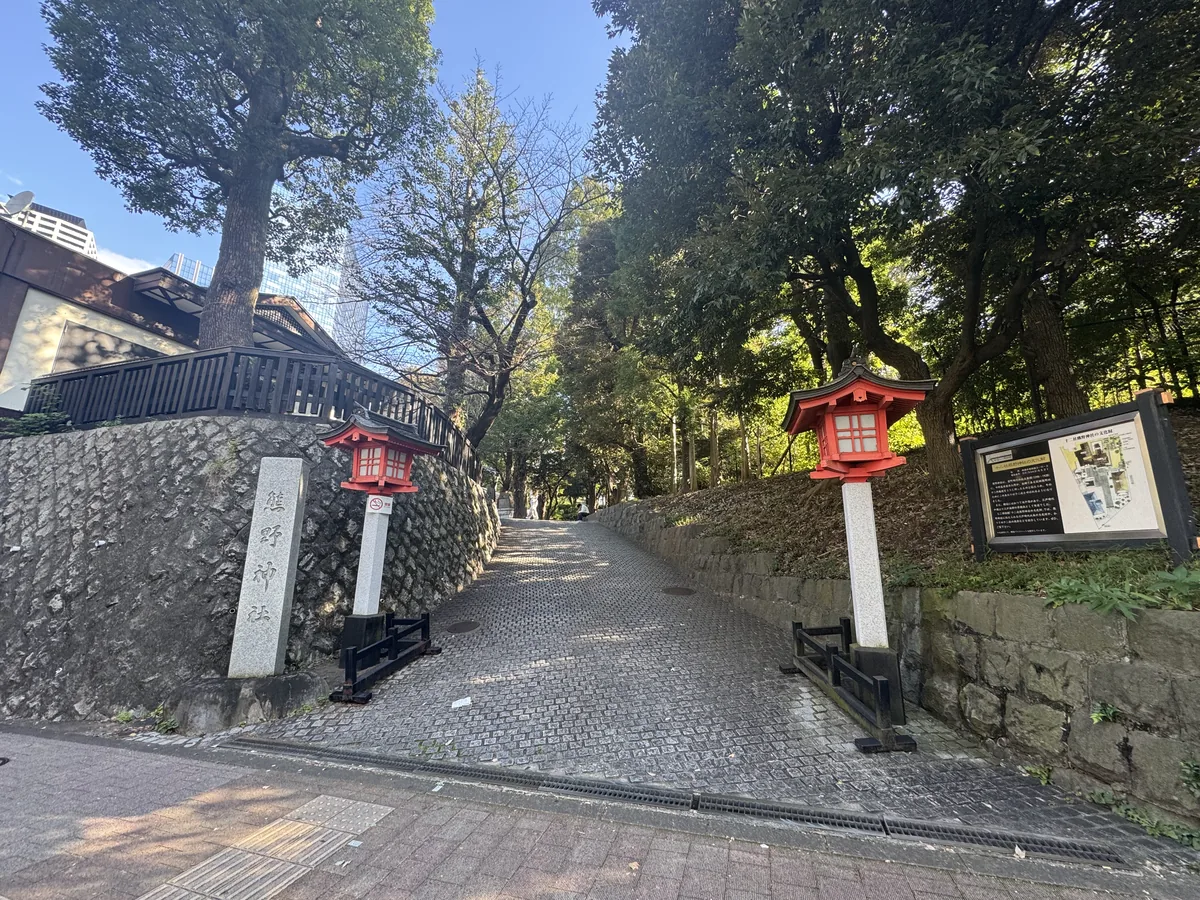
This is one of the shrine's entrances. Red lanterns stand on both sides of the approach between stone walls, and on the left is a stone pillar engraved with "熊野神社" (Kumano Jinja, Kumano Shrine).
Highlights
Facilities in Shinjuku Central Park
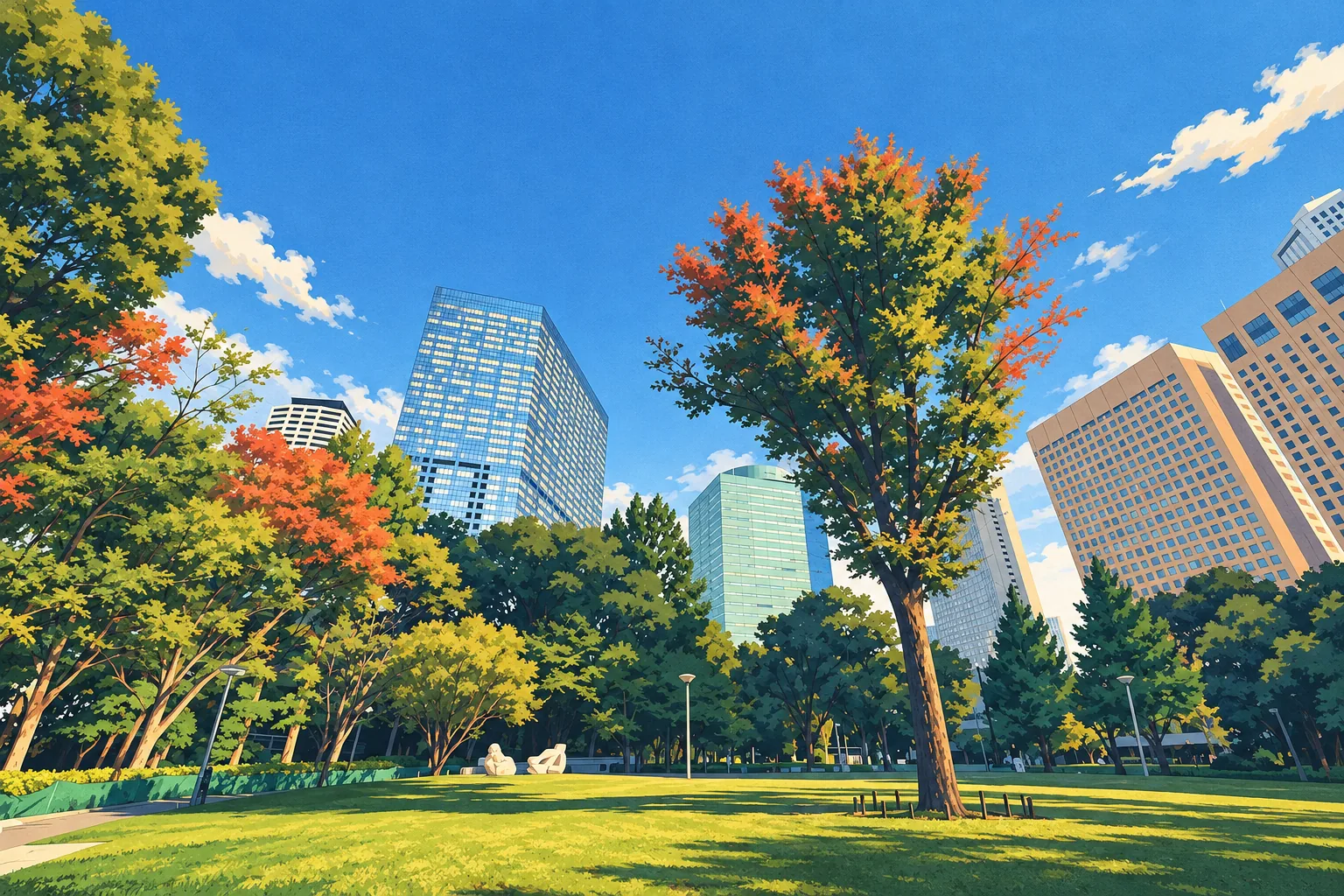
The main facilities listed on the park's official website are as follows.
- Lawn plaza: A large grassy plaza. Under the park's rules, sheets that do not let air through (such as plastic sheets) may not be used.
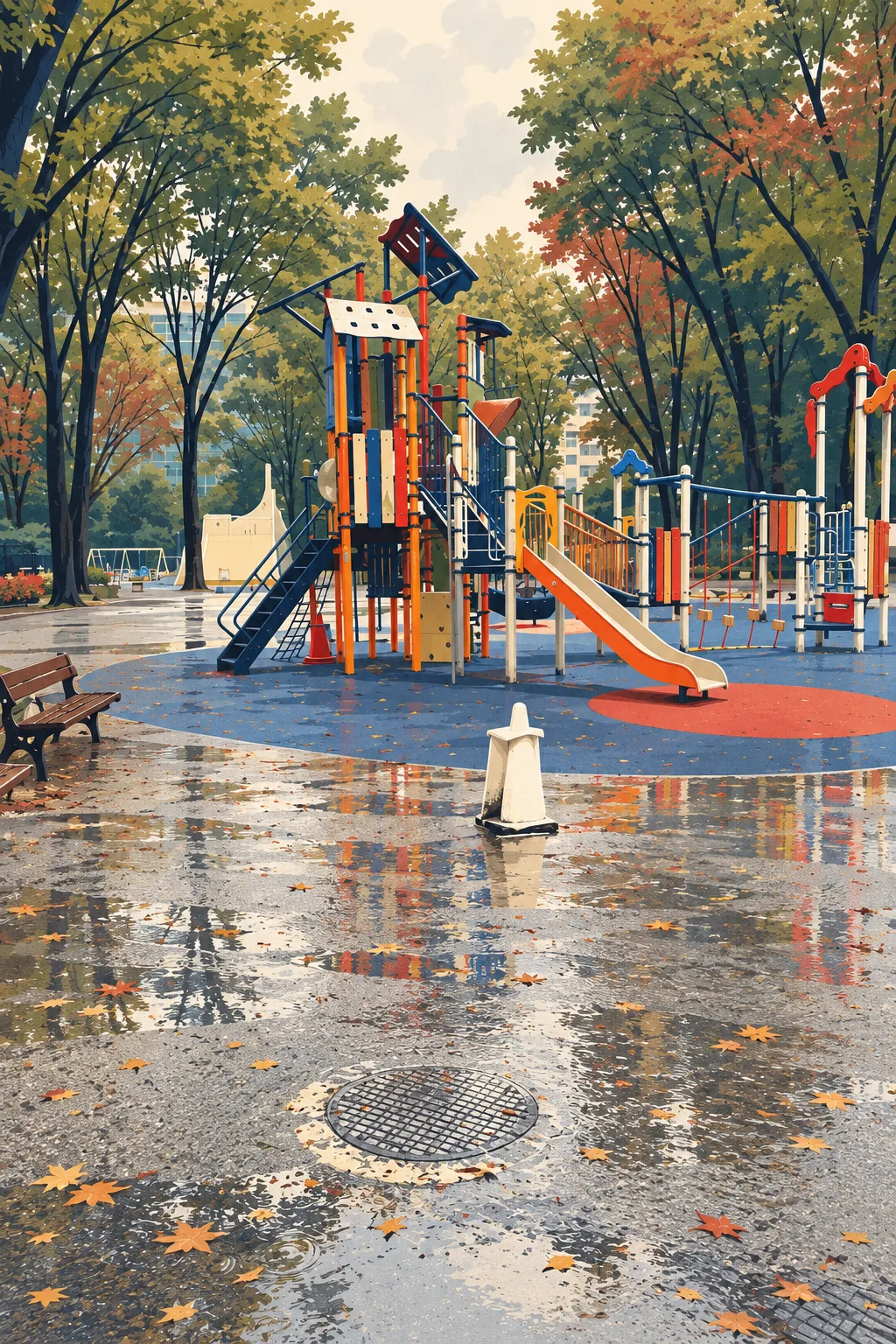
- Children's plaza (Chibikko Hiroba) and Jabu Jabu Ike (wading pool): A children's play area and a water-play pool that opens in summer.
- Shinjuku Shiraito Falls and Shinjuku Niagara Falls: Artificial waterfalls in the park.
- Sports corner: An area where you can play catch or practice tennis against a wall.
- There is also a futsal facility (fee required).
Taking a Break at Starbucks
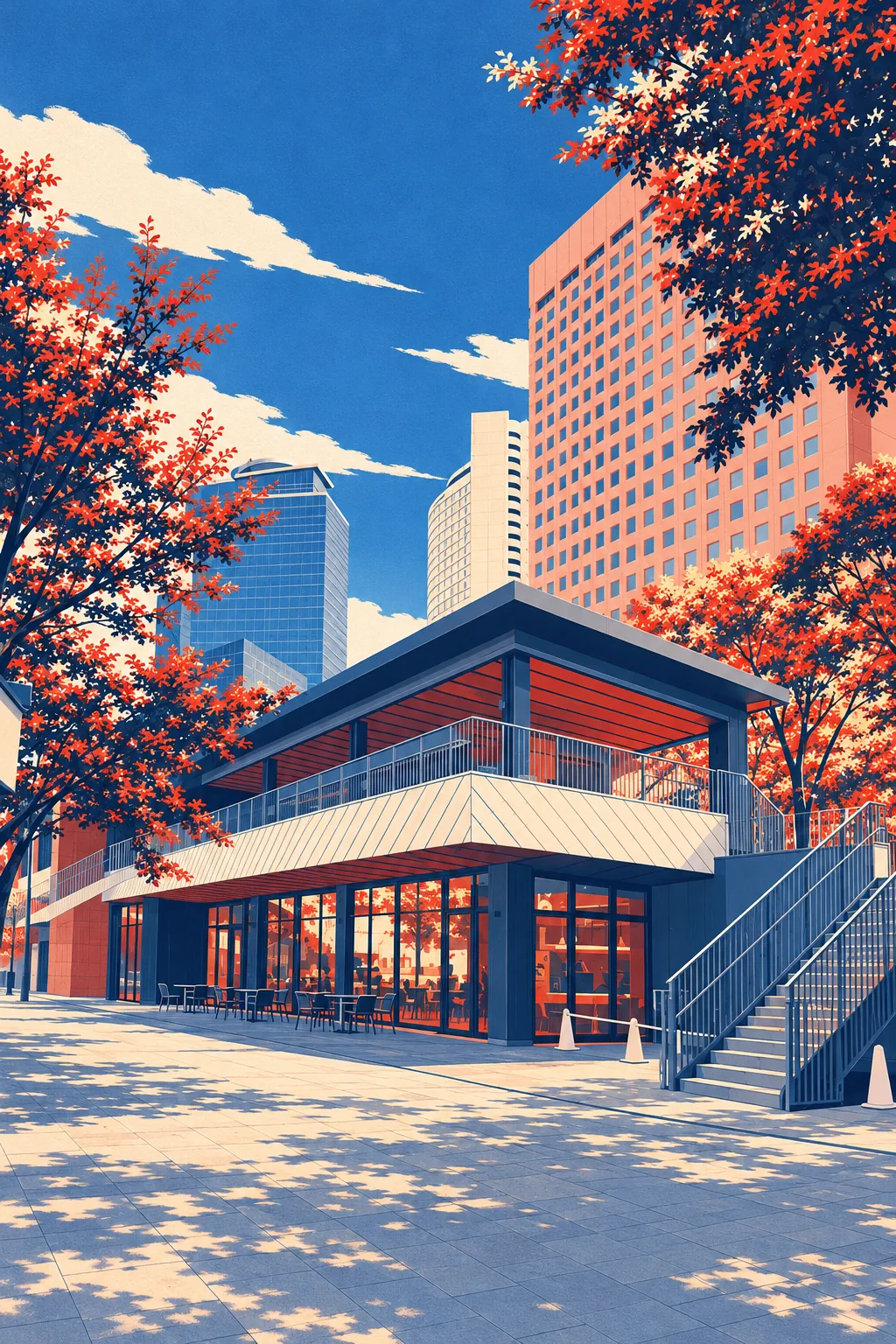
In a building in the park called SHUKNOVA, there is a Starbucks Coffee store (Starbucks Coffee Shinjuku Chuo Park SHUKNOVA). After walking around the park, you can buy a drink and take a rest.
- According to the store's page on the Starbucks website, it is open from 7:00 to 21:00, and it has no set days off.
- It may close without notice, or change its hours, because of typhoons, disasters, and the like.
The park management office is open from 9:00 to 17:00. It is open every day.
Juniso Kumano Shrine
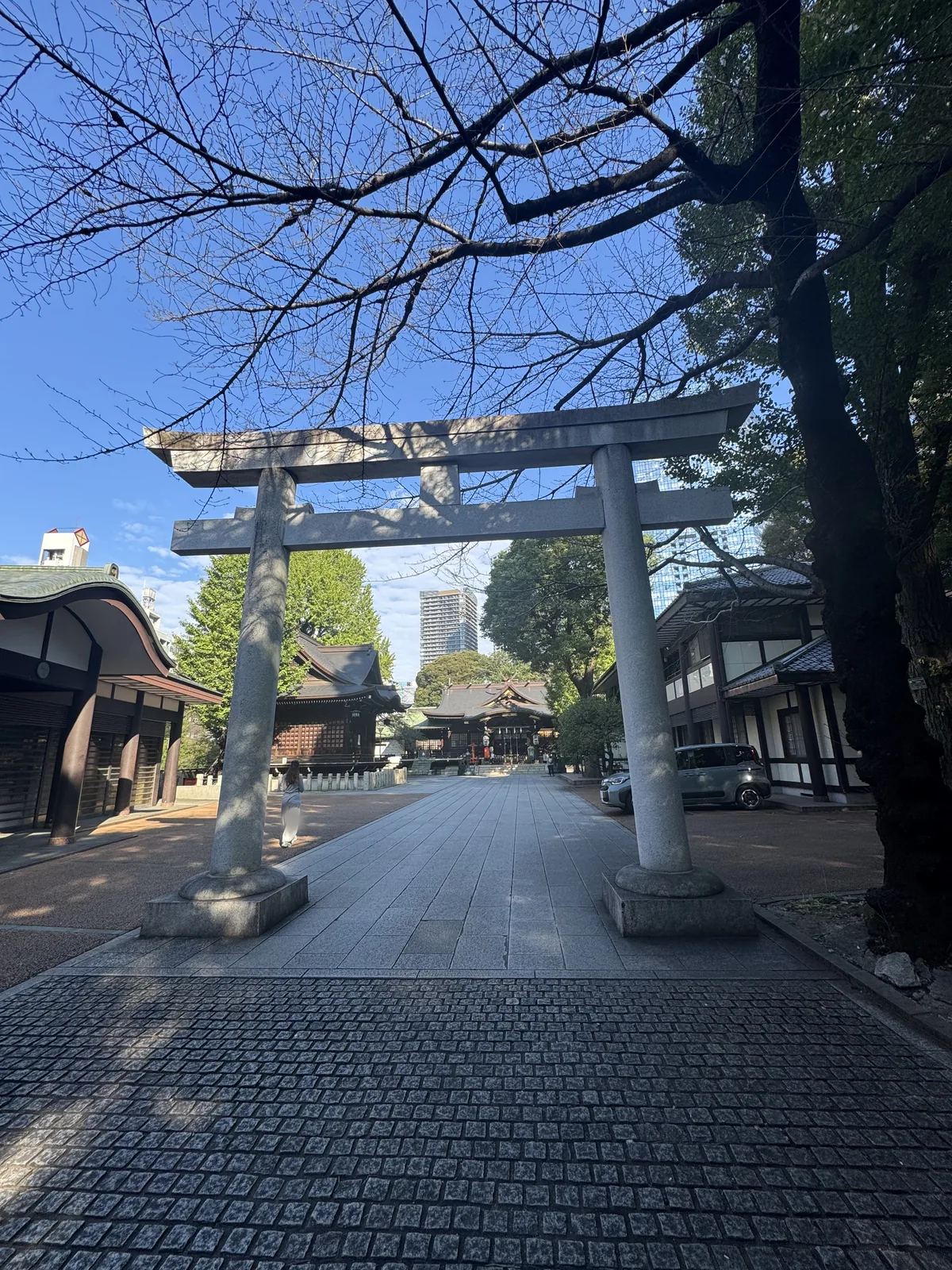
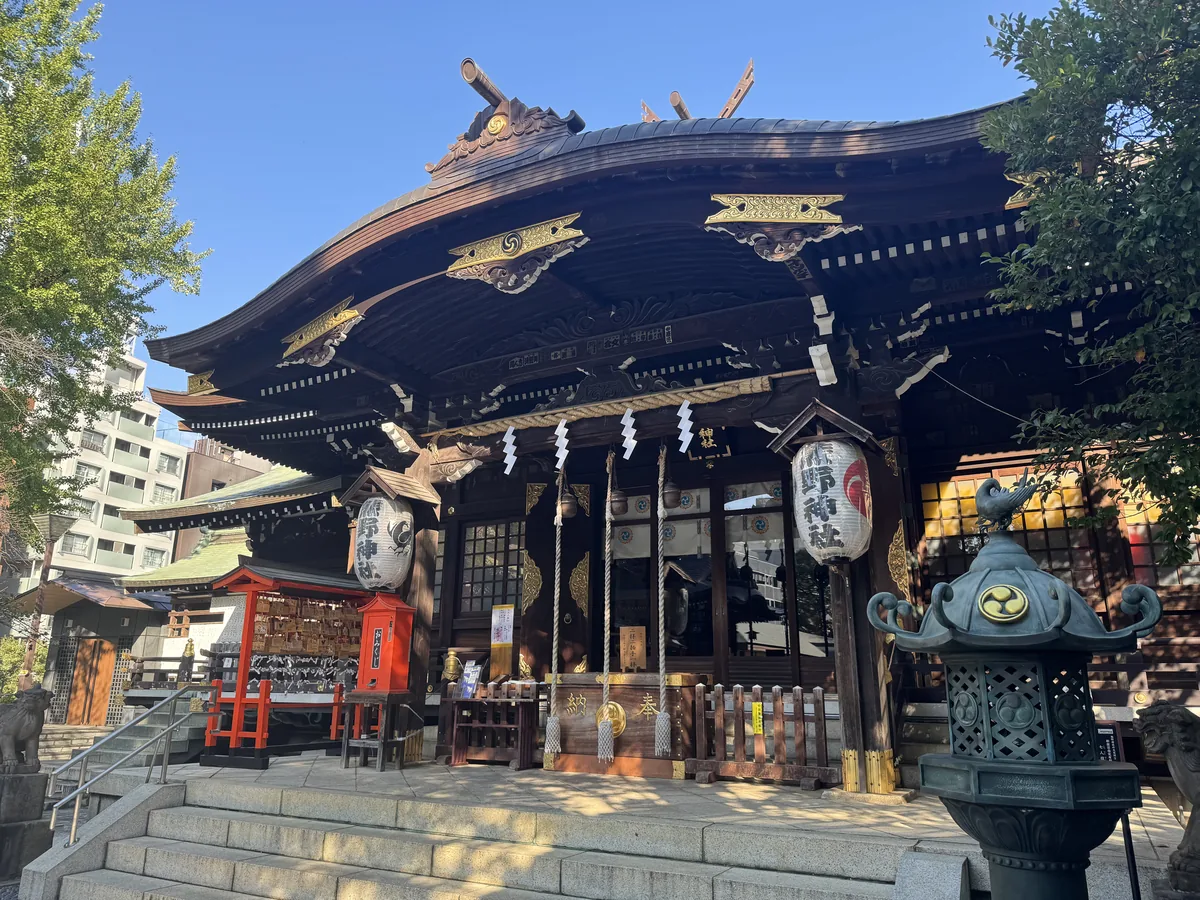
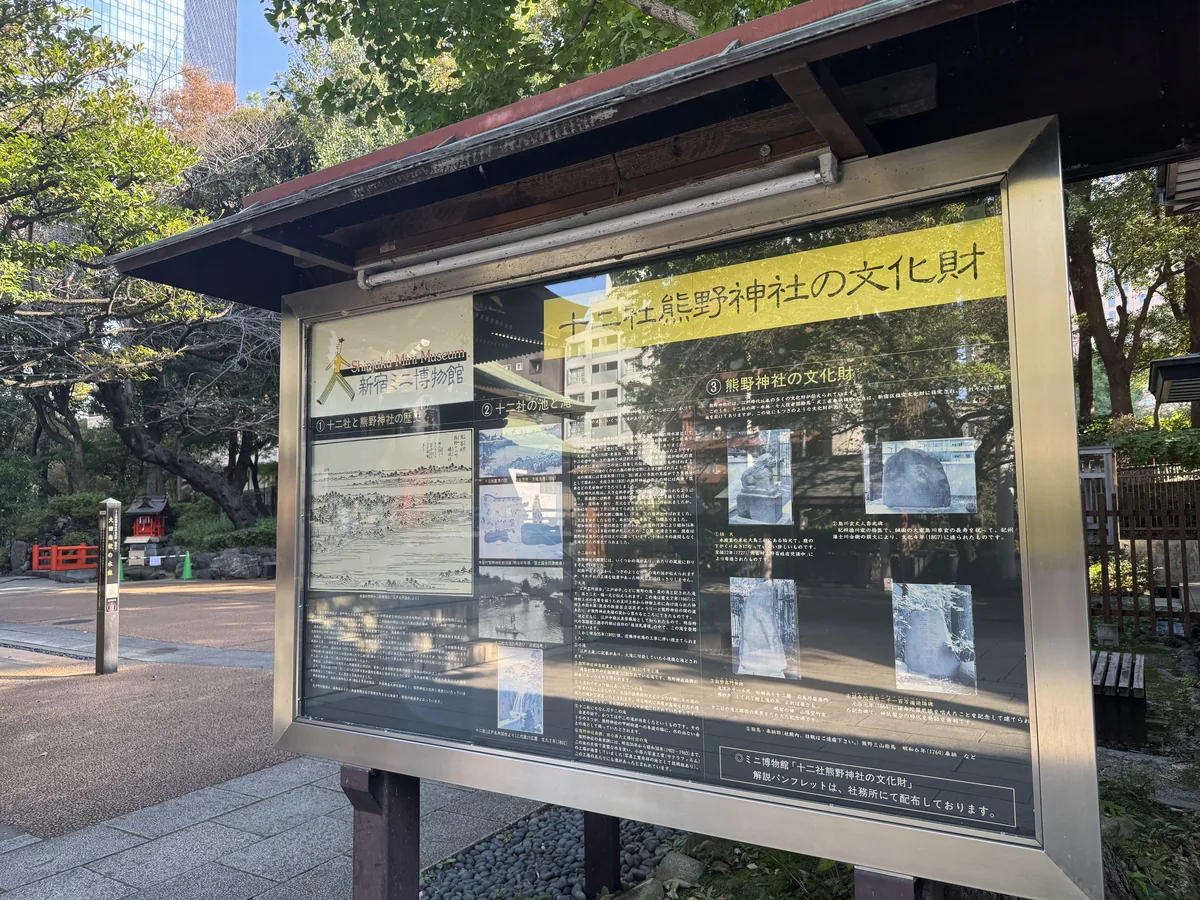
According to the Shinjuku City information board in the shrine grounds, Juniso Kumano Shrine is said to have been founded in the Oei era (1394 to 1428) of the Muromachi period, when a man named Suzuki Kuro brought the deities called Junisho Gongen from Kumano Sanzan in his home province of Kishu (today's Wakayama Prefecture) and enshrined them here.
- In the Edo period it was called "Kumano Junisho Gongen-sha," and at the beginning of the Meiji period its name was changed to "Kumano Jinja" (Kumano Shrine).
- The name "Junisho" is said to have become the place name "Juniso," which was the name of this neighborhood until 1970.
- The information board describes the area that this shrine protects as including Nishi-Shinjuku, the area around Shinjuku Station, and Kabukicho.
The Juniso Ponds
According to the information board, this area once had two ponds, one large and one small, and several waterfalls, and it was known for its scenery from the Edo period on. The ponds were dug in 1606 to store water for fields. From the Meiji period on, traditional restaurants (ryotei) and teahouses lined the ponds. In 1968, the larger pond was filled in.
Step by step
Worshipping at Kumano Shrine
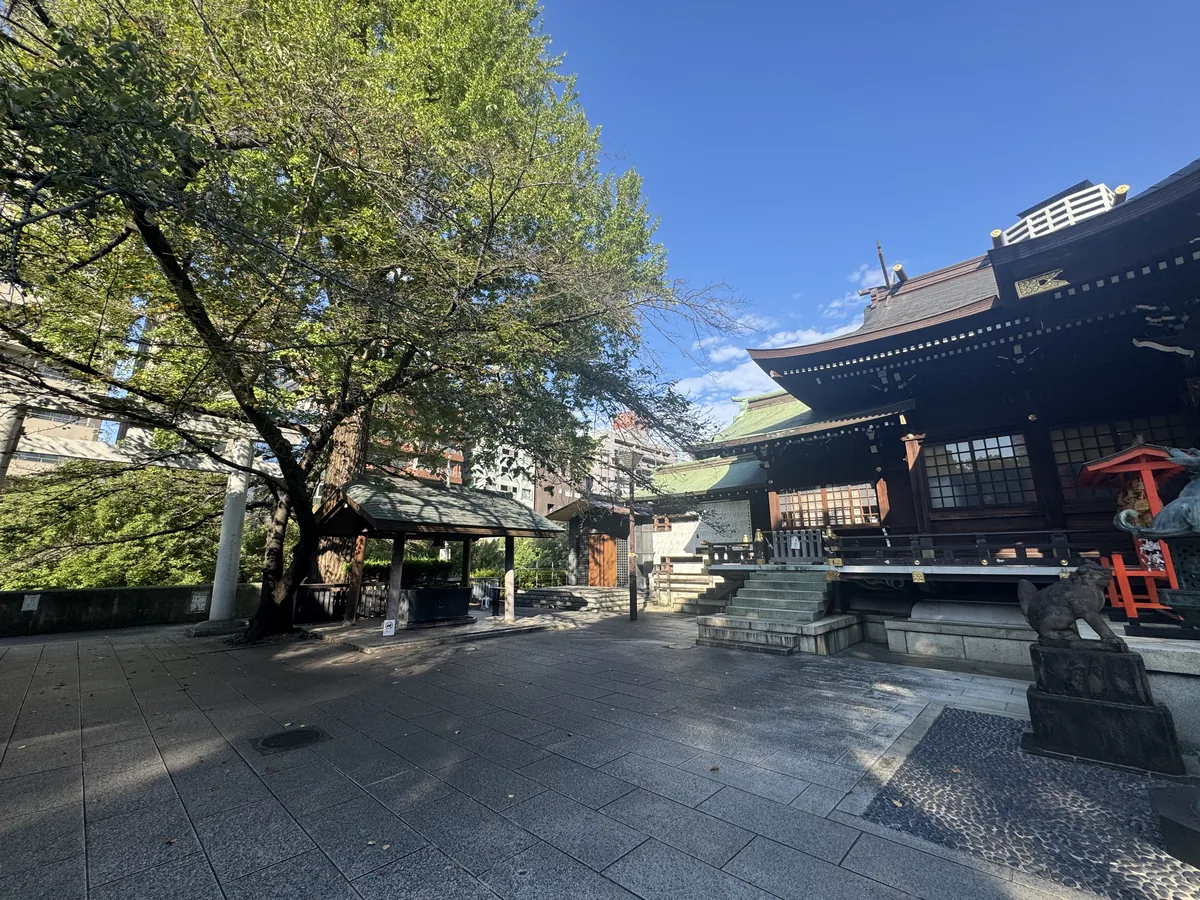
The worship etiquette is the same as at many other shrines.
- Bow lightly in front of the torii gate, then enter the grounds.
- At the temizusha (purification fountain), wash both hands, rinse your mouth, and then wash both hands again.
- In front of the haiden (worship hall), put in an offering (osaisen). Any amount is fine.
- Bow deeply twice, clap your hands twice in front of your chest, and finally bow deeply once.
The etiquette is also explained in detail in our Meiji Jingu article Meiji Jingu (Meiji Shrine) Guide | Access, Hours, Etiquette & Highlights.
When the Gate Closes
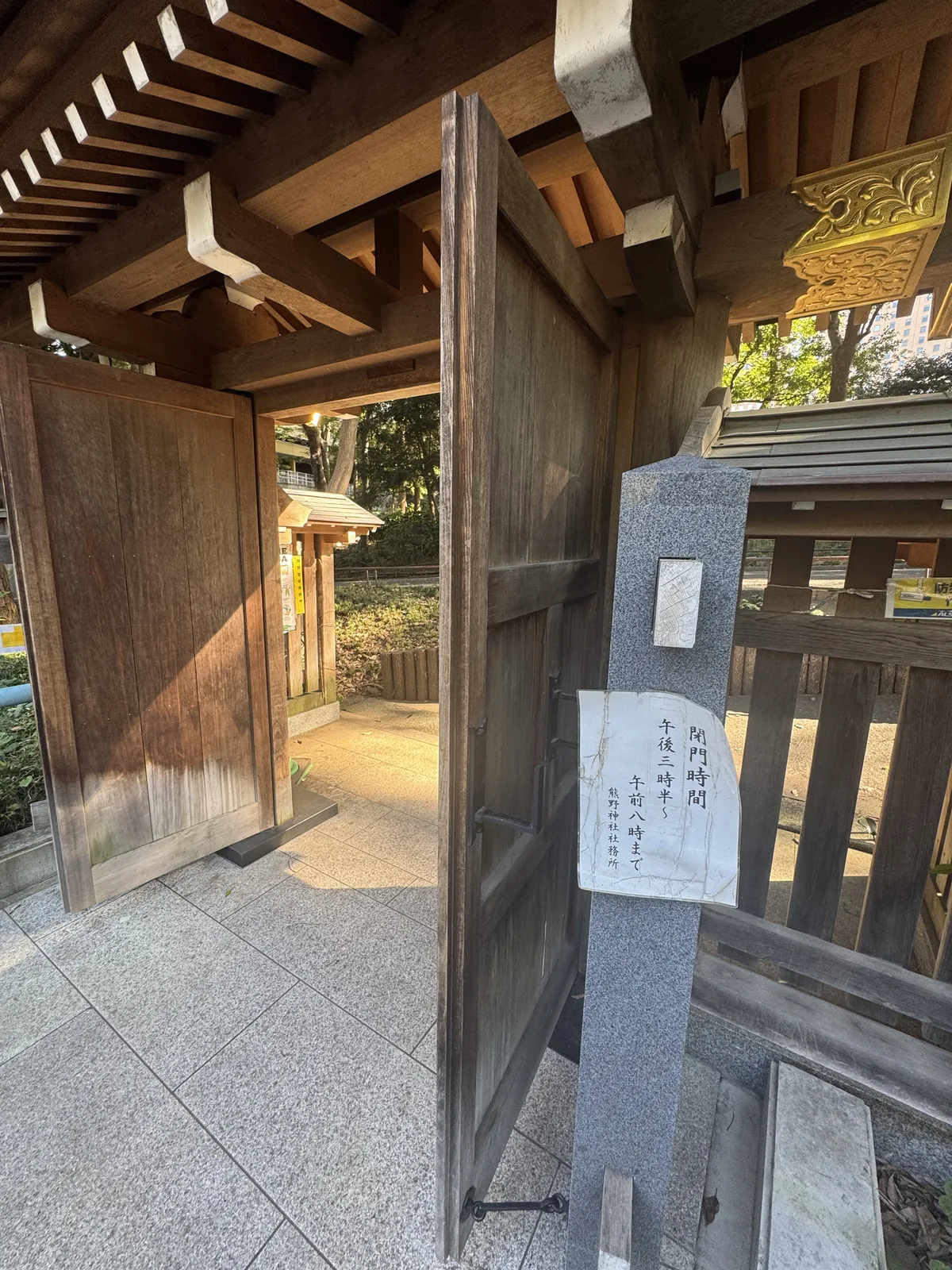
When the photos were taken, one of the gates of the grounds had a notice reading "Gate closing hours: 3:30 p.m. to 8:00 a.m., Kumano Shrine Office." This means that this gate is closed from 15:30 until 8:00 the next morning. The notice did not say anything about the other gates or the hours when you can enter the grounds.
Rules in the Shrine Grounds
When the photos were taken, there was a poster in the grounds in English titled "WELCOME TO THIS JINJA" that asked visitors to do the following.
- Do not drink, eat, or smoke outside the designated areas.
- Do not photograph the inside of the buildings.
- Do not photograph people without their permission.
- Do not use drones in the grounds.
- Take your trash home with you.
When the photos were taken, there was also a sign prohibiting filming with professional cameras without permission.
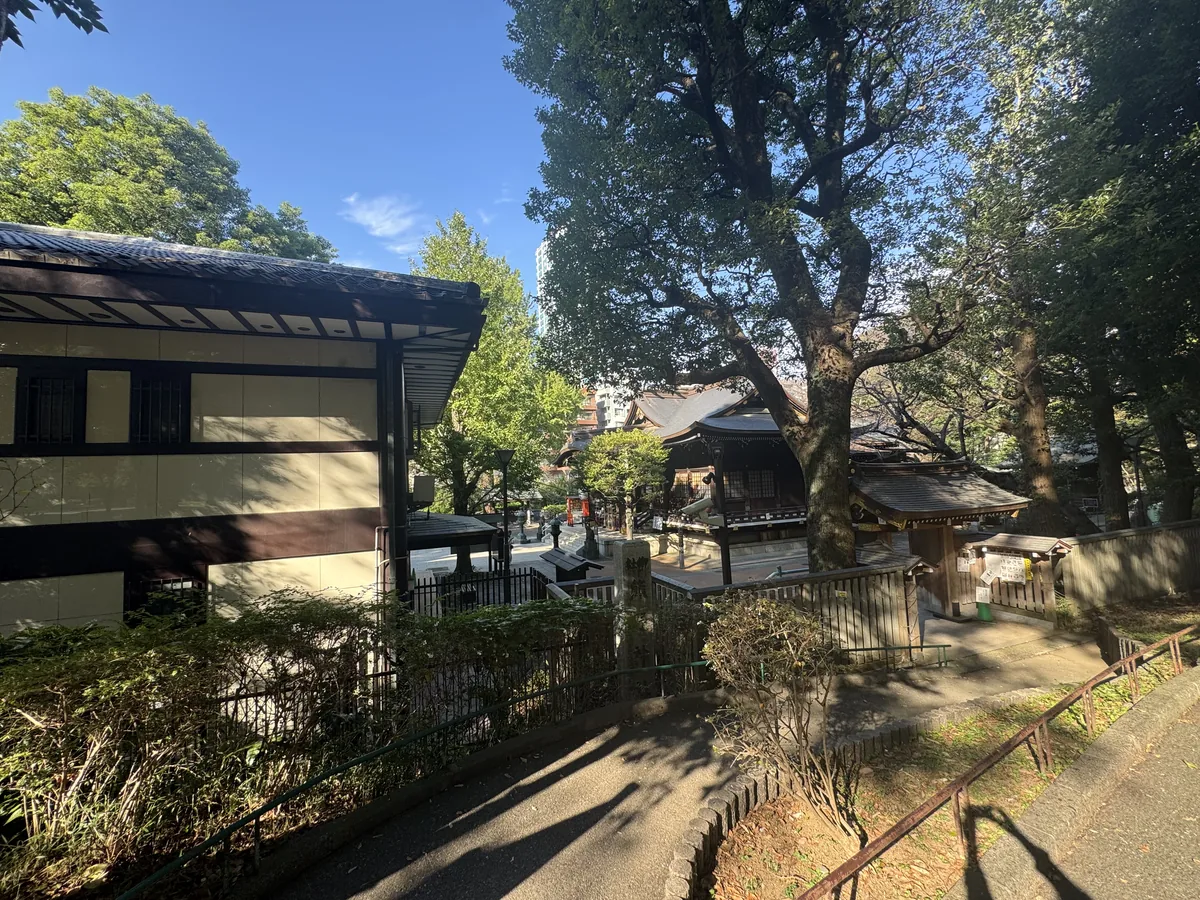
Shinjuku Central Park continues beyond the trees of the shrine grounds.
Good to know
Park Rules
The main prohibited activities listed on the park's official website are as follows.
- Riding a bicycle in the park (get off and push your bicycle, and park it at the bicycle parking area)
- Playing ball games (except in designated areas), setting off fireworks, and using fire
- Smoking (except at the smoking area in Mizu no Hiroba (water plaza))
- Letting dogs off the leash and feeding animals
- Using a smartphone while walking
- Entering with cars, motorcycles, or electric kick scooters
- Skateboarding (except in Mizu no Hiroba)
For the time being, the smoking area in Mizu no Hiroba is closed every day from 11:30 to 13:30 (because this is when many smokers gather there).
Other Information
- The dates of events such as flea markets are posted on the calendar on the park's official website.
- You need mobile data on your smartphone to look up maps and transfers. For how to choose an option, see eSIM, SIM Card or Pocket Wi-Fi in Japan: How to Choose | 5 Ways to Get Online Compared, What to Check First, and Airport Pickup.
The illustrations of Shinjuku Central Park in this article are AI-generated images. They are included in place of photos because this is a place where permission is needed to take photos. They differ from the real scene in small details.