How to Ride the Kyoto City Bus and Subway | Paying Fares, IC Cards, and the Subway & Bus 1-Day Pass
Fares for the Kyoto City Bus and Kyoto City Subway, how to ride the city bus (board at the rear door and pay when you get off), paying with cash, an IC card, or a 1-day pass, and how to buy and use the Subway & Bus 1-Day Pass, based on official information from the Kyoto City Transportation Bureau.
Ad · Affiliate This article contains links to partner booking and shopping pages (affiliate links). If you book or buy through these links, the site operator may receive a commission from the partner. Our advertising policy
Overview
When getting around Kyoto City for sightseeing, you will often use the Kyoto City Bus (city bus) and the Kyoto City Subway, both run by the Kyoto City Transportation Bureau. The subway has two lines, the Karasuma Line running north–south and the Tozai Line running east–west, and you can transfer between them at Karasuma Oike Station. The city bus also has stops near sightseeing spots that are far from subway stations.
- On most city bus routes, the fare is the same no matter how far you ride: ¥230 per ride for adults and ¥120 for children.
- Subway fares depend on the distance you ride: ¥220–¥360 for adults.
- On both the city bus and the subway, you can pay with IC cards such as Suica, PASMO, and ICOCA.
- The Subway & Bus 1-Day Pass (adults ¥1,100) lets you ride the city bus and the subway as many times as you like in one day.
Step by step
How to ride the city bus
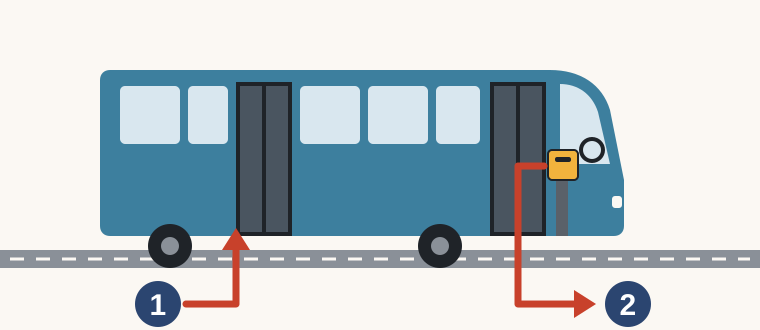
- Board through the rear door. On routes where the fare depends on the section you ride (routes whose route number is shown in white), when you board, either take a numbered ticket from the machine near the door or touch your IC card to the reader.
- When your stop is getting close, press the stop button. Once the bus has stopped, walk to the front, pay your fare at the fare box next to the driver, and get off through the front door.
You pay the fare when you get off, not when you board. Stay in your seat while the bus is moving, and walk to the front only after it has stopped.
Sightseeing Limited Express Bus (EX100 / EX101)
The Sightseeing Limited Express Bus is a city bus that runs only on Saturdays, Sundays, and national holidays. From Kyoto Station, it stops only at the stops near Kiyomizu-dera Temple, Gion, Heian Jingu Shrine, and Ginkakuji Temple.
- The Sightseeing Limited Express Bus works the opposite way from other city buses. You board through the front door, pay the fare when you board, and get off through the rear door.
- The fare is ¥500 for adults and ¥250 for children. If you have a Subway & Bus 1-Day Pass, you can ride without paying anything extra.
Paying
Paying with cash
- Pay with Japanese yen coins or ¥1,000 bills. Change is given.
- Bills larger than the ¥1,000 bill cannot be used on the bus, and you cannot get them changed into smaller bills or coins on board either. Have coins or ¥1,000 bills ready before you board.
Paying with an IC card
- You can use Japan's major transportation IC cards, such as Suica, PASMO, and ICOCA. When you get off, touch your card to the reader on the fare box.
- On routes where the fare depends on the section you ride, also touch your card when you board. When you get off, touch the same card you touched when boarding.
- If your card balance is not enough, pay the shortfall in cash.
- If you are riding at the child fare, or if you are paying the fares for two or more people with one card, tell the driver before you pay.
- See Welcome Suica: How to Buy and Use It | A 28-Day IC Card for Visitors to Japan for how to buy an IC card, and Where in Japan can you use Suica and ICOCA? | IC card areas and what to know when riding between areas for the areas where IC cards can be used.
Riding with a 1-day pass
- The first time you use a 1-day pass: on the city bus, insert the pass into the card slot of the fare box, the same way you would pay a fare. On the subway, insert the pass into the ticket gate.
- The pass comes back out with the date of use printed on the back. Take the pass.
- Once the date has been printed, on the city bus, show the date on the back of the pass to the driver, the same way you would pay a fare. On the subway, insert the pass into the ticket gate each time.
On the city bus, if the date has not yet been printed on the back of the 1-day pass, insert the pass into the fare box; if the date has been printed, show the date to the driver. On city buses other than the Sightseeing Limited Express Bus, you insert the pass or show the date when you get off; on the Sightseeing Limited Express Bus, you do this when you board. If you took a numbered ticket when boarding the bus, then when you get off, first put the numbered ticket into the fare box and then use your 1-day pass.
Prices
| Transport / ticket | Adult | Child |
|---|---|---|
| City bus (routes with the same fare regardless of distance; per ride) | ¥230 | ¥120 |
| Sightseeing Limited Express Bus (per ride) | ¥500 | ¥250 |
| Subway (per ride) | ¥220–¥360 | ¥110–¥180 |
| Subway & Bus 1-Day Pass | ¥1,100 | ¥550 |
| Kyoto City Subway 1-Day Pass | ¥800 | ¥400 |
Child fares
- Child fares apply to children aged 6 to 11. A 12-year-old who is still in elementary school also pays the child fare.
- Children aged 1 to 5 riding with a parent or other guardian ride free, no matter how many children there are.
- Children aged 1 to 5 riding with a person aged 6 or older who is not their guardian ride free, up to 2 children for each such person. Children aged 1 to 5 beyond that number for each such person pay the child fare.
- Children aged 1 to 5 who are not riding with anyone aged 6 or older pay the child fare. Children under 1 ride free.
Subway & Bus 1-Day Pass
- You can ride all city bus routes (including the Sightseeing Limited Express Bus) and all subway lines as many times as you like in one day. You can also ride some routes of Kyoto Bus, Keihan Bus, and West Japan JR Bus.
- The pass is valid only for one day: the day you first use it. You can also buy it in advance and start using it on a day other than the day you bought it.
- You can buy it at Kyoto City Bus & Subway Information Centers (such as the one at Kyoto Station), at ticket windows in subway stations, on board city buses, and elsewhere. Passes sold on board city buses are sometimes sold out, so buy one before you board if you can.
- When you ride a late-night bus (a city bus that runs late at night with a surcharged fare), you pay the late-night surcharge portion of the fare separately, even if you have a 1-day pass.
Kyoto City Subway 1-Day Pass
This pass lets you ride all subway lines as many times as you like in one day. It covers the subway only and cannot be used on the city bus. You can buy it at Kyoto City Bus & Subway Information Centers and at ticket windows in subway stations. You can also buy it from ticket machines in subway stations, but a Kyoto City Subway 1-Day Pass bought from a ticket machine can be used only on the day you buy it.
Good to know
- The subway runs roughly from 5:00 to 23:00. Trains run less often early in the morning and at night. City bus operating hours differ by route, so check the timetable.
- If you ride the city bus with a large suitcase, take care not to get in the way of other passengers.
- Kyoto City has announced a plan to set different city bus fares for people who live in Kyoto City and people who do not (resident-priority pricing). Under the city's proposal, it would start at some point between April 2027 and March 2028, and fares for people who do not live in Kyoto City would be higher than the current fares. The amounts have not been decided yet.
- See Tokyo to Kyoto and Osaka by Shinkansen | Nozomi, Hikari and Kodama compared, where to board, travel time and fares for how to get from Tokyo to Kyoto, and From Kansai International Airport to Osaka and Kyoto | Choosing between the Kansai-Airport Express HARUKA, Nankai Rapi:t and the Limousine Bus for how to get from Kansai International Airport to Kyoto.
- Fares, tickets, and timetables may change. Before you ride, check the latest information on the Kyoto City Transportation Bureau's official website (Kyoto City Bus & Subway Information Guide).