A One-Day Route Around Kyoto
Trains and Fares to Fushimi Inari, Kiyomizu-dera, and Gion, Closing Times, and the Subway & Bus 1-Day Pass vs. Paying Each Fare
A one-day route from Kyoto Station to Fushimi Inari Taisha, Kiyomizu-dera Temple, Sannenzaka and Ninenzaka, Yasaka Shrine and Gion, and Nishiki Market…
Ad · Affiliate Contains affiliate links. The site operator may earn a commission if you book or buy through them. Our advertising policy
Overview
This is a route for visiting Fushimi Inari Taisha, Kiyomizu-dera Temple, and Gion in one day from Kyoto Station. The fares, travel times, and temple and shrine hours in this article were checked on the official websites of the railway and bus operators and of each temple and shrine on November 9, 2026.
Key points
- This route does not use the Kyoto City Bus. You ride JR, the Keihan Railway, and the Kyoto City Subway once each, and walk the rest of the way. The total adult fare is ¥610.
- The Subway & Bus 1-Day Pass (adults ¥1,100) cannot be used on JR or the Keihan Railway. For this reason, on this route, paying each fare separately is cheaper than buying the 1-day pass.
- Kiyomizu-dera normally closes its gates at 18:00 (the closing time is different in July and August, during the special night viewing periods, and at some other times). The official website of Fushimi Inari Taisha gives no information on the hours when you can visit. Yasaka Shrine can be visited 24 hours a day. For this reason, the route in this article visits Kiyomizu-dera first and leaves Yasaka Shrine and Gion for later.
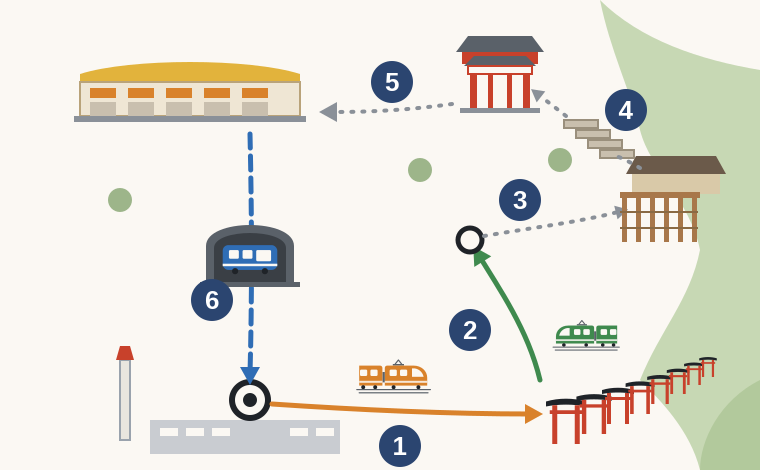
- From Kyoto Station, take the JR Nara Line to Inari Station. Fushimi Inari Taisha is in front of the station.
- Walk from Fushimi Inari Taisha to Fushimi-inari Station on the Keihan Railway, and take the Keihan Railway to Kiyomizu-gojo Station.
- Walk from Kiyomizu-gojo Station to Kiyomizu-dera.
- From Kiyomizu-dera, walk down the stone steps and sloping streets of Sannenzaka and Ninenzaka.
- Walk to Yasaka Shrine, then walk west along Shijo-dori Street in Gion to Nishiki Market.
- Walk from Nishiki Market to Shijo Station on the subway, and take the subway Karasuma Line back to Kyoto Station.
On this page
Itinerary
Route and travel times
| Order | Place and transport | Time and fare (adults) |
|---|---|---|
| 1 | Kyoto Station to Inari Station (JR Nara Line). Fushimi Inari Taisha is just outside Inari Station | 5 min, ¥150 |
| 2 | Walk from Fushimi Inari Taisha to Fushimi-inari Station on the Keihan Railway, then go to Kiyomizu-gojo Station (Keihan Railway) | 5 min on foot. Keihan Railway: ¥240 |
| 3 | Walk from Kiyomizu-gojo Station to Kiyomizu-dera | About 25 min |
| 4 | Walk down from Kiyomizu-dera through Sannenzaka and Ninenzaka | The official temple and shrine websites give no walking time |
| 5 | Walk to Yasaka Shrine, then walk west along Shijo-dori Street in Gion to Nishiki Market | Yasaka Shrine and Nishiki Market are both near Gion-Shijo Station on the Keihan Railway (according to the official websites, about 5 min from Gion-Shijo Station to Yasaka Shrine and about 10 min from Gion-Shijo Station to Nishiki Market) |
| 6 | Walk from Nishiki Market to Shijo Station on the subway, then go to Kyoto Station (subway Karasuma Line) | About 3 min on foot. Subway: 4 min, ¥220 |
- The table shows only the time spent on transport and the walking times given on official websites. It does not include the time you spend at each place.
- During the daytime, 6 JR Nara Line trains per hour leave Kyoto Station (November 2026 timetable). Every train stops at Inari Station.
- The Keihan Railway official website does not give the travel time from Fushimi-inari Station to Kiyomizu-gojo Station. From Fushimi-inari Station to Gion-Shijo Station takes 9 min. Kiyomizu-gojo Station is between Fushimi-inari Station and Gion-Shijo Station.
- According to the official website of Fushimi Inari Taisha, there are about 10,000 torii gates along the whole approach path on the mountain. The official website does not give the time it takes to walk to the top of the mountain.
- Sannenzaka is a sloping street with stone steps that branches off Kiyomizu-zaka, the street leading up to Kiyomizu-dera, and goes downhill. Ninenzaka is the sloping street that continues on at the bottom of Sannenzaka.
Closing times
| Place | Time |
|---|---|
| Kiyomizu-dera | The gates open at 6:00 every day. The gates normally close at 18:00. From July 1 to August 13 and from August 17 to August 31, they close at 18:30. During the special night viewing periods, they close at 21:30 (admission until 21:00) |
| Fushimi Inari Taisha | The official website gives no information on the hours when you can visit |
| Yasaka Shrine | Can be visited 24 hours a day. The shrine office is open from 9:00 to 17:00 |
| Nishiki Market | No opening hours are given for the market as a whole; hours differ by shop. The market as a whole has no closing days, but many shops close on Wednesdays |
- In 2026, Kiyomizu-dera's special night viewing periods are March 27 to April 5, August 14 to August 16, and November 21 to November 30. You can enter the autumn special night viewing without a reservation.
- Nishiki Market states that many shops are closed from January 1 to January 3.
Getting there
Comparing ways to get from Kyoto Station to the main sights
| Destination | Train | Kyoto City Bus |
|---|---|---|
| Fushimi Inari Taisha | JR Nara Line to Inari Station: 5 min, ¥150. Just outside Inari Station | Route Minami 5 from stop C4 in front of Kyoto Station to Inari Taisha-mae, ¥230. 7 min on foot after getting off |
| Kiyomizu-dera | You cannot get close by train alone. About 25 min on foot from Kiyomizu-gojo Station on the Keihan Railway | Route 206, 86, or 106 from stop D2 in front of Kyoto Station to Gojozaka, ¥230. 10 min on foot after getting off |
| Yasaka Shrine and Gion | JR Nara Line to Tofukuji Station, then change to the Keihan Railway to Gion-Shijo Station. About 5 min on foot from Gion-Shijo Station to Yasaka Shrine | Route 206, 86, or 106 from stop D2 in front of Kyoto Station to Gion, ¥230. Yasaka Shrine is right by the stop |
| Arashiyama | JR Sagano Line to Saga-Arashiyama Station: 17 min by local train, 11 min by rapid train, ¥240 | Route 28 from stop C6 or Route 85 from stop C5 in front of Kyoto Station to Arashiyama, ¥230 |
| Kinkaku-ji | You cannot get close by train alone | Route 205 from stop B3 in front of Kyoto Station to Kinkakuji-michi, ¥230 |
- On the Kyoto City Bus, the fare to the destinations in this table is ¥230 for adults and ¥120 for children, however far you ride. The official website of the Kyoto City Transportation Bureau does not give travel times for each bus route.
- On Saturdays, Sundays, and national holidays, the Sightseeing Limited Express Bus leaves from stop D1 in front of Kyoto Station (adults ¥500). From Kyoto Station to Gojozaka takes 12 min, and to Gion 17 min. The last departure from Kyoto Station is at 16:42.
- During crowded times in the tourist seasons, the Kyoto City Transportation Bureau recommends combining trains, such as the subway, with buses.
- Kyoto City's hands-free sightseeing guidance asks visitors to store or send large luggage and not to bring it onto the city bus. The Kyoto City Transportation Bureau also asks passengers who board the city bus with large luggage not to get in the way of other passengers.
How to pay
- On the city bus and the subway, you can use IC cards such as Suica and ICOCA. On the city bus, you can also pay with Japanese yen coins and 1,000-yen bills, and change is given. 10,000-yen, 5,000-yen, and 2,000-yen bills cannot be used.
- Credit cards cannot be used on the city bus or the subway (information as of November 9, 2026). The JAPAN RAIL PASS cannot be used either.
- With the JAPAN RAIL PASS, you can ride the JR Nara Line and the JR Sagano Line. Fares on the Keihan Railway, the subway, and the city bus are paid separately.
- How to ride the city bus and how to use the Subway & Bus 1-Day Pass are explained in Kyoto City Bus and Subway: How to Ride and Fares. IC cards are explained in Where in Japan can you use Suica and ICOCA?.
Costs
Paying each fare vs. using the 1-day pass (adults)
| How you pay | Total for the route in this article |
|---|---|
| Pay each fare separately (JR ¥150, Keihan Railway ¥240, subway ¥220) | ¥610 |
| Use the Subway & Bus 1-Day Pass | The 1-day pass at ¥1,100, plus the JR and Keihan Railway fares, since the 1-day pass cannot be used on them |
- The Subway & Bus 1-Day Pass lets you ride all Kyoto City Subway lines and all Kyoto City Bus routes until the end of service on the day you use it (it is not valid for 24 hours). It costs ¥1,100 for adults and ¥550 for children. You can also ride the Sightseeing Limited Express Bus at no extra charge. It cannot be used on JR or the Keihan Railway.
- The adult city bus fare is ¥230, so 4 city bus rides cost ¥920 and 5 rides cost ¥1,150. On a day when you ride only the city bus 5 or more times, the 1-day pass is cheaper. On a day when you also ride the subway, add up the subway fares for the sections you ride and compare the total with the price of the 1-day pass.
- For the Bus 1-Day Pass, which was valid only on buses, September 30, 2023 was the last day it was sold, and March 31, 2024 was the last day it could be used.
- The Keihan Railway offers the KYOTO SIGHTSEEING PASS for travelers visiting from abroad. The 1-day version (1day) costs ¥1,100 and covers sections such as Demachiyanagi Station to Iwashimizu-hachimangu Station on the Keihan Railway. You buy it as a digital ticket with a QR code on the Keihan Railway official website. On the route in this article, you ride the Keihan Railway only once, and the fare is ¥240.
- The Kyoto City Transportation Bureau plans to start a system that sets different city bus fares for people who live in Kyoto City and for everyone else, sometime between April 2027 and March 2028. The fares after it starts and how the 1-day pass will be handled have not been decided yet.
Admission fees
| Place | Adults | Children |
|---|---|---|
| Fushimi Inari Taisha | The official website gives no information on an admission fee | Same |
| Kiyomizu-dera | There is an admission fee. The amount is not given on the Kiyomizu-dera official website | Same |
| Yasaka Shrine | The official website gives no information on an admission fee | Same |
| Kinkaku-ji | ¥500 (high school students and older) | Elementary and junior high school students ¥300. Children not yet in elementary school do not pay |
| Tenryu-ji garden | ¥500 (high school students and older) | Elementary and junior high school students ¥300. Children not yet in elementary school do not pay |
- The rules for children's fares are explained in Child Fares on Japan's Trains and Subways.
Booking
What to buy in advance and where to leave luggage
- What to reserve in advance: None of the temples and shrines on the route in this article require a reservation.
- Where to buy the Subway & Bus 1-Day Pass: You can buy it at the ticket office of each subway station, at the Kyoto City Bus & Subway Information Centers, and on board city buses (limited numbers), among other places. You can buy it in advance. The first time you use it, the date of use is printed on the back of the ticket.
- Leaving luggage at Kyoto Station: On the first basement floor of the Kyoto Station Building, there is Crosta Kyoto, a luggage storage service (8:00 to 20:00). There are also coin lockers inside Kyoto Station and the station building. How to use coin lockers is explained in How to Use Coin Lockers at Train Stations in Japan, and how to send luggage to your hotel or the airport is explained in Send Your Suitcase by Courier.
- On November 21, 22, 23, 28, and 29, 2026, a temporary luggage storage area and a counter for delivering luggage to hotels on the same day will be set up in the station plaza of the Kyoto Station Building (9:00 to 20:00; same-day deliveries within Kyoto City are accepted until 14:00).
What travelers often find confusing
This section is based on travelers' public posts and questions, along with search trends. It is not a collection of personal reviews or ratings.
- Can I visit Fushimi Inari Taisha and Kiyomizu-dera on the same day?: Yes. On the route in this article, you take the Keihan Railway from Fushimi-inari Station to Kiyomizu-gojo Station, then walk about 25 min from Kiyomizu-gojo Station to Kiyomizu-dera.
- Can I walk from Kiyomizu-dera to Gion?: Yes. On the route in this article, you walk down Sannenzaka and Ninenzaka from Kiyomizu-dera and go to Gion by way of Yasaka Shrine. The official temple and shrine websites give no walking time.
- Does buying the Subway & Bus 1-Day Pass save money?: Not on the route in this article, because the 1-day pass cannot be used on JR or the Keihan Railway. On a day when you ride only the city bus 5 or more times, the 1-day pass is cheaper.
- Can I still buy the Bus 1-Day Pass, which was valid only on buses?: No. September 30, 2023 was the last day it was sold, and March 31, 2024 was the last day it could be used. The pass you can buy now is the Subway & Bus 1-Day Pass, which is valid on both the subway and the city bus.
- Can I use a credit card on the city bus?: No (Kyoto City Transportation Bureau information as of November 9, 2026). Pay with an IC card or with Japanese yen in cash.
- What time do Tenryu-ji in Arashiyama and Kinkaku-ji close?: Kinkaku-ji closes at 17:00. The Tenryu-ji garden closes at 17:00, with admission until 16:50. Kiyomizu-dera normally closes at 18:00. A route covering Arashiyama and Kinkaku-ji is explained under “A route covering Arashiyama and Kinkaku-ji” later in this article.
Good to know
A route covering Arashiyama and Kinkaku-ji
- From Kyoto Station, take the JR Sagano Line to Saga-Arashiyama Station (17 min by local train, ¥240). Excluding limited express trains, 5 Sagano Line trains per hour leave Kyoto Station during the daytime.
- Walk from Saga-Arashiyama Station to Tenryu-ji (13 min). The Tenryu-ji garden is open from 8:30 to 17:00 (admission until 16:50). Leaving Tenryu-ji by its north gate takes you onto the bamboo grove path.
- From Arashiyama Station on the Randen (Keifuku Electric Railroad), in front of Tenryu-ji, take the Randen, change trains at Katabiranotsuji Station and go to Kitano-Hakubaicho Station (20 min, not including transfer time; ¥250).
- From Kitano-Hakubaicho, take city bus Route 204 or 205 to Kinkakuji-michi (¥230). Kinkaku-ji is open from 9:00 to 17:00 and has no closing days.
- From Kinkakuji-michi, take city bus Route 205 back to Kyoto Station (¥230).
The total adult fare for this route is ¥950. On this route, the Subway & Bus 1-Day Pass can be used only for the 2 city bus rides. For this reason, paying each fare separately is cheaper than buying the 1-day pass.
- From November 14 to November 30, 2026, Tenryu-ji lets visitors into the garden from 7:30 (at the garden entrance; entry through the north gate starts at 8:30).
- Kinkaku-ji does not allow photography intended for sharing with third parties, such as on social media. Only snapshots taken with a small camera for personal enjoyment are allowed.
Rules at temples and shrines and in town
- Fushimi Inari Taisha prohibits eating and drinking outside the designated rest areas (including eating while walking or standing) and taking photos that block people passing along the narrow approach paths.
- Kiyomizu-dera prohibits bringing in food and drink other than drinks with a closable lid, and prohibits eating while walking or standing. The plaza in front of the Nio-mon Gate is also part of the Kiyomizu-dera grounds.
- Nishiki Market asks visitors not to walk around the market while eating. Eat in front of the shop where you bought the food, or inside the shop.
- The council of the southern district of Gion-machi prohibits taking photos on private roads in Gion and photographing geiko and maiko.
- From October 31 to November 29, 2026, the southbound side of the Gojozaka city bus stop cannot be used. To return to Kyoto Station, board at the Kiyomizu-michi or Umamachi stop.
- Crowded periods during Kyoto's autumn tourist season are explained in Autumn Leaves Season in Japan, and Japan's national holidays and busy periods in Japan Public Holidays 2027 and Busy Periods.
- Trains from Osaka and Nara to Kyoto are explained in Getting Around Osaka, Kyoto and Nara by Train, the Shinkansen from Tokyo to Kyoto in Tokyo to Kyoto and Osaka by Shinkansen, and how to get from Kansai Airport to Kyoto in Kansai Airport to Osaka and Kyoto: How to Get There.
Official sources
These are the official pages we used to check the fares, hours, and other facts in this article. Please check each page for the latest information.
- この記事の東まわりの順路の大人の運賃の合計(計算): JR 京都→稲荷 150円+京阪 伏見稲荷→清水五条 240円+地下鉄 四条→京都 220円=610円 www.jr-odekake.net
- 京都市交通局 地下鉄・バス1日券 大人 1,100円・小児 550円(2026-11-09 確認) www.city.kyoto.lg.jp
- 清水寺 2026年の拝観時間 閉門 18:00(1/1〜3/26・4/6〜6/30・9/1〜11/20・12/1〜12/31) www.kiyomizudera.or.jp
- 伏見稲荷大社 アクセス「JR奈良線 稲荷駅下車 徒歩直ぐ (京都駅より5分)」 inari.jp
- JR西日本 京阪神の電車特定区間の運賃 1〜3km 150円(2025年4月1日発売分から) www.westjr.co.jp
- 京阪 伏見稲荷駅の駅別運賃表(2025/10/01改定)清水五条 3.1km 240円 www.keihan.co.jp
- 八坂神社 アクセス「京阪電車「祇園四条」駅より徒歩約5分」 www.yasaka-jinja.or.jp
- 錦市場 アクセス「京阪本線「四条」駅下車徒歩 約10分」(現在の駅名は祇園四条) www.kyoto-nishiki.or.jp
- 京都市交通局 地下鉄の所要時分 四条→京都 4分 www2.city.kyoto.lg.jp
- 京都市交通局 地下鉄 四条→京都 大人 220円・小児 110円(1区、2025年10月1日からの運賃) www2.city.kyoto.lg.jp
- JRおでかけネット 京都駅 奈良線の時刻表(2026-11-11)10〜15時台 1時間に6本(みやこ路快速2本・普通4本)。どれも東福寺・稲荷に止まる timetable.jr-odekake.net
- 京阪 英語のモデルコース「Keihan Fushimi-inari Station / 9 minutes / Keihan Gion-shijo Station」 www.keihan.co.jp
- 伏見稲荷大社 よくある質問「約1万基の鳥居がお山の参道全体に」 inari.jp
- 清水寺 2026年 秋の夜間特別拝観 11月21日〜30日、予約不要 www.kiyomizudera.or.jp
- 八坂神社「参拝時間:24時間」「社務所の受付時間:午前9時~午後5時」 www.yasaka-jinja.or.jp
- 京都市交通局 市バス 均一運賃 大人 230円・小児 120円 www.city.kyoto.lg.jp
- 京都市交通局 観光特急バス 大人 500円・小児 250円(現金・交通系IC)。地下鉄・バス1日券は追加料金不要 www2.city.kyoto.lg.jp
- 京都市交通局 2026年3月20日ダイヤ改正 別紙の観光特急バスの時刻表 京都駅前発の最終 16:42 www.city.kyoto.lg.jp
- 京阪 KYOTO SIGHTSEEING PASS 1day 1,100円(京阪本線 出町柳〜石清水八幡宮・宇治線・ケーブル線、デジタル券、2026-11-09 確認) www.keihan.co.jp
- 金閣寺 参拝料 大人(高校生以上)500円・小中学生 300円 www.shokoku-ji.jp
- 天龍寺 庭園参拝料 高校生以上 500円・小中学生 300円 www.tenryuji.com
- 京都駅ビル よくある質問 手荷物預かり所「Crosta京都」営業時間 8:00〜20:00、京都駅ビル地下1階 www.kyoto-station-building.co.jp
- HANDS FREE KYOTO 京都駅の臨時手荷物配送・預かり所 2026年11月21日〜23日・28日・29日 9:00〜20:00 hands-free.kyoto.travel
- JRおでかけネット 京都駅 嵯峨野線の時刻表(2026-11-11)10〜14時台 特急を除いて1時間に5本 timetable.jr-odekake.net
- 嵐電 嵐山駅の「当駅からの所要時間」北野白梅町 20分(嵐山本線と北野線の乗り換え時間は含まない) www.keifuku.co.jp
- 京福電気鉄道 嵐電 全線均一 大人 250円・こども 120円 www.keifuku.co.jp