
Plugs and Voltage in Japan | Type A Plugs and 100V: How to Check Whether You Need a Plug Adapter or Transformer
Based on official information from JNTO (Japan National Tourism Organization), this guide explains the plug shape (Type A) and voltage (100V) of outlets in Japan and the different frequencies in eastern and western Japan, then covers how to check whether your device needs a plug adapter or a transformer, where to buy one, and where you can charge during your trip.
Overview
Electricity in Japan is 100V everywhere in the country. The plug shape that fits the outlets is Type A (according to JNTO, the Japan National Tourism Organization). When you use a device brought from your home country in Japan, check two things: the plug shape and the voltage.
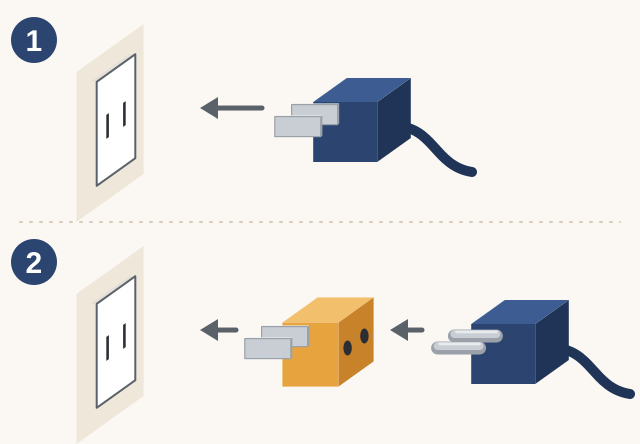
- If your device's plug has the same shape as Japanese plugs (two flat, parallel pins), you can plug it straight into the outlet.
- If the plug shape is different, attach a plug adapter first, then plug it in.
Even if the plug shape fits, you cannot use the device unless it supports 100V. How to check is explained in "Check the voltage".
Compatibility
Plug shape
A Type A plug has two flat pins set parallel to each other. There is no third pin for grounding. Japanese outlets have two tall, narrow slots side by side that fit these pins.
- If your device's plug has the same shape (two flat, parallel pins), you do not need a plug adapter.
- If the shape is different, for example the pins are round, there are three pins, or the pins are set at an angle, you need a plug adapter.
- A plug adapter only changes the plug shape to fit Japanese outlets. It does not change the voltage.
The frequency differs between eastern and western Japan
The frequency of electricity in Japan is 50Hz in eastern Japan and 60Hz in western Japan, which includes Nagoya, Kyoto and Osaka (according to JNTO). On a trip from Tokyo to Osaka, you will be using the same devices in both regions. So also check that the device supports both 50Hz and 60Hz. How to check is explained in item 2 of "Check the voltage".
Step by step
Check the voltage
To find out whether you can use a device, look at the INPUT rating printed on the device itself or on its charger (AC adapter).
- Check whether 100V falls within the input voltage range. For example, if it says "100-240V", 100V is within that range.
- Check whether the frequency rating includes both 50Hz and 60Hz. For example, if it says "50/60Hz", the frequency matches in every region of Japan.
- If 100V is not within the input voltage range, the device cannot be used with a plug adapter alone. You need a transformer that lowers the voltage (according to JNTO).
JNTO says that devices such as dual-voltage hair dryers, travel irons and shavers should work anywhere in Japan.
Where to buy
Where to buy plug adapters and transformers
According to JNTO, plug adapters and transformers are relatively easy to find in cities, and they are sold in places like these.
- Districts with many electronics shops: Akihabara in Tokyo, Nipponbashi in Osaka
- Large electronics retailers: Yodobashi Camera, BicCamera and others
Good to know
Where to charge during your trip
- Shinkansen: Newer train cars have outlets beside the window seats. If you want to sit in one of these seats, tell the staff when you buy your ticket (according to JNTO).
- Airports: At Narita Airport, there are outlets you can use for free in several places in the terminals (according to Narita Airport).
- Shops and restaurants: Some hamburger chains and family restaurants have outlets that customers can use (according to JNTO). Ask the staff before using one.
A pocket Wi-Fi router also needs to be charged, separately from your smartphone. How to choose an internet connection in Japan is covered in Getting Online in Japan | eSIM vs SIM Card vs Pocket Wi-Fi, What to Check First, and Airport Pickup.