How to Use 100-Yen Shops in Japan
Reading Prices at DAISO, Can Do and Seria, What They Sell, Payment and Returns
Japan's 100-yen shops are chain stores that sell kitchenware, cleaning supplies, stationery, sweets and more, mostly for 100 yen per item (110 yen…
Ad · Affiliate Contains affiliate links. The site operator may earn a commission if you book or buy through them. Our advertising policy
Overview
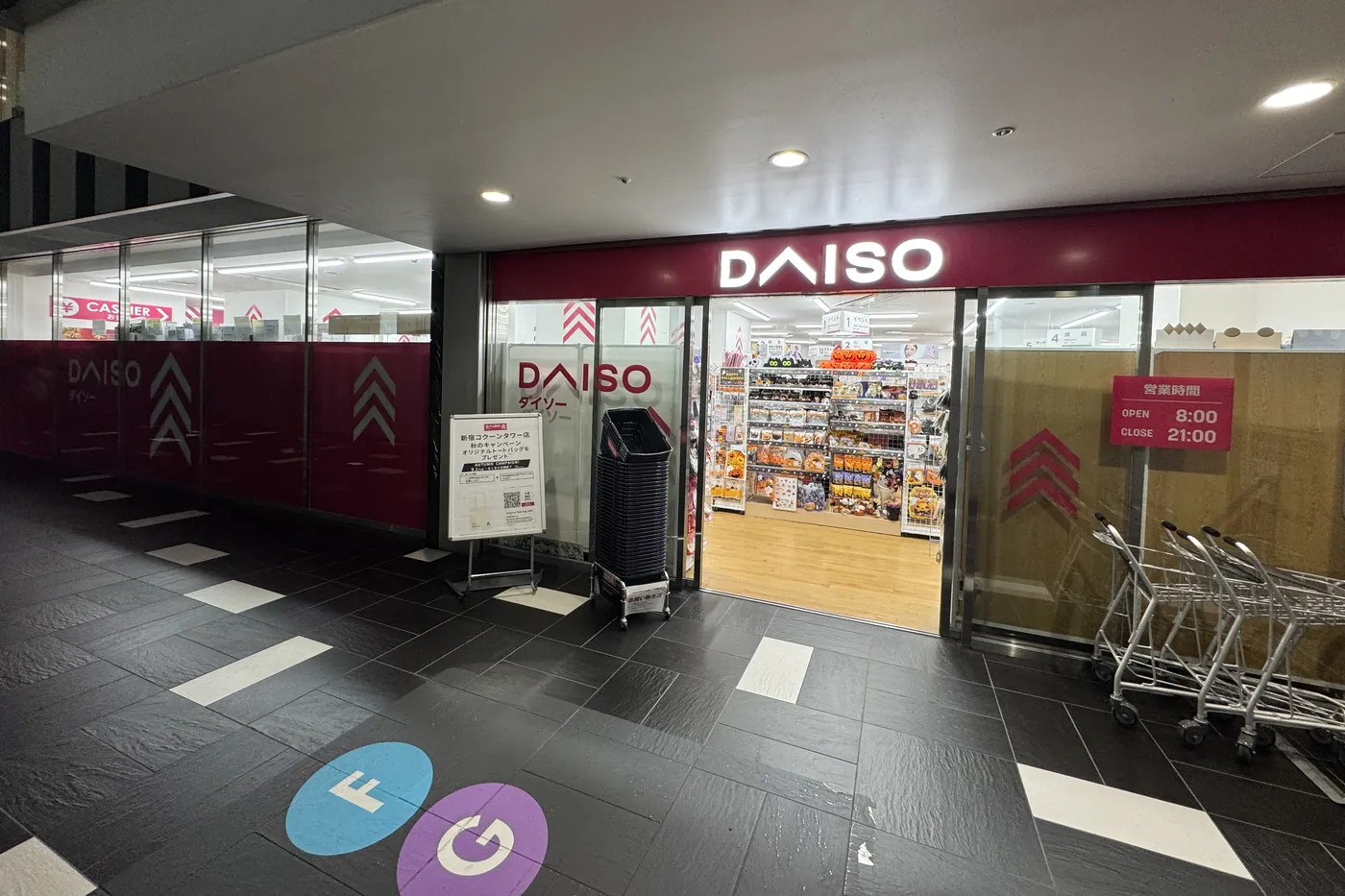
Japan's "100-yen shops" are chain stores that sell many everyday items, such as kitchenware, cleaning supplies, stationery and sweets, for 100 yen each (¥110 (tax included)). They are common near stations, in shopping complexes and in residential areas, and are handy for picking up things you have run out of during your trip or for finding lightweight souvenirs. This article focuses on DAISO, which has 4,784 stores in Japan (its signs also show the name in katakana as "ダイソー"), and also covers Can Do and Seria.
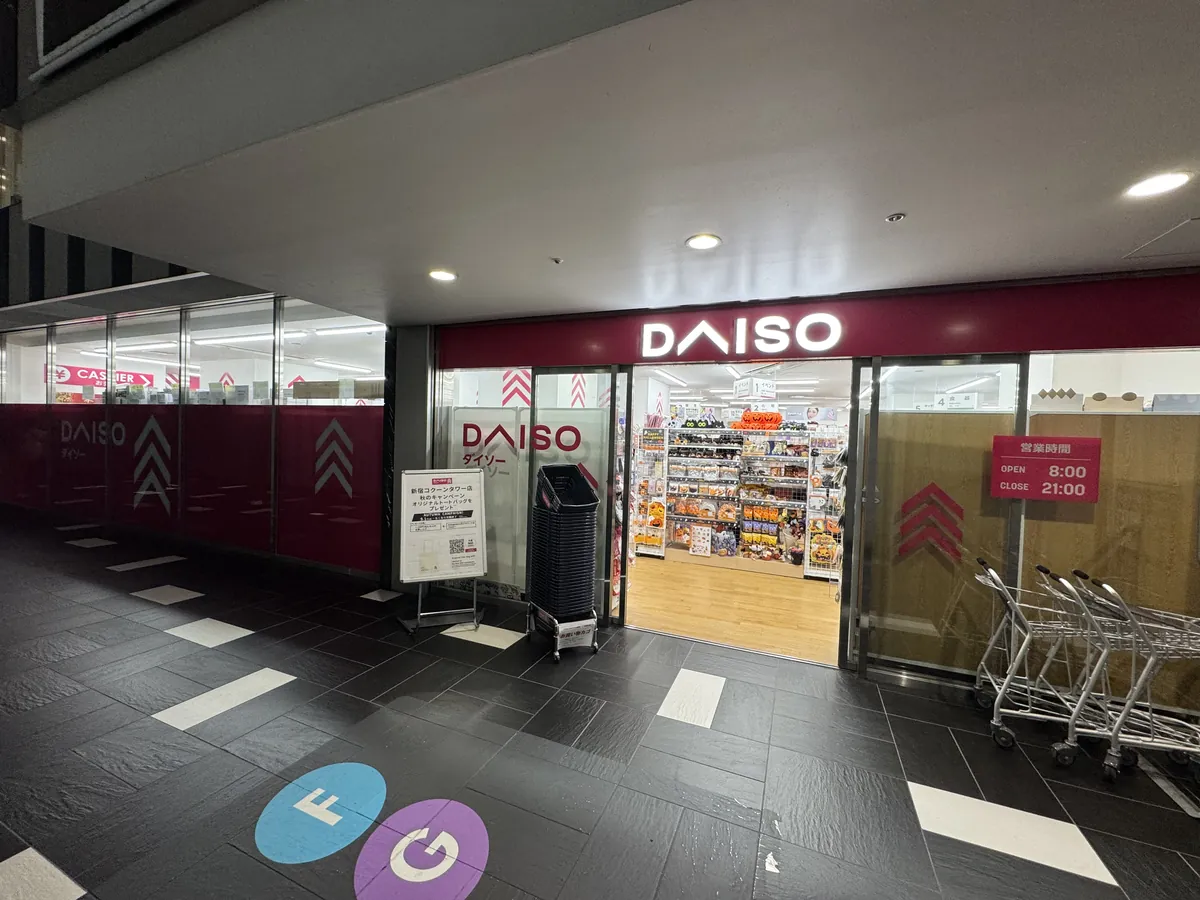
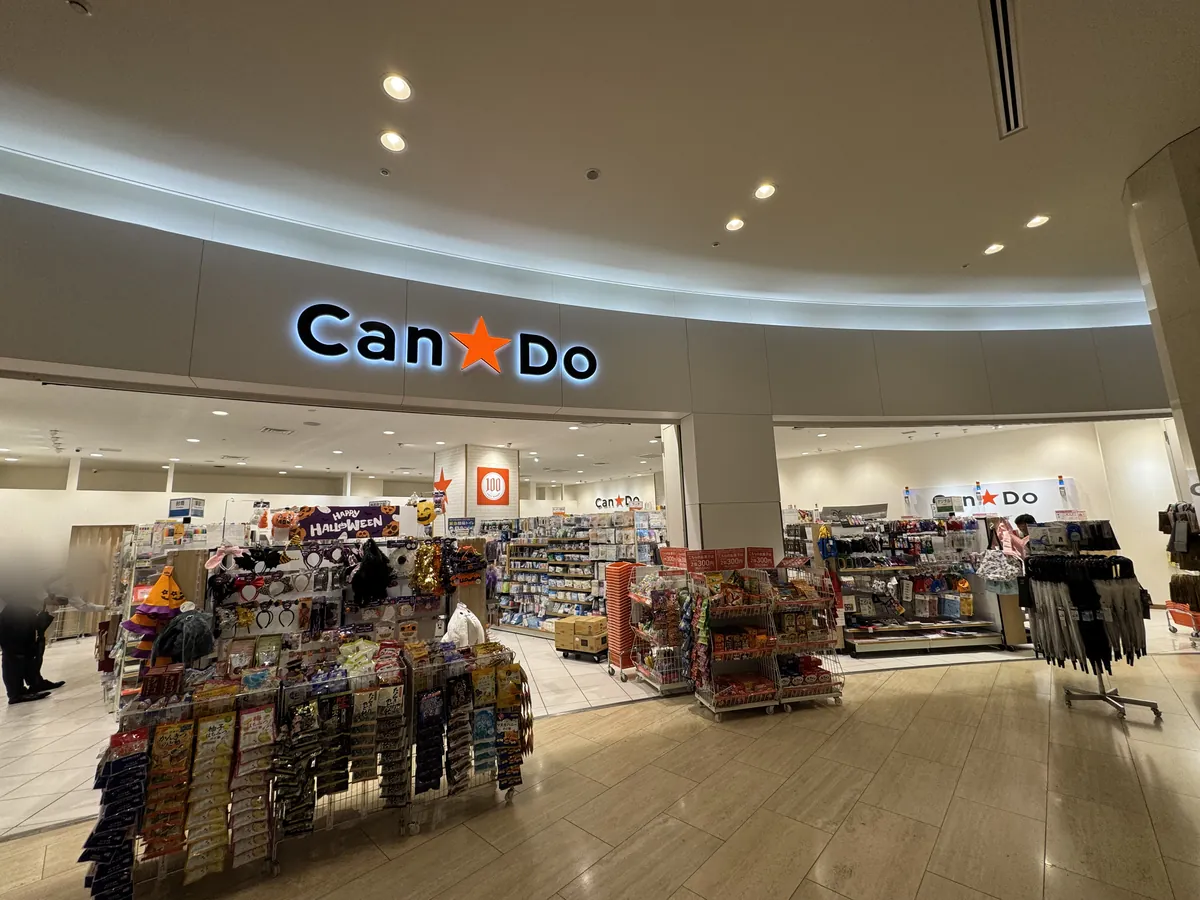
The photos show examples of individual stores at the time they were taken. The product range, facilities, opening hours and accepted payment methods vary by store.
On this page
Prices
A 100-yen item costs 110 yen at the register
"100 yen" is the price before consumption tax. At the register you pay ¥110 (tax included), which includes 10% consumption tax. Food and drink such as sweets and beverages are taxed at 8%, so they cost ¥108 (tax included) (National Tax Agency guidance on the reduced tax rate; alcoholic beverages are taxed at 10%). Seria states on its official website that its products have a uniform price of 110 yen for general goods and 108 yen for food.
Not everything costs 100 yen
DAISO and Can Do also sell items priced above 100 yen, such as 200, 300 and 500 yen (DAISO's official product pages; Can Do's company history). DAISO's official product pages show both the pre-tax and the tax-included price, such as "100 yen (110 yen incl. tax)" and "200 yen (220 yen incl. tax)". In the store, check the label on the packaging or the price tag on the shelf.
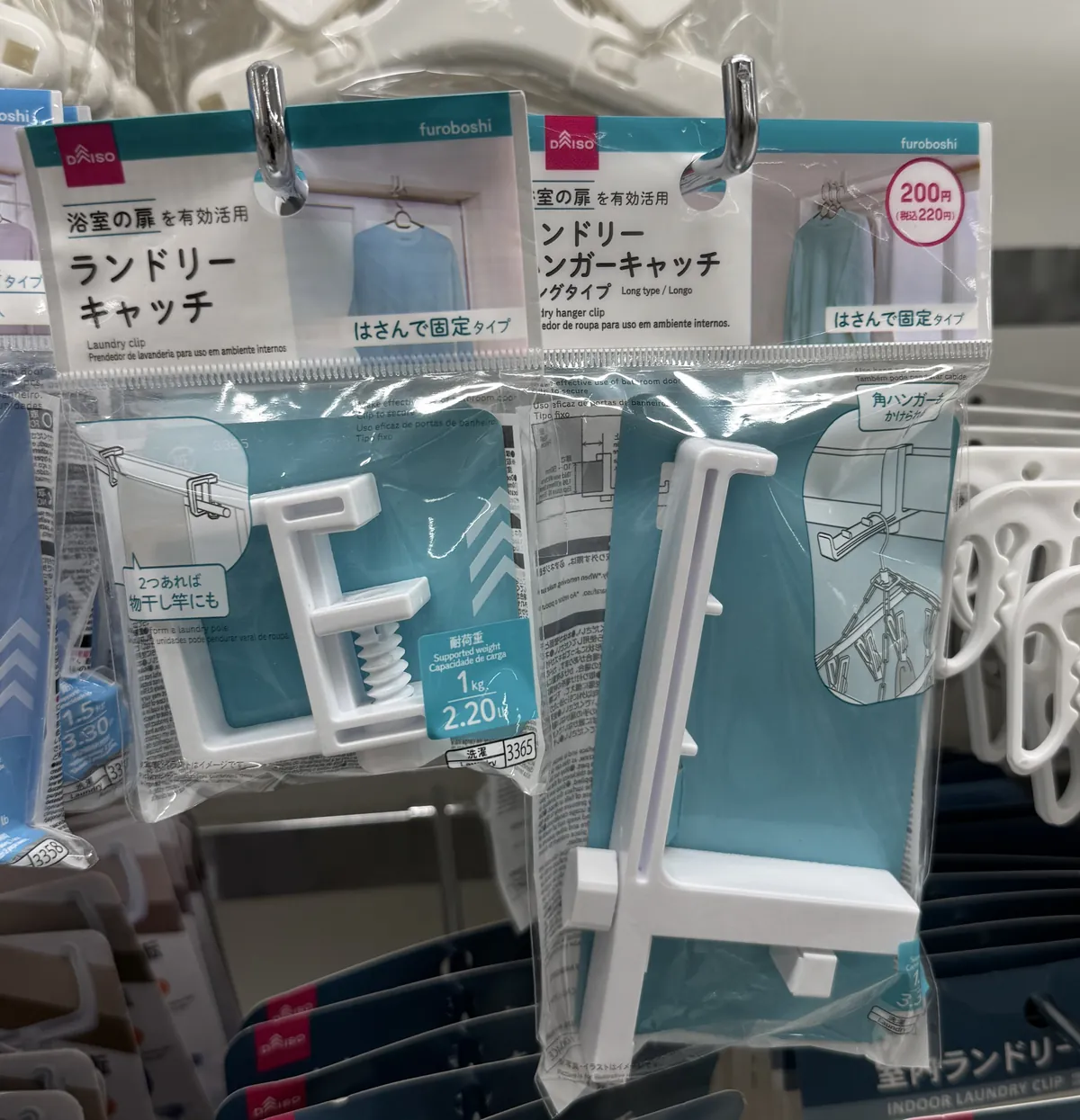
On the packaging in the photo, the top right corner reads "200円(税込220円)" (200 yen; 220 yen incl. tax).
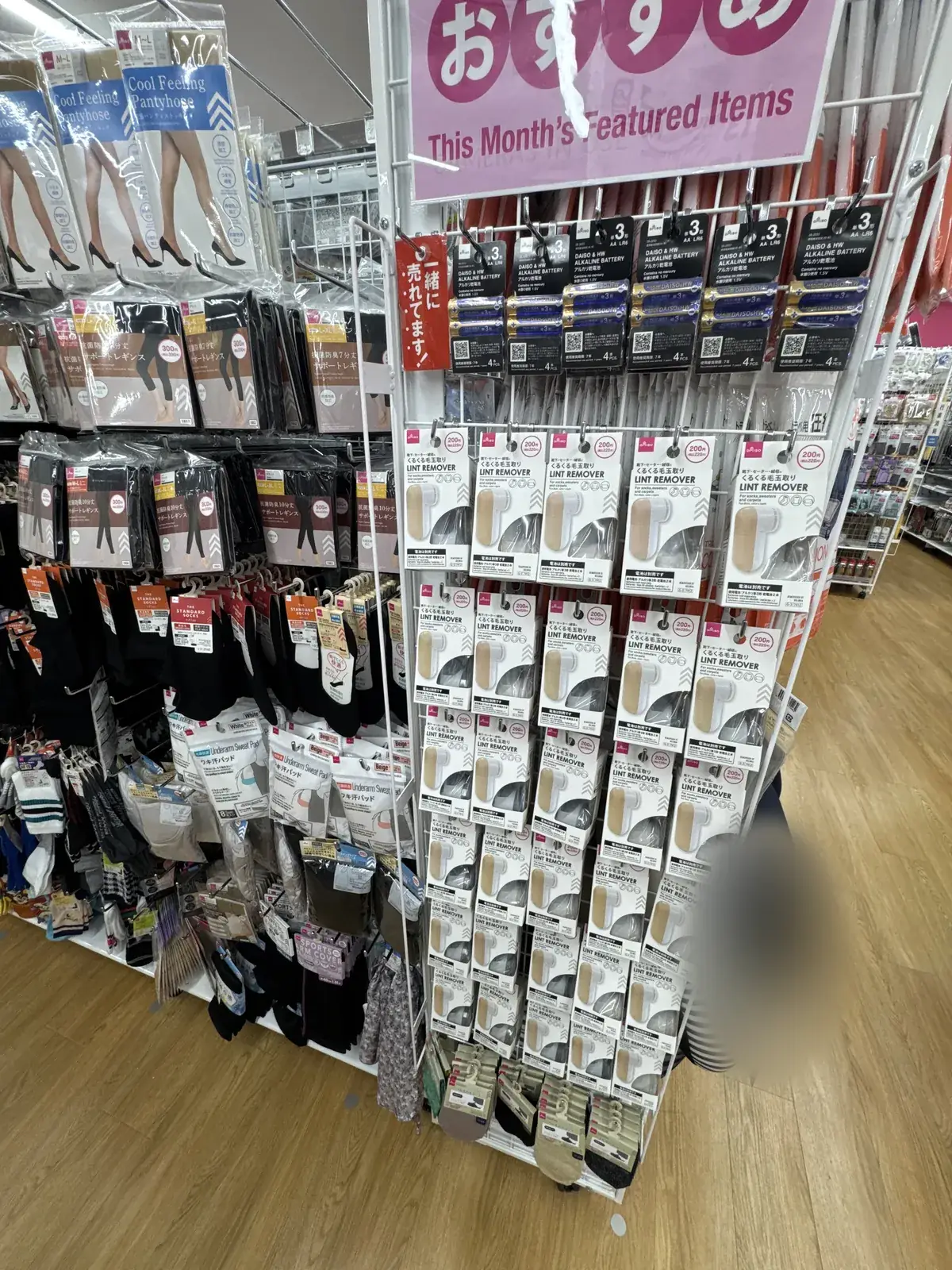
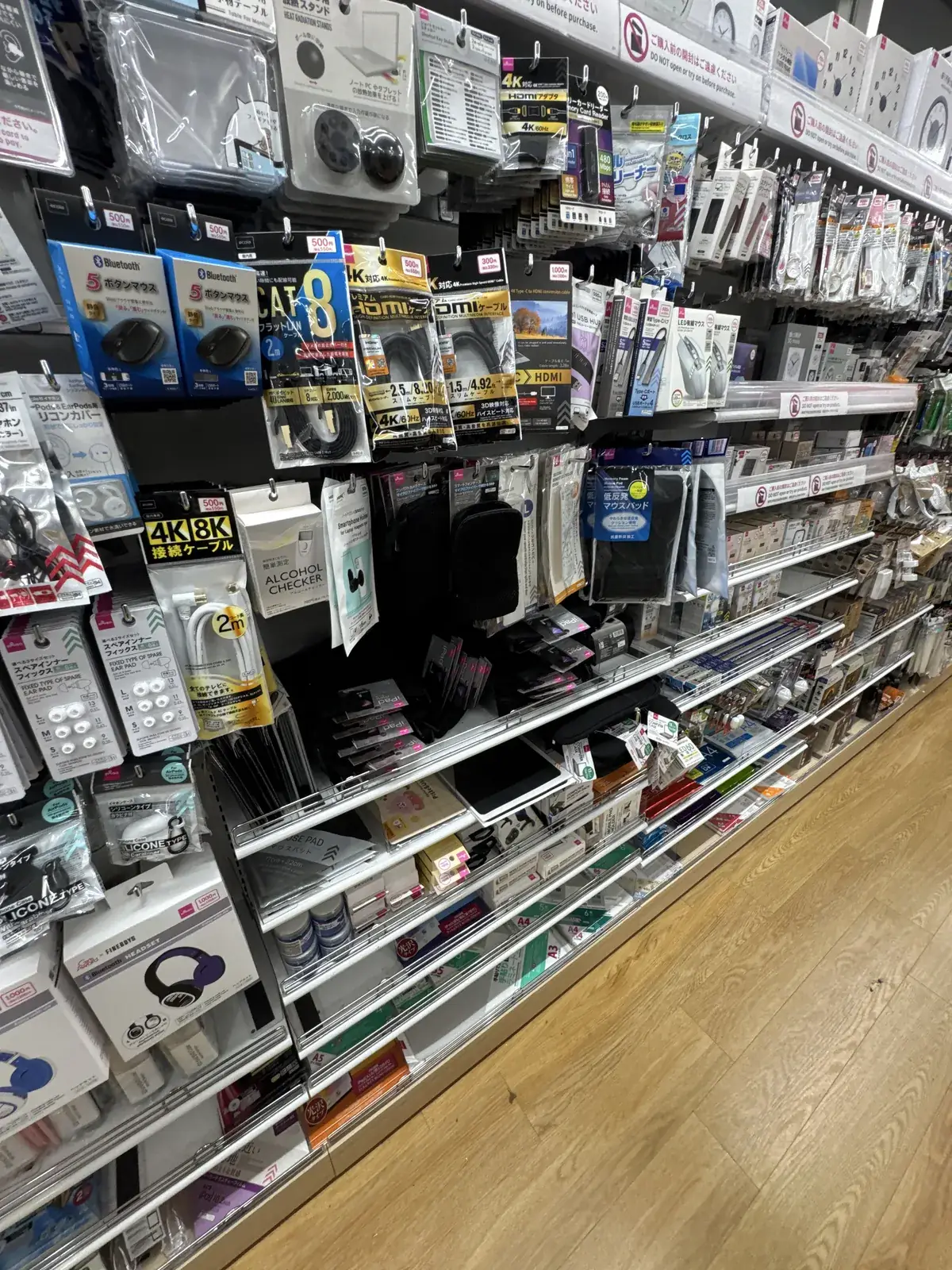
In the store in the photo, the section for cables and smartphone accessories had price tags of 300 yen, 500 yen and so on.
Consumption tax on food from April 2027
In September 2026, the Japanese government approved, at a Cabinet meeting, a proposed amendment that would lower the consumption tax rate on food and drink to 1% for the two years from April 1, 2027 to March 31, 2029 (National Tax Agency; Cabinet Secretariat). If the bill passes the Diet, tax-included food prices will change during this period. This article will be rewritten once the change is finalized.
What to buy
Use the aisle signs
In large DAISO stores, each section has a numbered sign with the category written in Japanese and English.
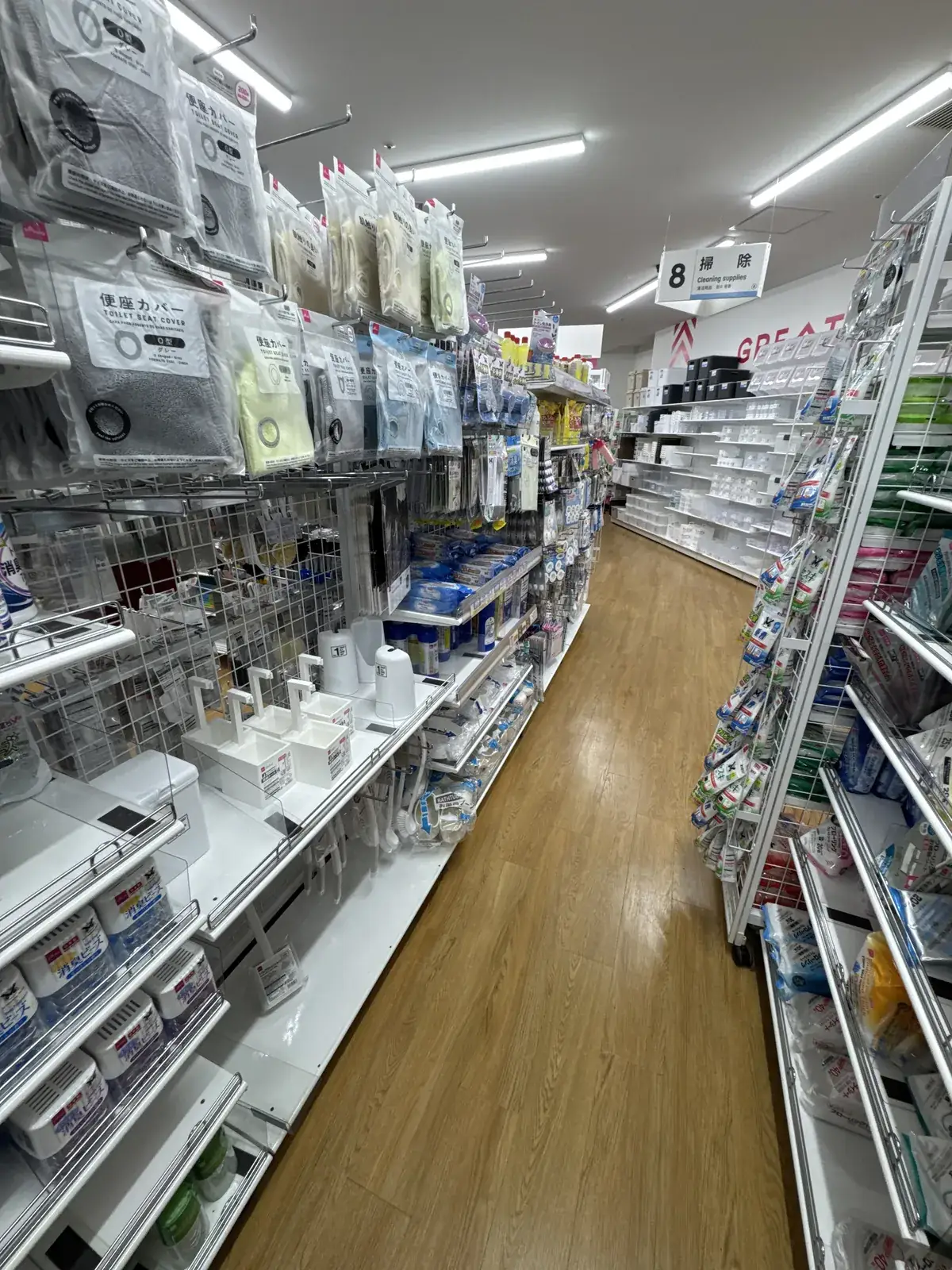
The sign in the photo reads "8 掃除 Cleaning supplies". Use these signs to find the section you are looking for, or ask a staff member. DAISO classifies its stores as large, standard or small, and Can Do also states that the variety and quantity of its products differ by store size and region. If you already know what you want, you are more likely to find it in a large store.
Sections in the store where the photos were taken
Here are items travelers often use, photographed in a DAISO store. Not every store carries the same products.
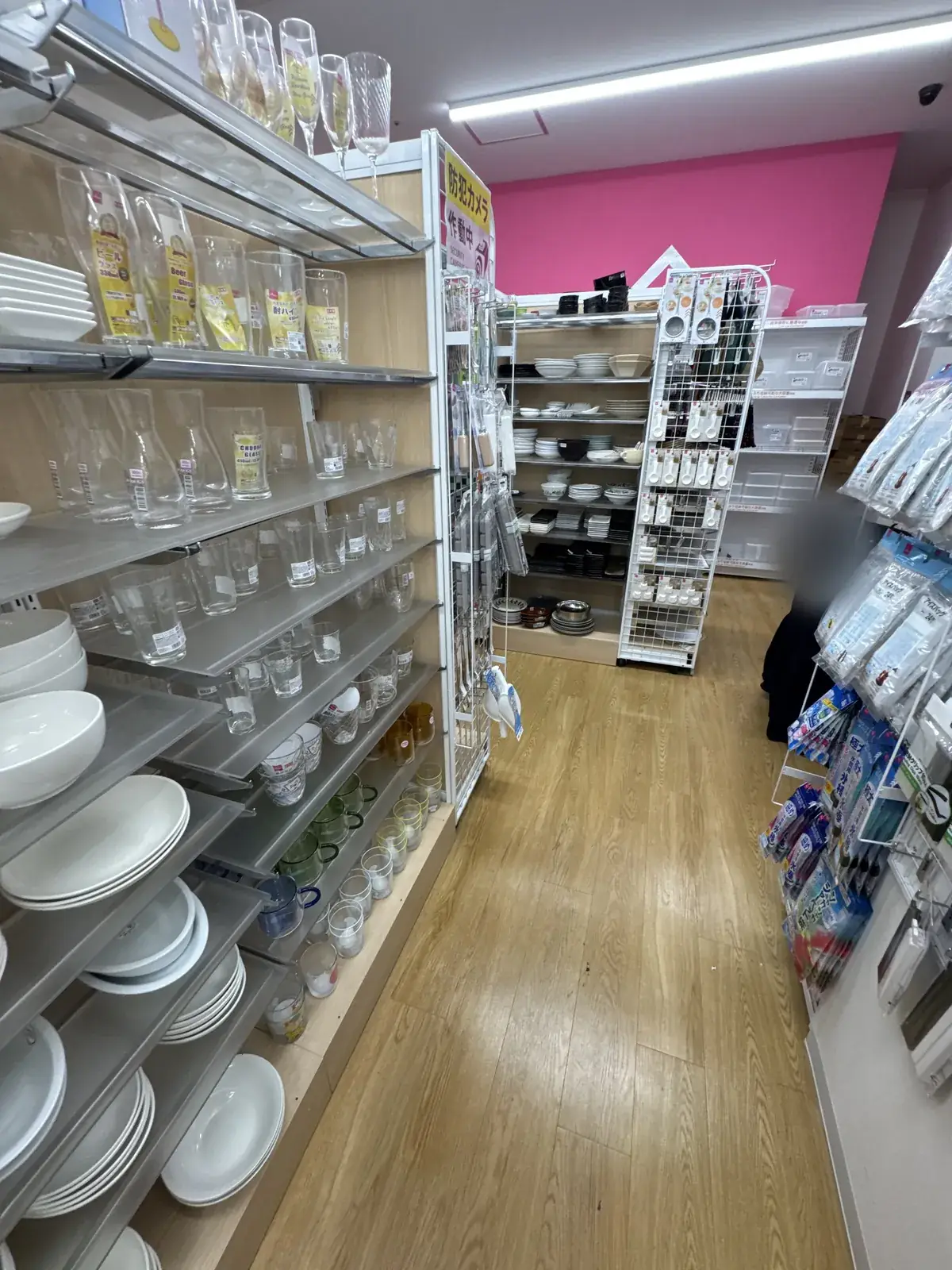
The tableware, glassware and chopsticks section. It carries items shaped for the Japanese table, such as chopstick rests, small plates and rice bowls.
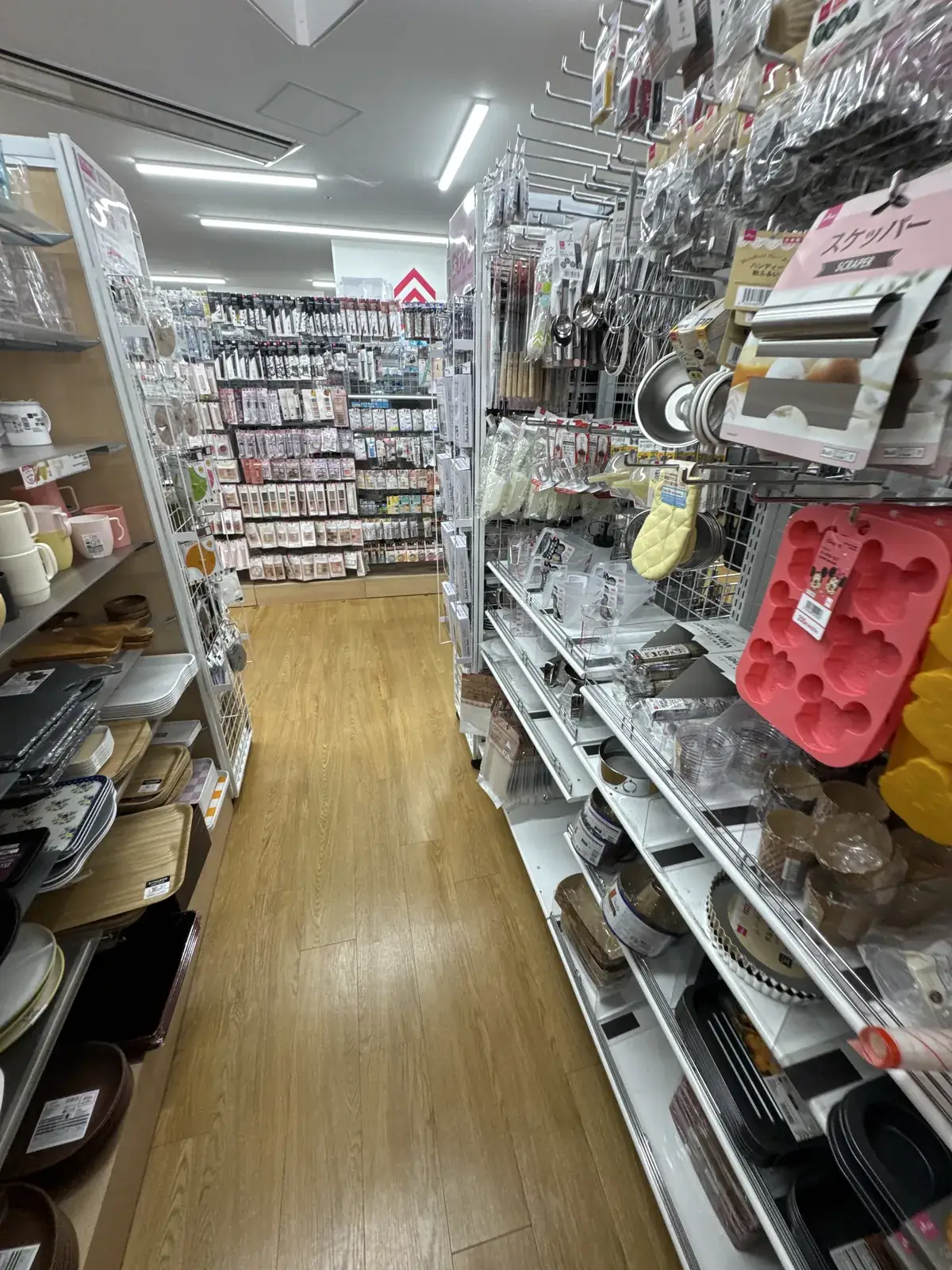
The kitchenware section, with cooking utensils, bento boxes and baking supplies.
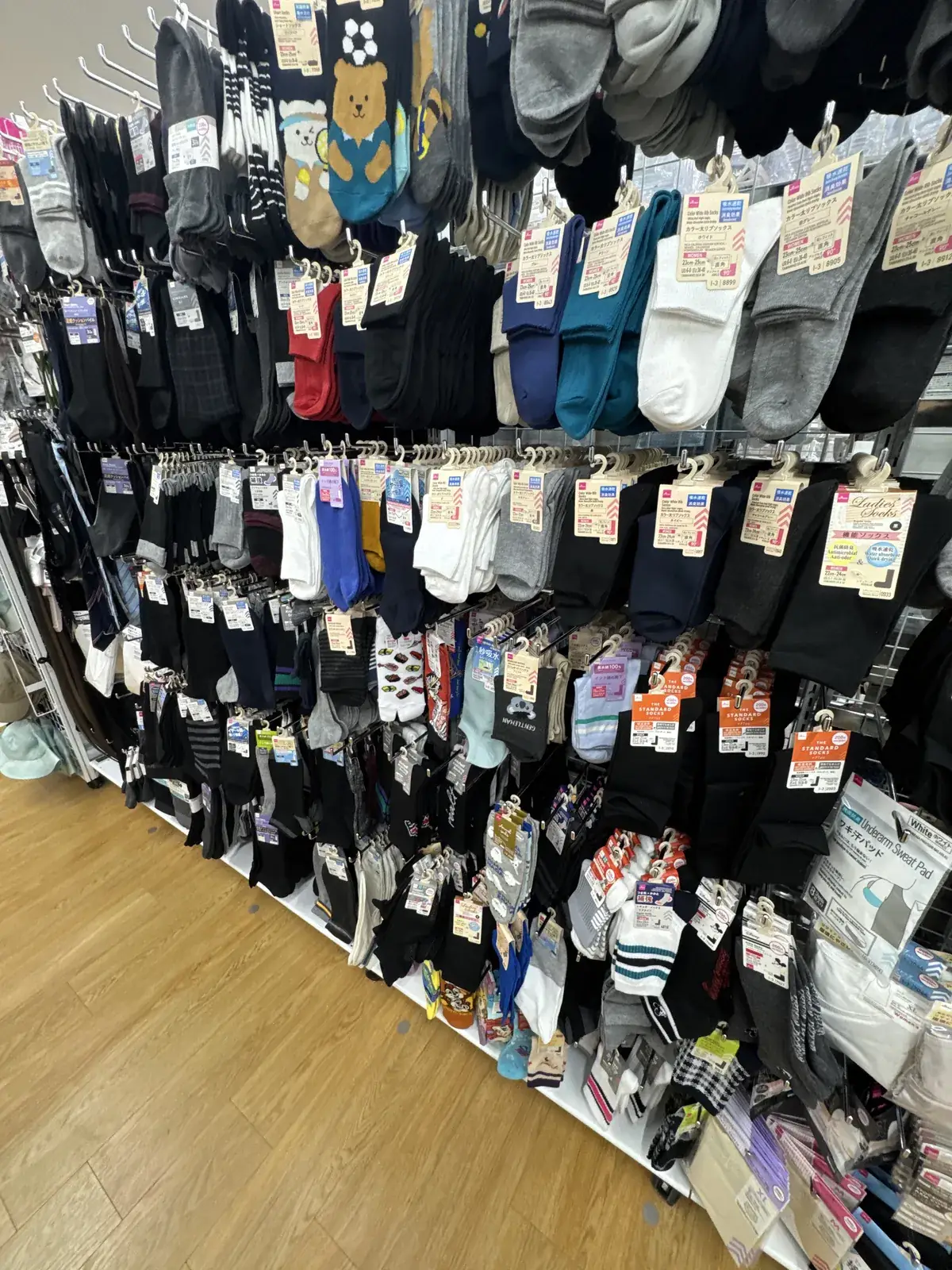
The socks and tights section. Useful if you run out during your trip.
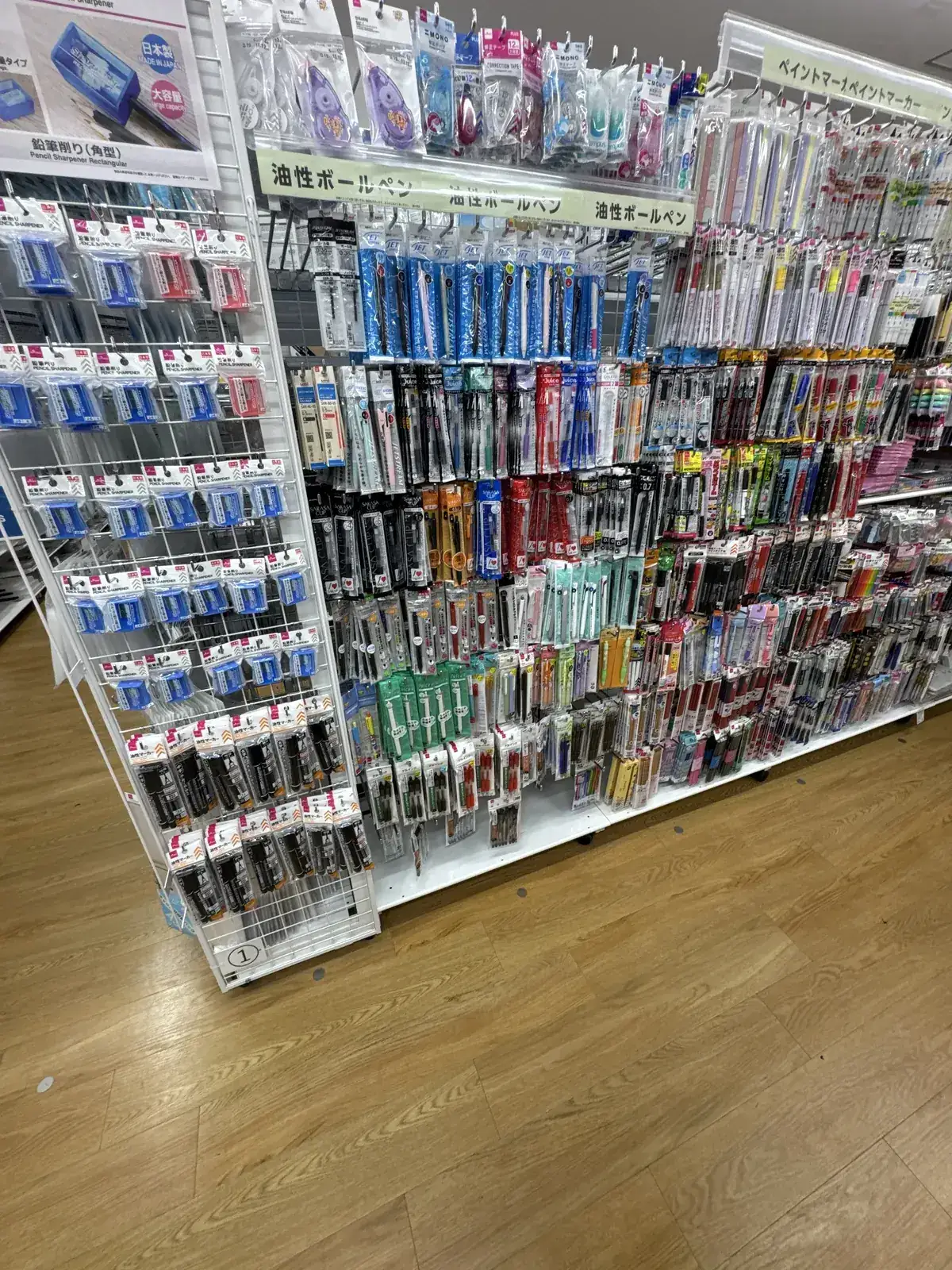
The stationery section, with ballpoint pens, pencil sharpeners and notebooks.
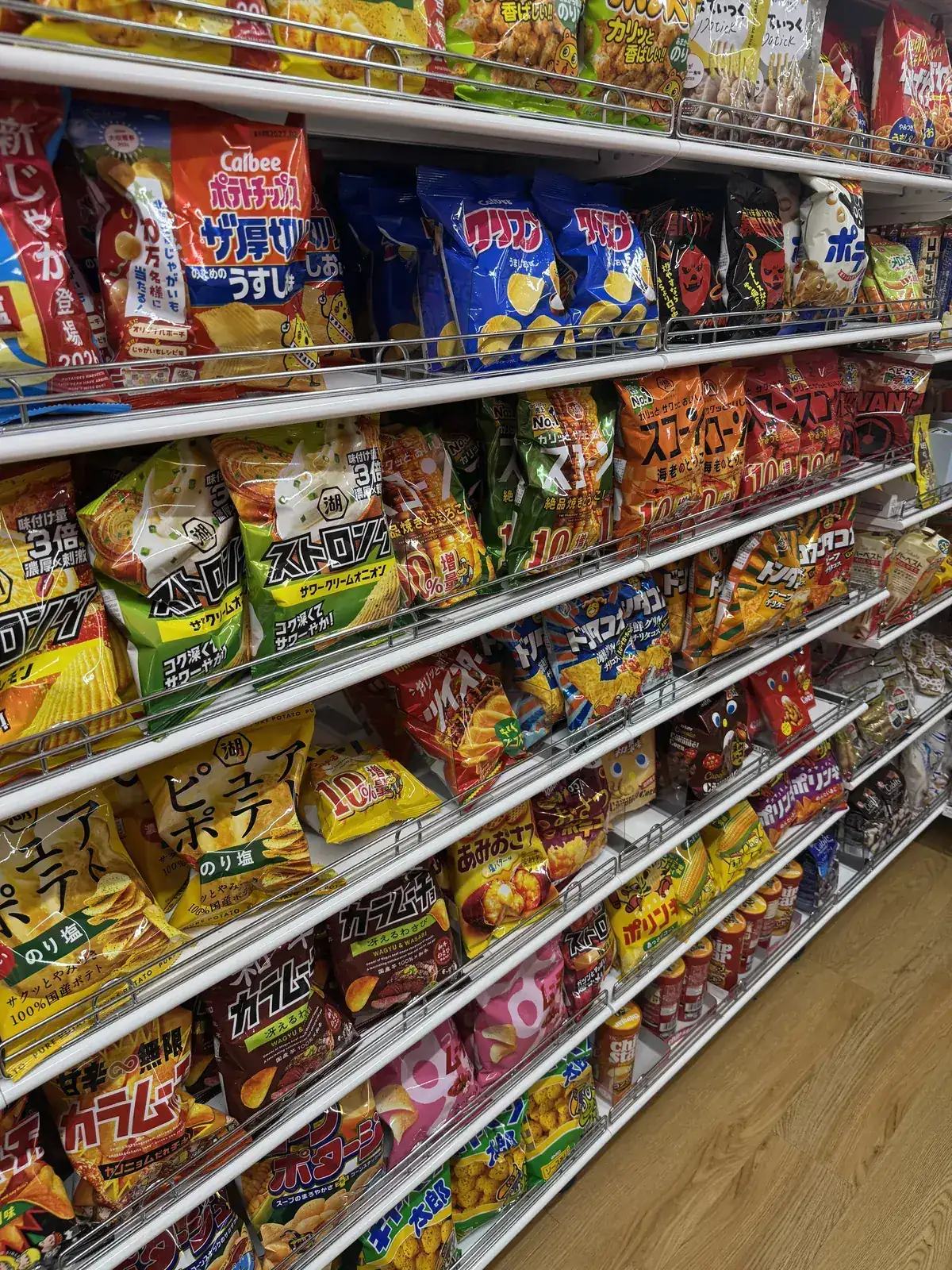
The snacks section. Products from Japanese confectionery makers are sold in small bags. Food costs ¥108 (tax included) (see "A 100-yen item costs 110 yen at the register").
Reading the packaging
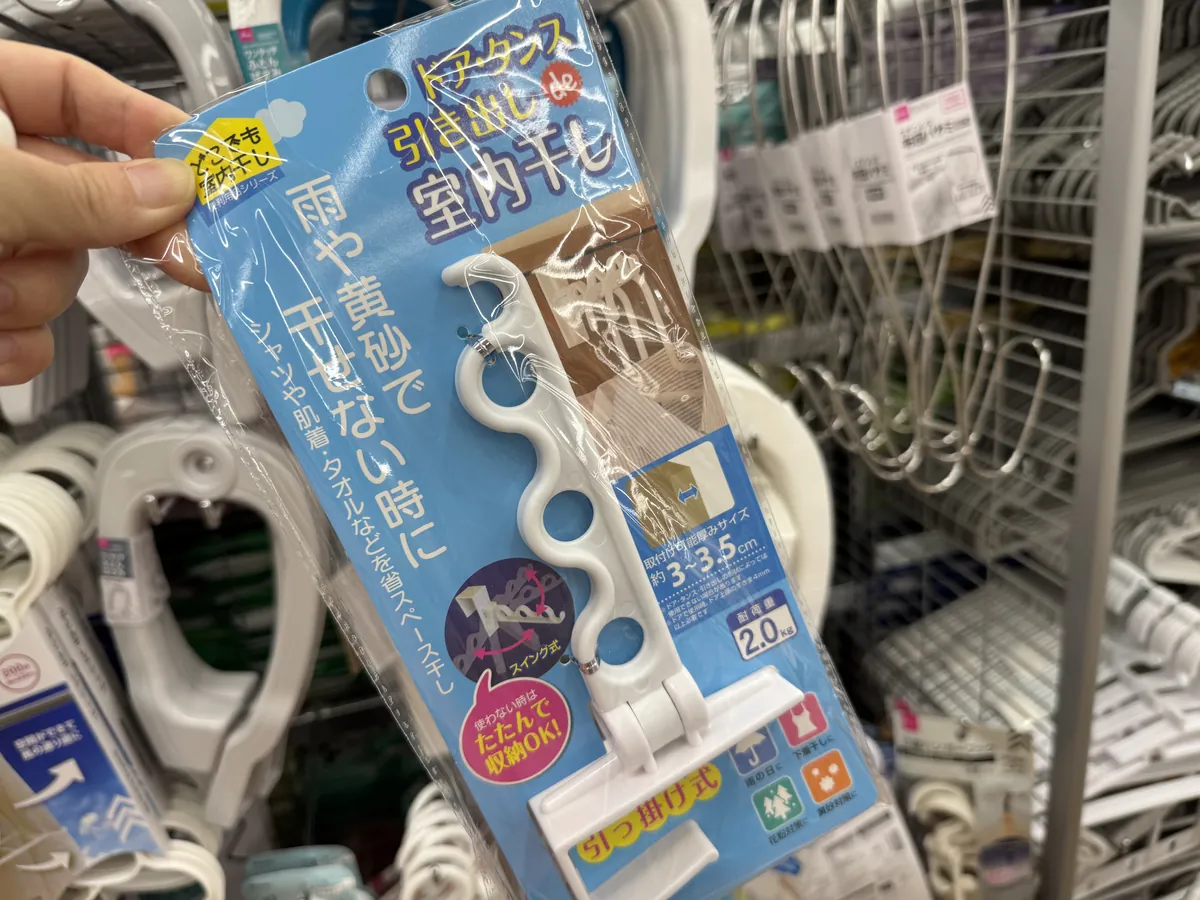
Packaging is mostly in Japanese. Like the product in the photo, many packages also give the product name in English and show how to use the item with pictures. Figures such as size and load capacity are also printed on the packaging.
Where to buy
How to find a store
| Store | Number of stores and store locator |
|---|---|
| DAISO | 4,784 stores in Japan (as of the end of February 2026). The store locator on the official website is in Japanese only and can search from your current location. You can filter for stores that accept credit cards, e-money or barcode payment, and for stores open past 8 p.m., 9 p.m. or 10 p.m. |
| Can Do | 1,355 stores (as of the end of February 2026). The official store locator is in Japanese and can filter by store size, types of payment accepted and products carried (items of 200 yen or more, food, drinks). The official website has English, Chinese (Simplified and Traditional) and Korean versions |
| Seria | 2,134 stores. The official store locator is in Japanese, and each store's page lists its opening hours by day and the payment methods accepted at that store |
- DAISO's corporate website has no English version; the store locator and the official FAQ are in Japanese only.
- DAISO's official app lets you check the stock at individual stores (stock as of the previous evening; some stores are not covered. The app's supported languages are not stated officially). Can Do and Seria do not offer stock checks by phone, web or app. None of the three chains will set items aside for you.
- DAISO has about 1,107 stores in 25 countries and regions outside Japan (as of the end of February 2026).
- The online shops of all three chains serve Japan only, with no information on overseas shipping. Travelers will need to buy in store.
- You need a data connection to use the store locators, maps and apps on the spot. See eSIM, SIM Card or Pocket Wi-Fi in Japan: How to Choose.
Paying
How to pay
- Accepted payment methods vary by store (official guidance from all three chains). DAISO's official FAQ states that some stores accept credit cards and PayPay, au PAY, Rakuten Pay, Merpay, d-Barai (d払い) and EPOS Kantan Kessai (エポスかんたん決済).
- Each Seria store page lists, one by one, the credit cards, transit IC cards, e-money and QR code payment services accepted at that store. Can Do's store pages also list the types of payment accepted.
- Whether transit IC cards (such as Suica) are accepted also depends on the store. See Welcome Suica: How to Buy and Use It for how to buy a card.
- The Japan National Tourism Organization advises carrying cash, as there are still many situations in Japan where you need to pay in cash.
- There is a charge for plastic shopping bags (at DAISO, in all stores since July 2020). If you bring your own shopping bag, there is no bag fee.
- Prices are not negotiable (Can Do's official FAQ: "We do not offer discounts or price reductions").
Tax-free shopping
Tax-free purchases are possible only at stores licensed by the government as tax-free shops, and conditions apply, such as spending ¥5,000 (tax excluded) or more at the same store on the same day (Japan Tourism Agency). The official websites of DAISO, Can Do and Seria have no list of, or information about, stores that offer tax-free shopping.
What travelers often find confusing
This section is based on travelers' public posts and questions, along with search trends. It is not a collection of personal reviews or ratings.
- Can you shop tax-free at every DAISO, Can Do and Seria store? Not at every store. Tax-free shopping is possible only at stores licensed by the government as tax-free shops. The official websites of DAISO, Can Do and Seria have no list of, or information about, stores that offer tax-free shopping. To find out whether the store you visit offers the tax-free procedure, look for a "Tax-free" sign in the store or ask a staff member. Tax-free shopping has conditions, such as spending ¥5,000 (tax excluded) or more at the same store in one day (Japan Tourism Agency). The tax-free conditions and the refund system are explained in Tax-Free Shopping in Japan. The refund system started on November 1, 2026.
- Does everything at DAISO in Japan cost 100 yen? No. Many items cost 100 yen, but not every item does. DAISO and Can Do also sell items priced above 100 yen, such as 200, 300 and 500 yen. DAISO's official product pages show both the pre-tax and the tax-included price, such as "200 yen (220 yen incl. tax)". In the store, check the label on the packaging or the price tag on the shelf before putting an item in your basket.
- If the packaging says "100 yen", do you pay 100 yen at the register? No. At the register you pay the amount with consumption tax added. "100 yen" is the price excluding consumption tax. At the tax rate as of November 2026, you pay ¥110 (tax included), which includes 10% consumption tax. Food and drink such as sweets and non-alcoholic beverages are taxed at 8%, so they cost ¥108 (tax included) (National Tax Agency guidance on the reduced tax rate). Alcoholic beverages are taxed at 10%.
- Can you return items bought at DAISO for your own reasons? Yes. Items that meet the conditions can be returned, but only in person at the store where you bought them. At DAISO, you can return items within 14 days counting from the day after purchase, when you bring the receipt. Food, personal seals (hanko), opened items, used items and pet food cannot be returned. You cannot return items after you go back to your home country, so check your purchases in the store. The deadlines and conditions for Can Do and Seria are in the "Returns and exchanges" table.
- Can you pay by credit card at every DAISO store? Not at every store. According to DAISO's official FAQ, accepted payment methods vary by store. The FAQ lists credit cards and PayPay, au PAY, Rakuten Pay, Merpay, d-Barai and EPOS Kantan Kessai, and which of these can be used differs from store to store. In the store locator on DAISO's official website (Japanese only), you can filter for stores that accept credit cards, e-money or barcode payment. The Japan National Tourism Organization advises carrying cash, as there are still many situations in Japan where you need to pay in cash.
Good to know
Returns and exchanges
These are the rules for returns and exchanges for the customer's own reasons. All of them require the receipt and are accepted only in person at the store where you bought the item. You cannot return items after you have gone home, so check your purchases in the store.
| Store | Deadline and conditions |
|---|---|
| DAISO | Within 14 days counting from the day after purchase. Food, personal seals (hanko), opened or used items and pet food are excluded |
| Can Do | Within 30 days of purchase. Unopened and unused items only. Food is excluded unless it is defective |
| Seria | Within 30 days of the purchase date. Opened items, food, special orders and shopping bags are excluded |
Other points
- DAISO's store locator also shows stores of the company's other brands (Standard Products, THREEPPY and CouCou). Items bought at these stores can be returned only at a store of the same brand.
- When taking photos inside a store, keep other customers and staff out of the frame, and follow any signs prohibiting photography (Seria's official FAQ).
- For things you can do at a convenience store, such as buying drinks and bento or using an ATM, see What You Can Do at Japanese Convenience Stores.
Official sources
These are the official pages we used to check the fares, hours, and other facts in this article. Please check each page for the latest information.
- セリア 公式サイト トップ「セリアの商品は雑貨110円、食品108円!」 www.seria-group.com
- DAISO 公式サイト 商品ページ「各種100円(税込110円)」 www.daiso-sangyo.co.jp
- DAISO 公式FAQ「食品・飲料は軽減税率が適用され、消費税率8%」 daiso.tayori.com
- DAISO 公式サイト 商品ページ(食品)「100円(税込108円)」 www.daiso-sangyo.co.jp
- 国税庁 軽減税率制度の概要「標準税率(10%)と軽減税率(8%)の複数税率」 www.nta.go.jp
- 国税庁 消費税率引下げ特設サイト(2026-09-15 閣議決定の改正案。令和9年4月1日〜令和11年3月31日、飲食料品の消費税率1%。法案成立が前提) www.nta.go.jp
- 大創産業 会社概要 国内店舗数 4,784店舗(2026年2月末現在) www.daiso-sangyo.co.jp
- 大創産業 グローバル「海外25の国と地域に約1,107店舗」(2026年2月末時点) www.daiso-sangyo.co.jp
- キャンドゥ 会社概要 店舗数 1,355店舗(2026年2月末) www.cando-web.co.jp
- セリア 会社概要 店舗数 2,134店(直営 2,101・FC 33。時点の記載なし、2026-10-03 取得) www.seria-group.com
- 観光庁 免税制度の概要(同一店舗・同一日の購入額が税抜5,000円以上) www.mlit.go.jp
- DAISO 公式FAQ 返品「ご購入日の翌日から14日間以内」 daiso.tayori.com
- キャンドゥ よくある質問「お買い上げから30日以内で、レシートがあり、未開封・未使用のもの」 www.cando-web.co.jp
- セリア よくある質問 自己都合の返品・交換は「購入日から30日以内」 www.seria-group.com