Do You Need Cash in Japan? | Where Cards Work, ATMs That Accept Overseas Cards, and Currency Exchange
International card brands are widely accepted in Japan, but there are still times when you need cash. Based on official information from the Japan National Tourism Organization (JNTO) and other sources, this guide explains where you can pay by card or transport IC card; the withdrawal limit, hours, and fees of Japan Post Bank (“ゆうちょ銀行”) ATMs, which let you withdraw Japanese yen with a card issued outside Japan; Japanese banknotes and coins; and where to exchange money.
Ad · Affiliate This article contains links to partner booking and shopping pages (affiliate links). If you book or buy through these links, the site operator may receive a commission from the partner. Our advertising policy
Overview
In Japan, credit, debit, and prepaid cards from international brands (such as Visa and Mastercard) are accepted at many shops across the country. Even so, there are times when you need cash. The Japan National Tourism Organization (JNTO) recommends carrying some cash to use during your trip.
You can get Japanese yen in cash in the following two ways.
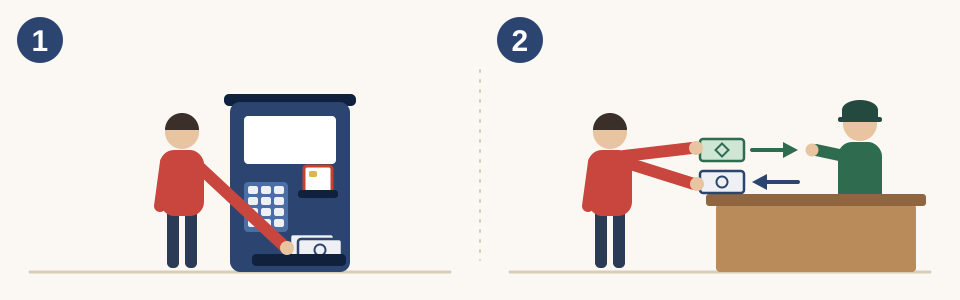
- Withdraw Japanese yen from an ATM using a card issued outside Japan.
- Exchange foreign banknotes you brought with you for Japanese yen at a currency exchange counter or bank.
This article explains where you can pay by card and how to use ATMs and currency exchange.
Paying
Paying by card and transport IC card
- International-brand cards are accepted at many shops across Japan. You can also buy tickets for the Narita Express (N'EX) and the Shinkansen by card.
- Tickets for short-distance trains and subways sometimes cannot be bought by card.
- Transport IC cards (such as Suica and PASMO) can be used not only on trains and buses but also to pay at convenience stores and some shops and restaurants. However, they are not accepted everywhere. How to buy one is explained in Welcome Suica: How to Buy and Use It | A 28-Day IC Card for Visitors to Japan.
- If you lose your card, contact the card issuer directly. Write down the issuer's contact phone number and keep it somewhere separate from your card.
ATM
Withdrawing Japanese yen with a card issued outside Japan
The main ATMs where you can withdraw Japanese yen with a card issued outside Japan are listed below.
| ATM | Main locations |
|---|---|
| Japan Post Bank (shown in Japanese as “ゆうちょ銀行”) | Post offices. Also found at some stations and supermarkets |
| Seven Bank | Mainly at 7-Eleven stores |
| Airport ATMs | Narita, Haneda, Chubu, and Kansai airports |
Withdrawal limits and how to use Seven Bank ATMs and ATMs at other convenience stores are explained in What You Can Do at Japanese Convenience Stores | ATM Cash Withdrawals, Payment Methods, Sending Luggage.
Japan Post Bank ATMs
- You can withdraw cash with cards bearing the Visa, PLUS, Mastercard, Maestro, Cirrus, JCB, China UnionPay, or Discover logo. These cards can be used at Japan Post Bank ATMs nationwide.
- You can withdraw up to ¥50,000 per transaction.
- Balance inquiries are not available.
- Hours vary by ATM. Hours for ATMs at post offices and similar locations are as follows.
| Day | Hours |
|---|---|
| Monday–Saturday (except public holidays) | 7:00–23:00 |
| Sundays, public holidays, and the year-end and New Year holidays | 7:00–21:00 |
- Small Japan Post Bank ATMs in convenience stores such as FamilyMart have different hours.
- During long holidays such as the year-end and New Year holidays and Golden Week, hours may change.
- Even during service hours, some cards may not work. If you have questions about your card, contact the card issuer.
Costs
Fees and the currency you are charged in
- With some overseas cards, a Japan Post Bank ATM fee of ¥220 (tax included) is charged per transaction.
- Separately from this fee, the card issuer may charge its own fees. Check the amount with your card issuer.
- At ATMs other than Japan Post Bank (such as ATMs at airports), fees may vary depending on the time of day and the day of the week you withdraw (according to JNTO).
With some overseas cards, when you withdraw Japanese yen, you can lock in the amount charged in the currency of the country where your card was issued (such as US dollars or euros) on the spot. If you do not lock it in on the spot, the amount charged is determined when the card company bills you.
Good to know
Japanese banknotes and coins, currency exchange, and bringing cash into Japan
Japanese yen comes in the following banknotes and coins.
| Type | Denominations |
|---|---|
| Banknotes | ¥10,000, ¥5,000, ¥2,000, ¥1,000 |
| Coins | ¥500, ¥100, ¥50, ¥10, ¥5, ¥1 |
- ¥10,000 notes are generally accepted even for small purchases.
- ¥2,000 notes are rarely seen in circulation. They can be used, but they are easy to mistake for ¥1,000 notes, so check your change.
- Coins pile up quickly, so a coin purse is handy.
- Banknotes with new designs have been issued since 2024. Older notes can still be used, so there is no need to exchange them.
Where to exchange money
- Major airports have currency exchange counters in the arrival lobby.
- You can also exchange foreign currency for Japanese yen at currency exchange counters, banks, and some hotels. The currencies accepted vary by location, and exchange rates change daily.
- Bank branches are often in convenient places such as in front of stations, but many branches close at 15:00, so keep this in mind.